- What is a drone-in-a-box system?
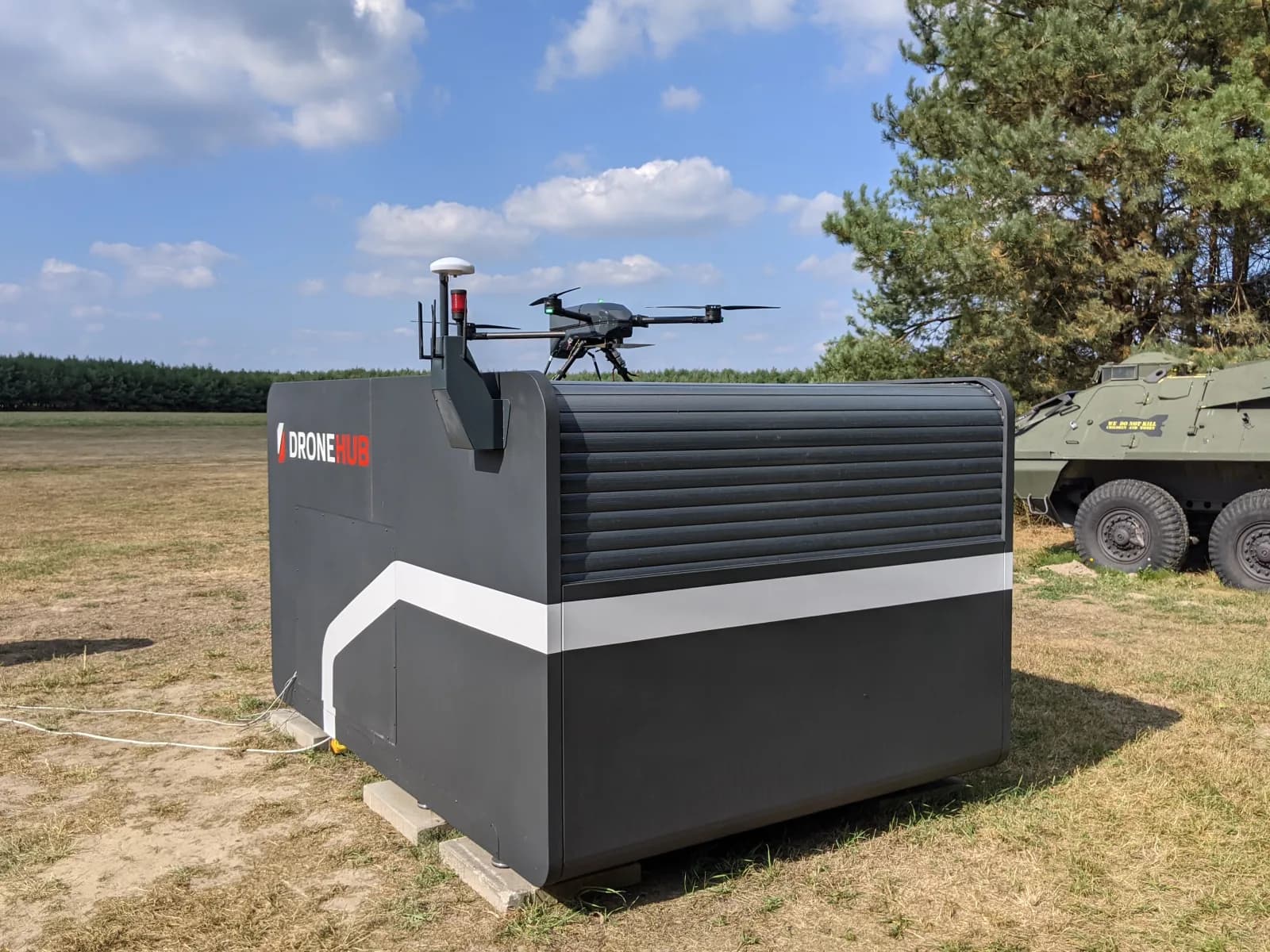
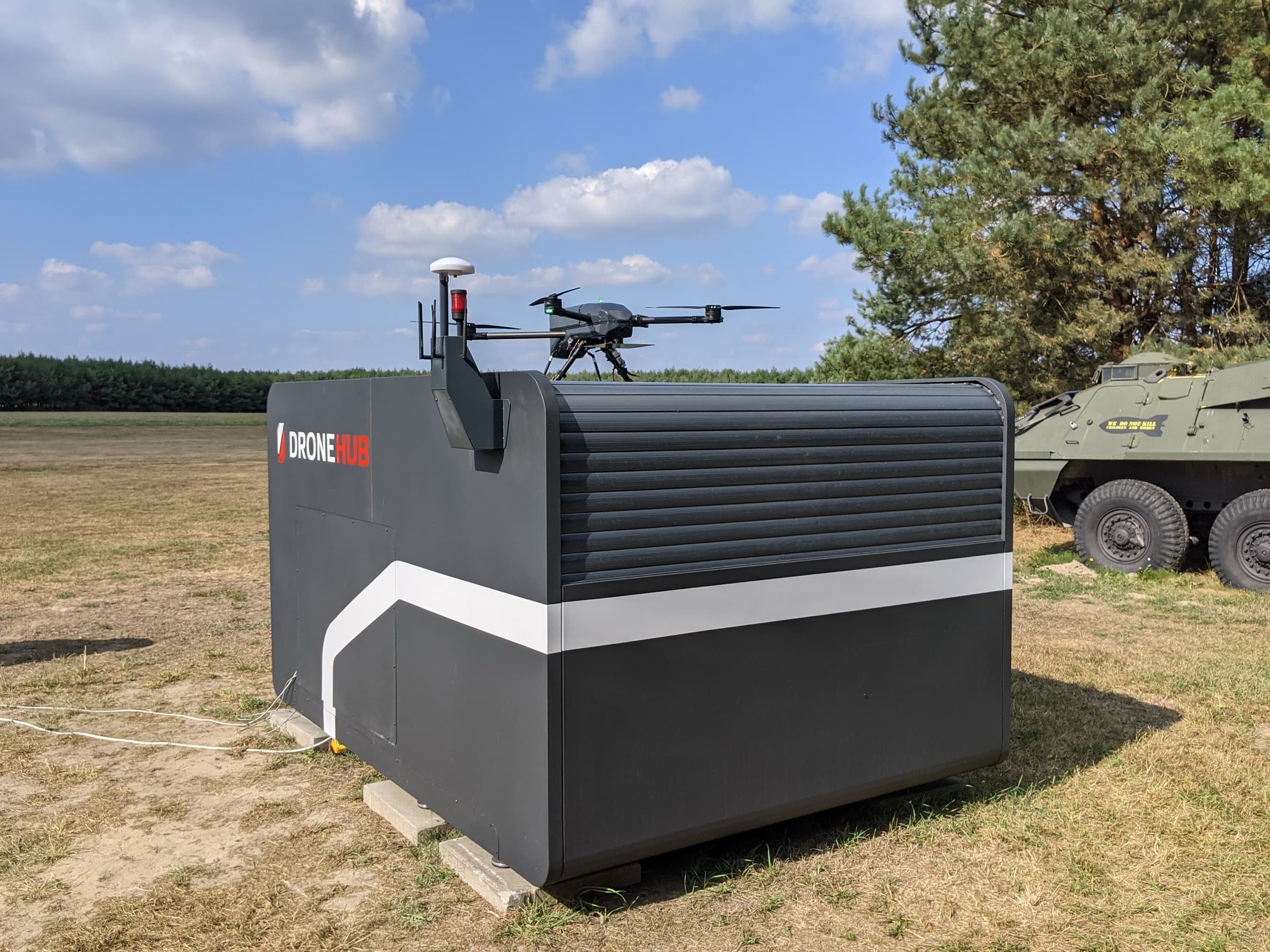
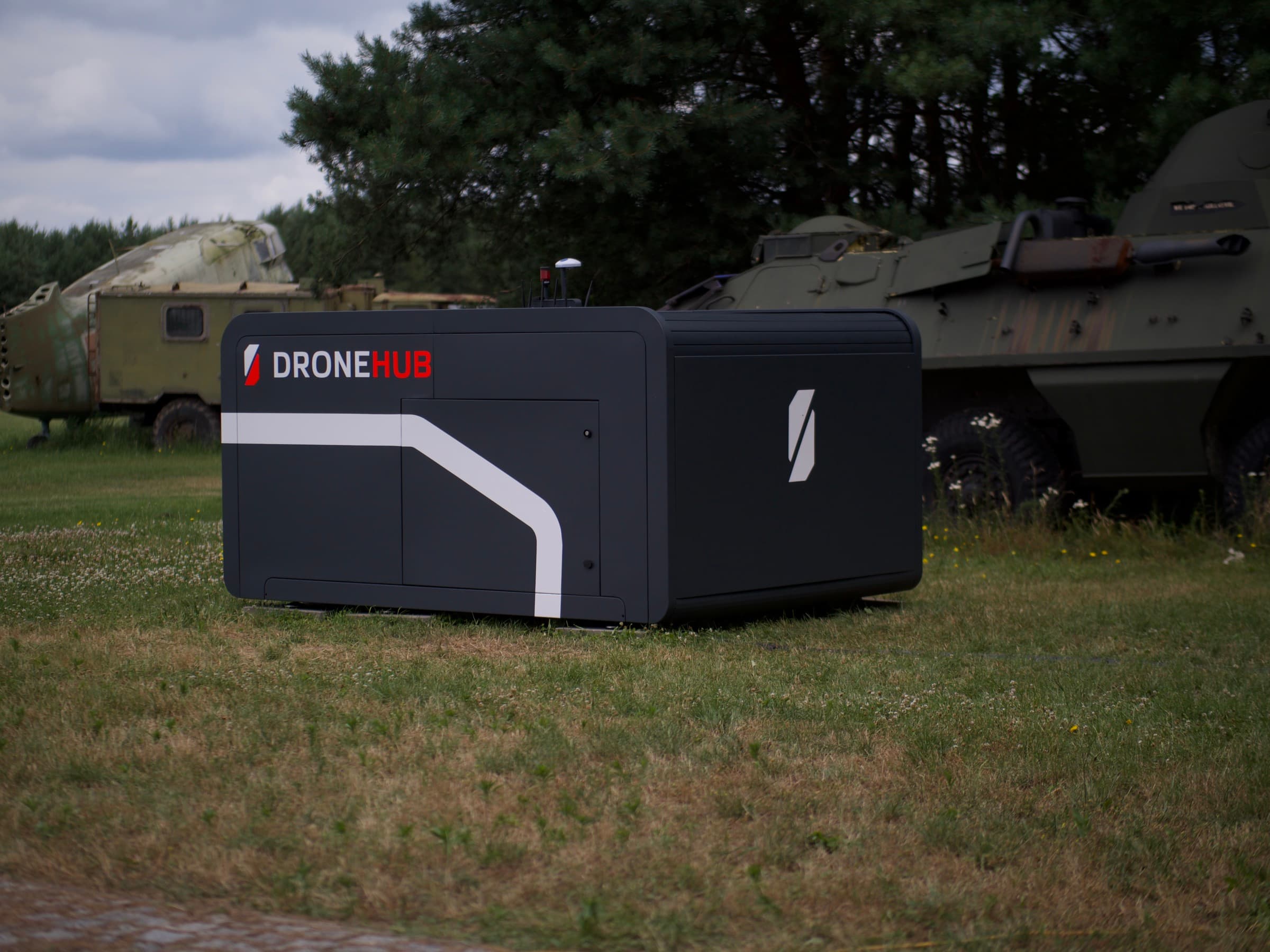
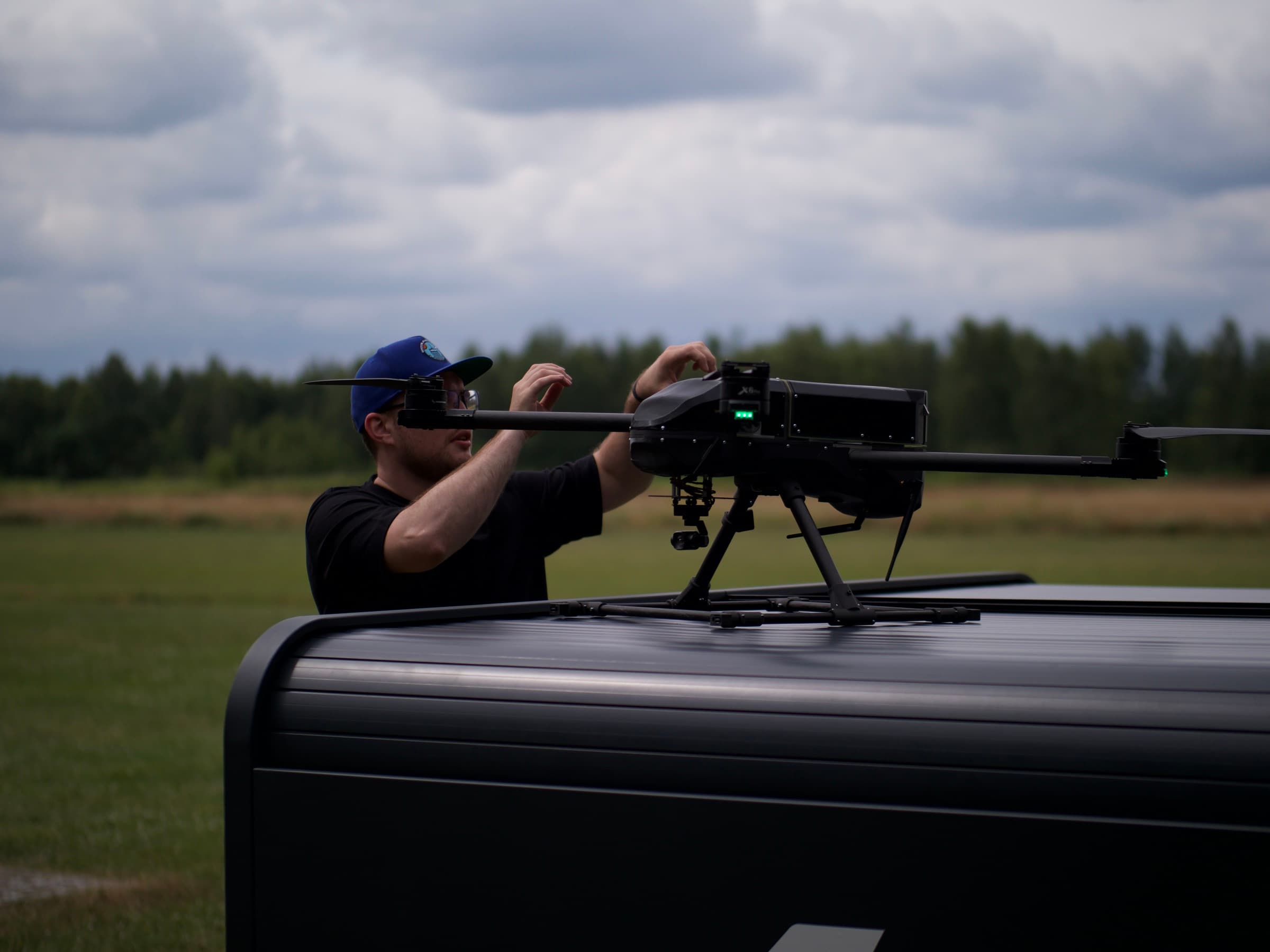
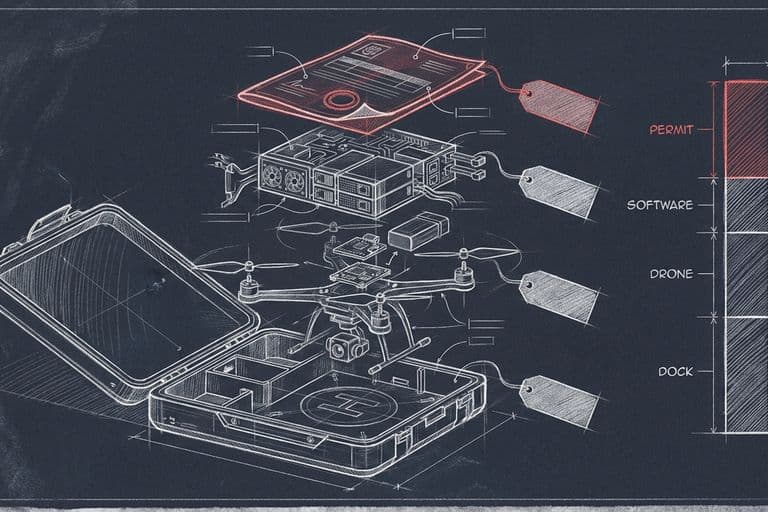
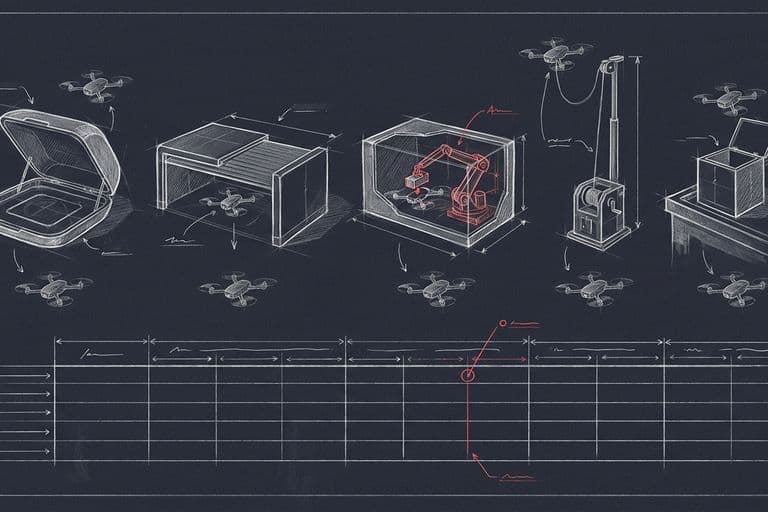
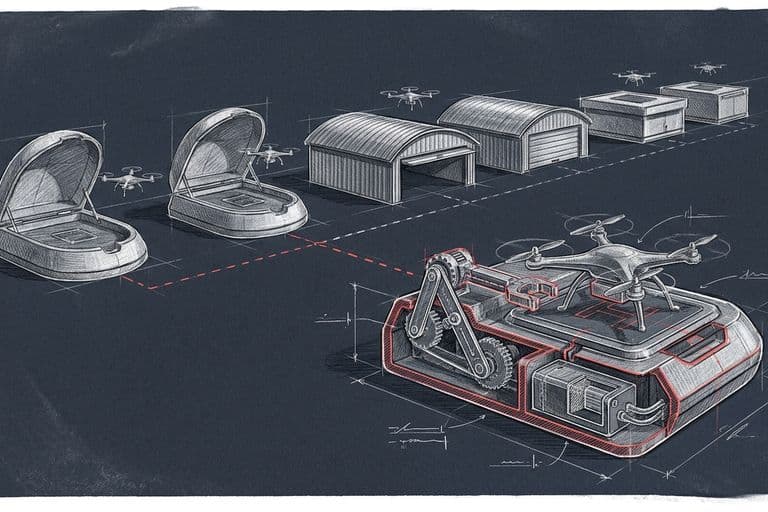
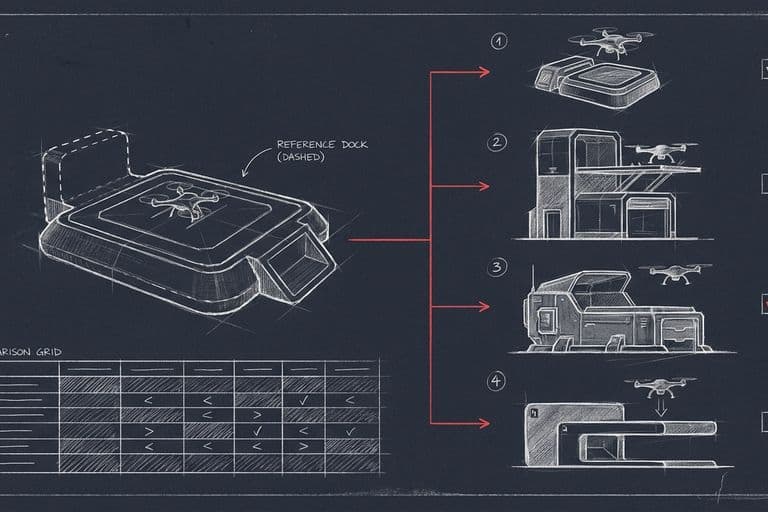
- A drone-in-a-box is an autonomous deployment system: an aircraft, a ground docking station, and an analytics layer designed as one. The drone launches on its own, flies the mission, returns to the dock, re-arms, and is staged for the next run — with no operator in the loop for each flight. The dock and the analytics layer are the parts that turn a drone into infrastructure that runs itself.
- What actually makes it autonomous — where does autonomy usually break?
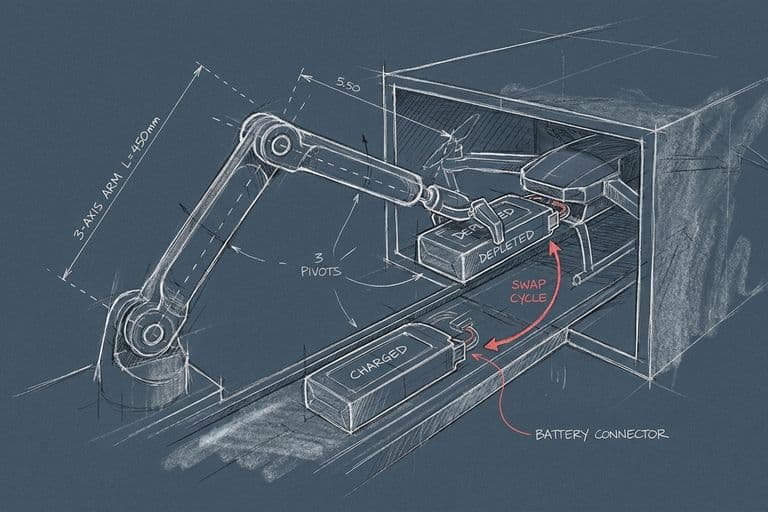
- Drones can fly themselves. Autonomy breaks at the ground: landing, charging, and redeployment. That is the infrastructure layer most systems neglect. Our approach closes that loop with a docking station and automatic battery-swap mechanism that re-arms the drone in roughly two minutes, so no operator is needed per flight and the system can sustain near-continuous operation instead of stalling on a charge cycle.
- What does Dronehub actually provide here?
- The infrastructure IP and the analytics layer — the docking and battery-swap design, the autonomy that closes the land-charge-redeploy loop, and the AI anomaly-detection stack — not a finished product you buy off a shelf. Dronehub provides the engineered foundation an operator builds an operation on, which is why it can be licensed as IP rather than only delivered as hardware.
- What is a drone-in-a-box best suited for?
- Linear infrastructure — rail corridors, pipelines, and power lines — where the asset length outpaces the inspector count, and fixed sites that need near-continuous coverage such as energy substations, perimeters, ports, and industrial facilities. The pattern fits anywhere the cost of repeated inspection, or the cost of a missed defect, justifies an autonomous standing capability over scheduled manual sweeps.
- How do operators get a drone-in-a-box from Dronehub?
- By licensing the IP or entering an R&D partnership, then building the operation on top of it. License the patent-pending docking, autonomy, and analytics design to ship under your own brand and contracts, or co-develop a mission-specific variant adapted to your asset class, environment, and data requirements — including as a US small-business prime, an EU consortium partner, or a technical sub under your prime.