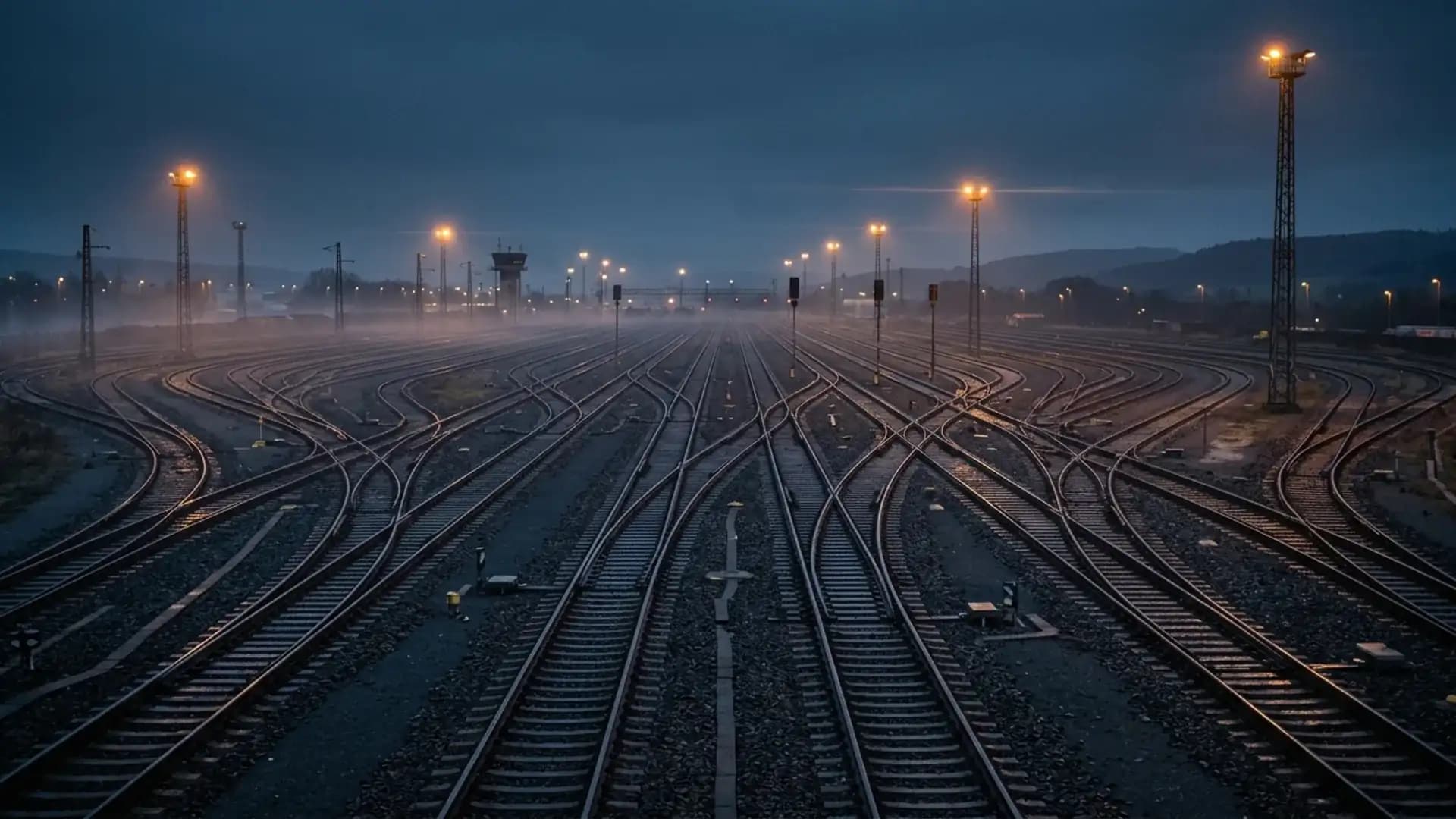
Inspect what humans
can't keep up with.
AI per-fastener defect detection above 95% accuracy. Reports inside 15 minutes. 24/7 availability by design. Proven on Germany's 33,000-kilometre Deutsche Bahn rail network — with up to $500M in modelled annual savings at full coverage.
In plain English
What is autonomous rail inspection?
Autonomous rail inspection means scheduled drone flights over a rail network — typically nightly, in dark and poor weather — capturing imagery of track geometry, fasteners, ballast, overhead lines, and switches. AI on the drone or in the operator's cloud identifies defects automatically and routes them to maintenance within minutes.
The legacy model is calendar-based: a crew walks a section every N weeks and logs visual observations on paper. Autonomous rail inspection is condition-based: 95%+ defect-detection accuracy, reports inside 15 minutes, 24/7 availability by design. Dronehub's Deutsche Bahn deployment on Germany's 33,000-km network is the at-scale proof.
Why rail
Twenty thousand kilometres of track. Three shifts a day. One pair of eyes per crew.
Rail networks at national scale are inspected by human crews walking the line. Skilled but expensive, limited to daylight, scheduled in calendar blocks, and statistically guaranteed to miss defects: an inspector's attention measurably degrades after about twenty minutes of continuous concentration. After kilometre twelve, you're no longer inspecting — you're just walking.
The cost compounds upward every year: labour inflation, shrinking workforce, hour-cap regulation, mandatory rest periods. A railway operator doesn't have an inspection problem so much as it has an inspection-cost problem — and a quietly accumulating safety problem behind it. The job needs a different kind of worker: one that can fly, pay attention to every rivet for 100 kilometres, generate an audit-grade report in 15 minutes, and run again at 03:00.
What it does
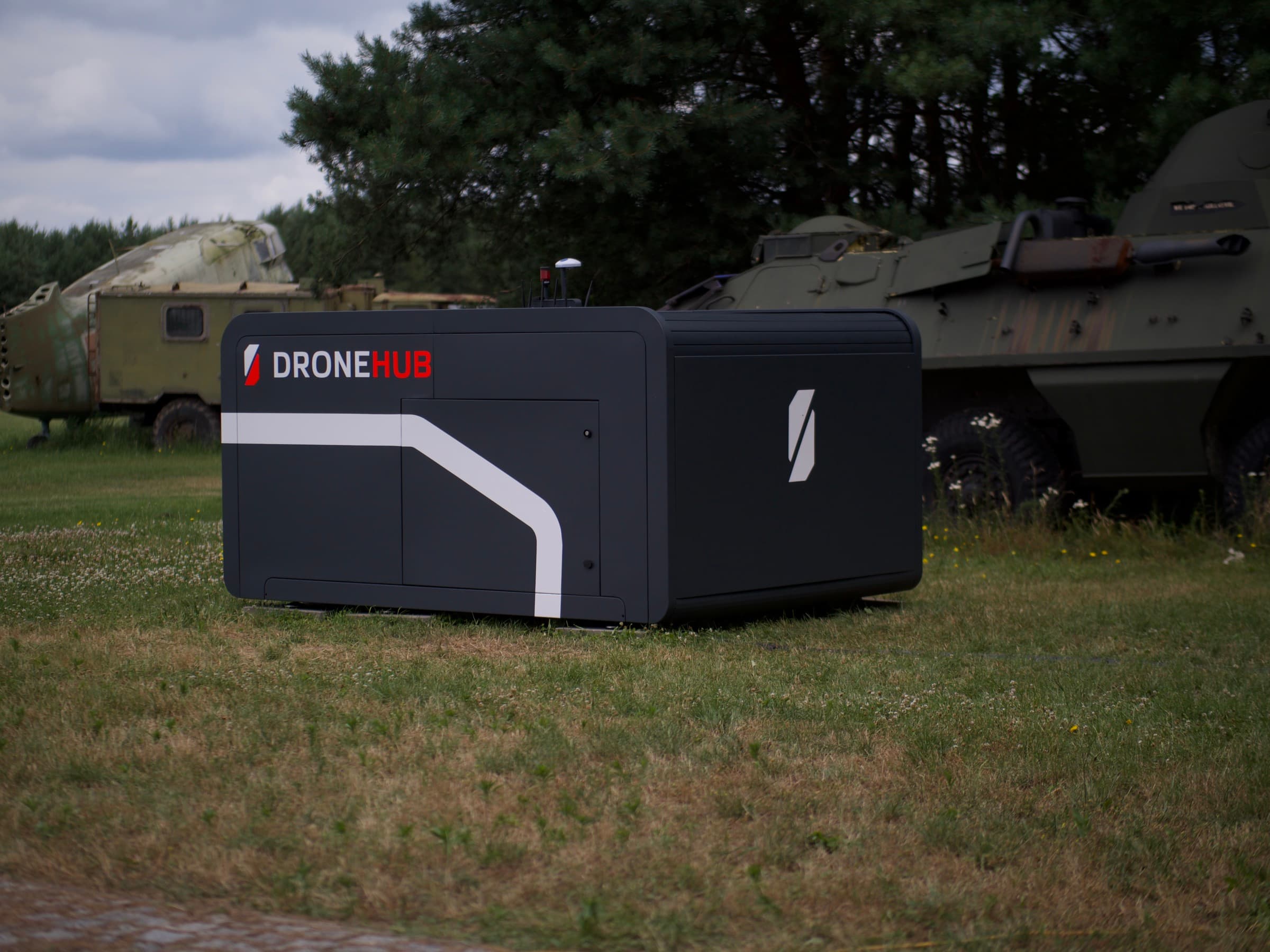
Four capabilities, deployed on Germany's national rail network.
The Sentinel platform — our in-house AI stack — and the drone-in-a-box hardware that ran the Deutsche Bahn pilot together deliver the four capabilities below. The same stack re-deploys on any rail network with similar geometry.
Per-fastener anomaly detection
Count and verify every bolt, screw, and spring clip on every joint. Loose, missing, or rotated elements invisible from a moving train cab — and easy to miss on a hurried foot inspection — get flagged automatically with location pin and confidence score.
Obstacle and foreign-object triage
Branches, debris, dropped cargo, even dummy ordnance. The system identifies what's on the track within minutes of an alert, so dispatchers know whether to halt traffic for hours or wave it through after a 30-second visual confirmation.
Longitudinal digital twin
Every flight feeds a longitudinal dataset that lets operations plan maintenance against the actual rate of degradation, not against a fixed inspection calendar. Crack growth, ballast displacement, vegetation encroachment — tracked frame over frame.
15-minute reports, 24/7 availability
First-pass classification on the drone's Nvidia edge compute. Only frames warranting human review hit the cloud. Operators see anomalies, not raw video — and reduces analyst load by orders of magnitude versus traditional CCTV-style monitoring.
The hardware
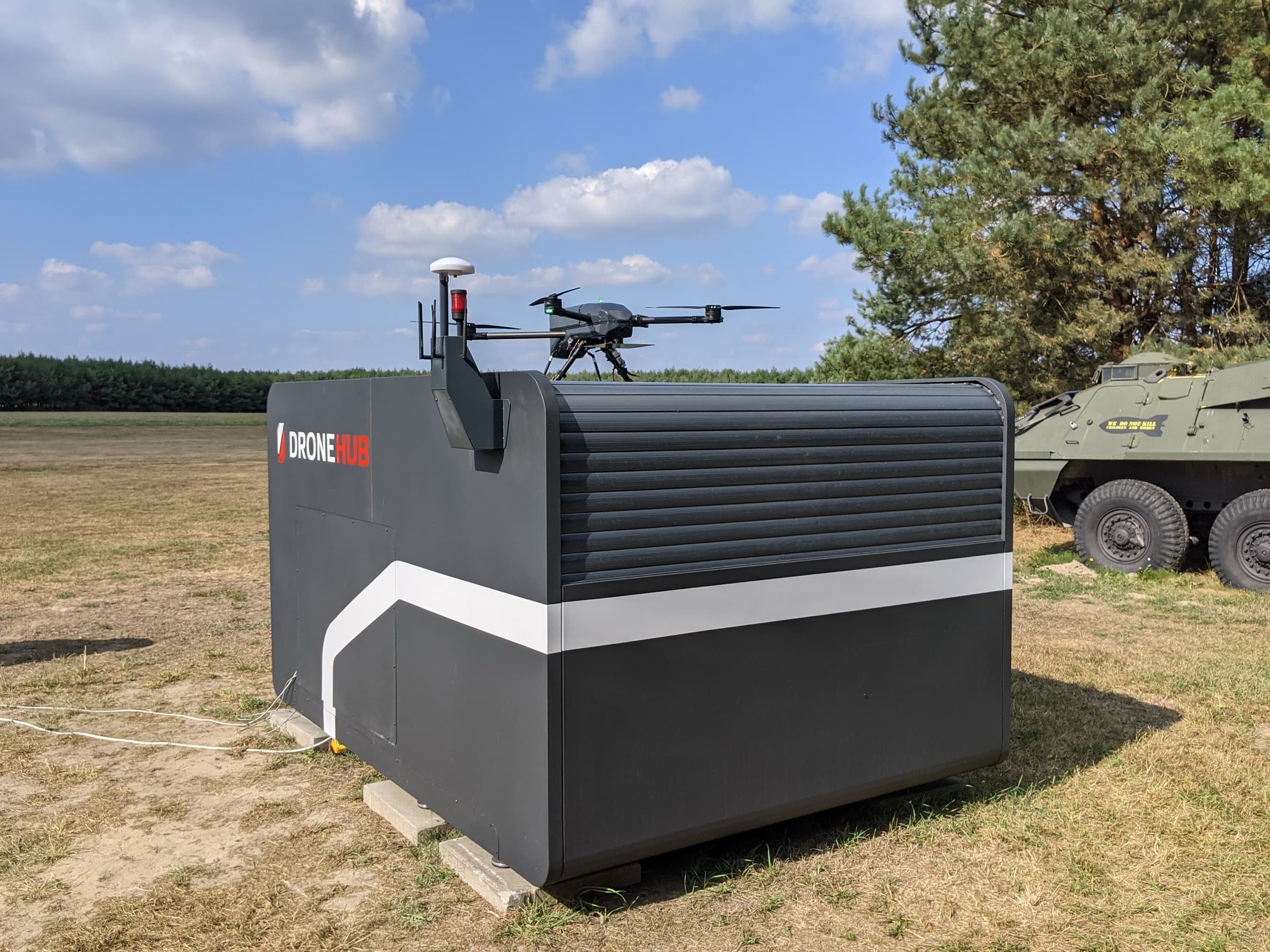
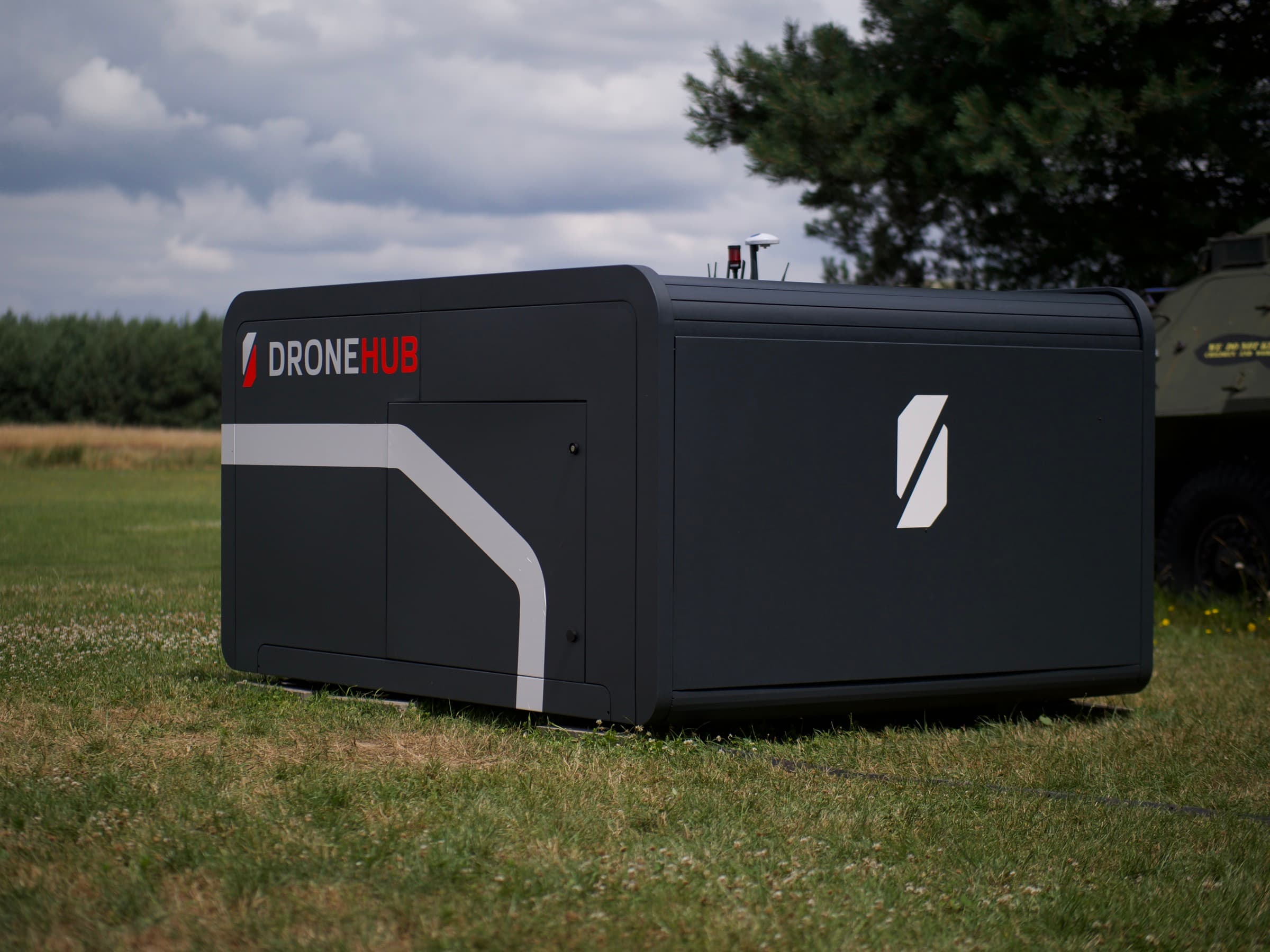
The drone-in-a-box that runs the sweep.
A stationary autonomous dock houses, charges, and launches the inspection drone — deployed trackside, it flies on schedule without a crew on site.
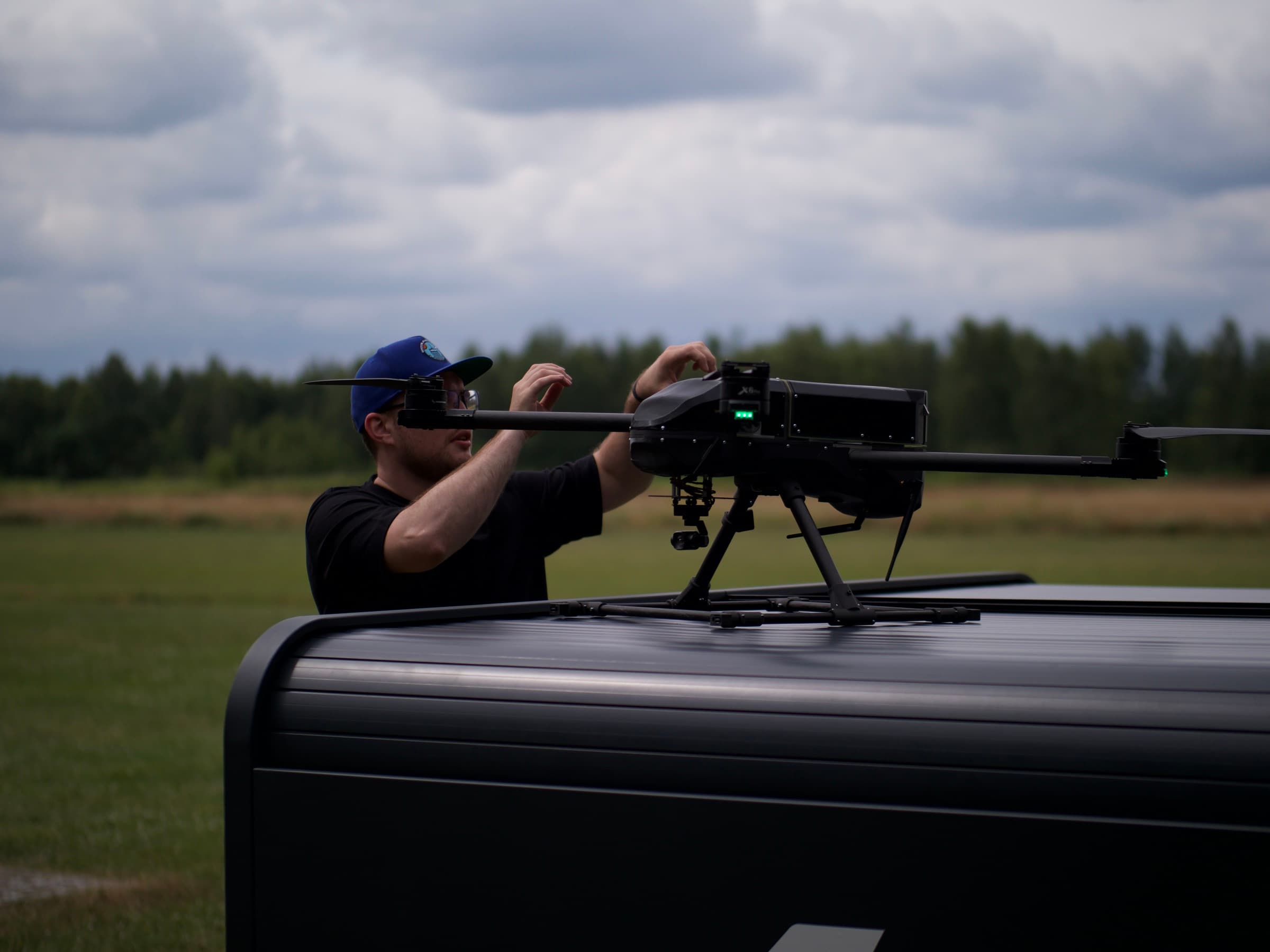
Flagship reference
Deutsche Bahn — the validation that the AI stack works at national scale.
Germany's 33,000-kilometre rail network. AI-driven per-fastener defect detection above 95% accuracy. Reports inside 15 minutes. 24/7 availability by design. Up to $500M in modelled annual savings at full network coverage. The measurements are documented; the technology is licensable.
Where it fits
Three rail asset classes where this stack pays back fast.
National-scale rail networks
Heavy-rail operators with thousands of kilometres of track and inspection backlogs that grow faster than the patrol crew. Replace calendar-based inspection with continuous AI-driven sweeps — Deutsche Bahn is the reference deployment.
Light rail, metro, suburban
Commuter rail networks where service density makes ground inspection difficult to schedule. The drone sweeps overnight, the report is ready before first train, the operator UI integrates with existing track-condition databases.
Freight corridors and ports
Long-distance freight corridors, terminal yards, port-rail interfaces. Persistent overwatch for security, vegetation control, and condition monitoring — high asset-density geography where inspection cost compounds fast.
Next move
Bring us the network. We'll bring the deployment plan and the indicative ROI horizon.
Tell us the kilometre count, the inspection cadence, the terrain, and the existing condition-monitoring stack — we'll come back with a fit, a phasing plan for pilot → segment → network, and the engagement structure that matches.
FAQ
Drone rail inspection — frequently asked
What is autonomous drone rail inspection?
Drones autonomously capture the track and lineside infrastructure, and Dronehub's in-house AI flags defects, with per-fastener detection above 95% accuracy, reports inside 15 minutes, and 24/7 availability by design. It was proven on Germany's 33,000-km Deutsche Bahn network.
How accurate is the defect detection?
Per-fastener defect detection above 95% accuracy. The AI (Sentinel) is built and owned in-house — models, training pipeline, and anomaly taxonomy — which is what makes the capability licensable and the data path sovereign.
Can drone rail inspection scale to a national network?
The architecture is built for it: autonomous capture plus analytics-first processing, modelled at up to $500M in annual savings at full coverage of a national network. The structural fit — linear assets and a coverage-and-cadence mismatch human inspection cannot close — is what the Deutsche Bahn engagement demonstrates.
More on AI rail inspection
Browse all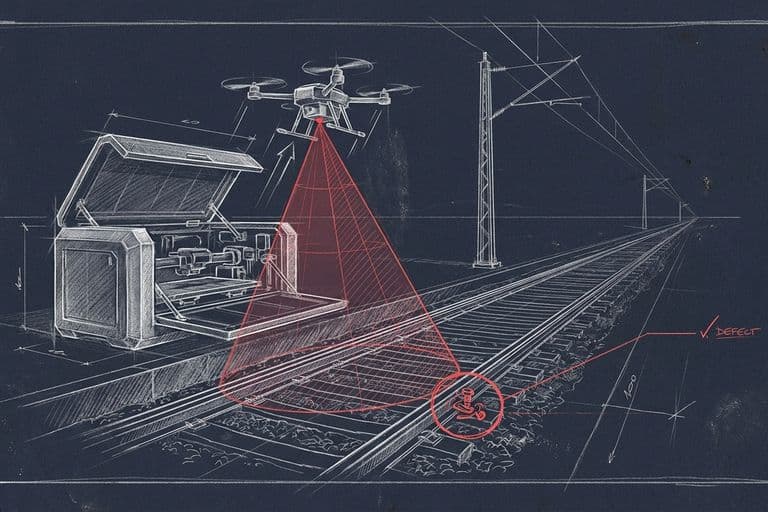 UPDATED · SEP 2026
Autonomous AI Rail Inspection — The Architecture
A grounded look at why autonomous drone-in-a-box infrastructure plus AI analytics fits rail track inspection, and where Dronehub's IP-and-partnership model applies — anchored by the announced Deutsche Bahn anomaly-detection engagement.
Read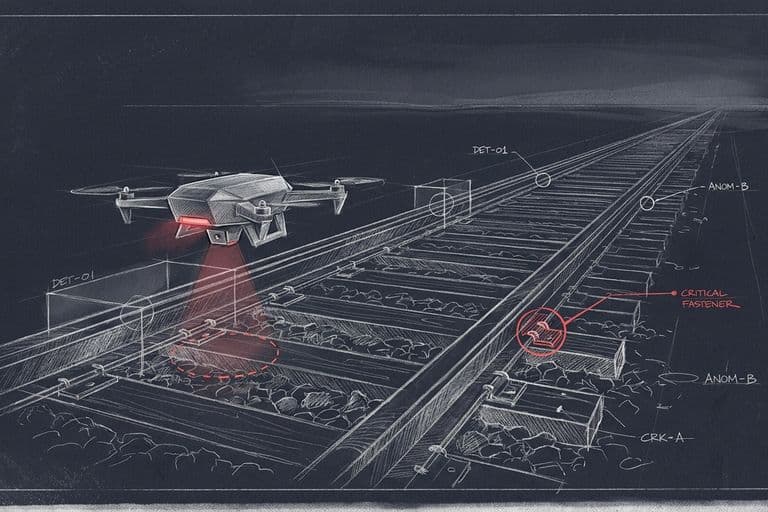 UPDATED · MAY 2026
AI Rail Inspection at Scale: Lessons From Deutsche Bahn
What Germany's 33,000-km Deutsche Bahn network taught us about AI rail inspection — accuracy, latency, sovereignty, and the operator handoff.
Read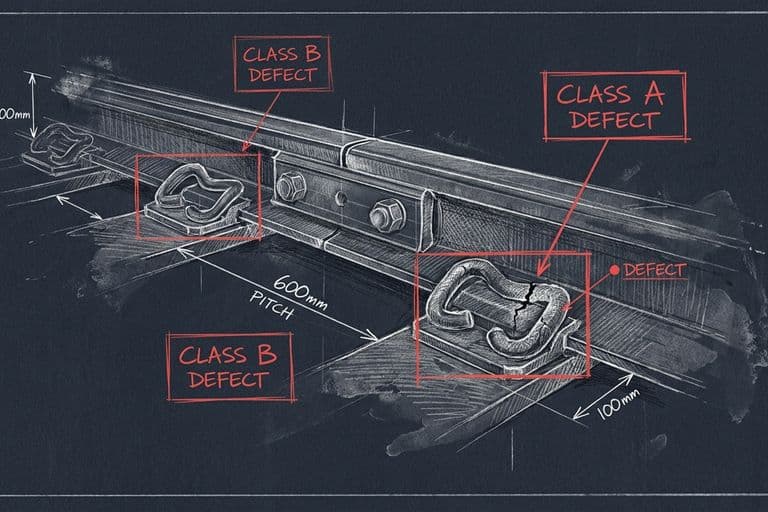 UPDATED · MAY 2026
Per-Fastener Defect Detection: From Spec to 95%+ Accuracy
The 95%+ per-fastener defect detection number at Deutsche Bahn scale. What it measures, how it was achieved, and where the next gains come from.
Read