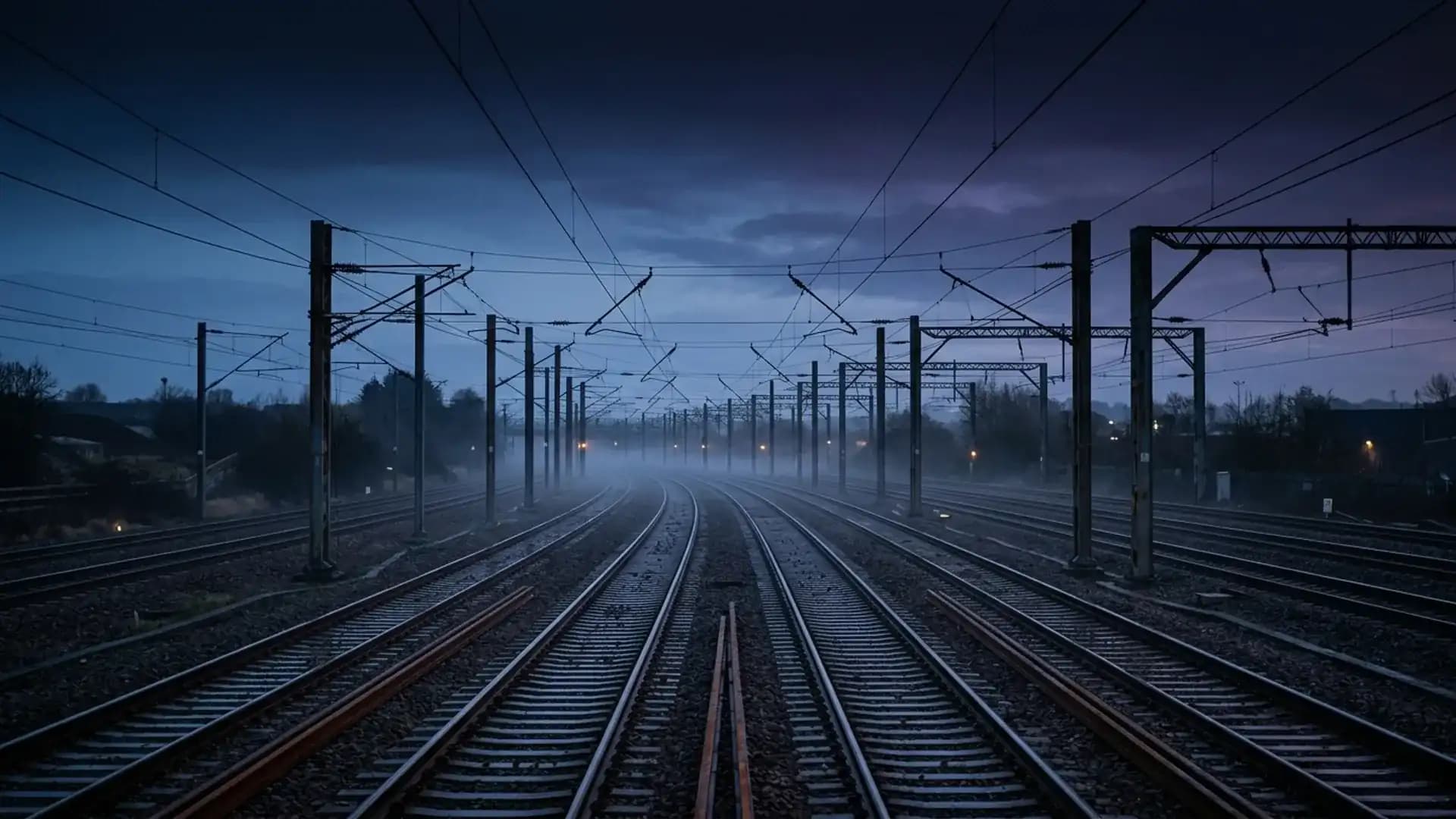
Deutsche Bahn
Our autonomous drone-in-a-box plus in-house AI anomaly detection — deployed on Germany's national rail network and measured against thousands of human-hour inspection cycles. Per-fastener accuracy above 95%. Reports inside 15 minutes. The flagship validation of the Dronehub autonomous infrastructure stack — and the reason we can tell US programmes our AI is real, not a slide.
- Client
- Deutsche Bahn
- Domain
- Critical rail infrastructure
- AI accuracy
- 95%+ on critical defects
- Report latency
- ≤15 minutes post-flight
- Coverage
- ~20 km per drone, per mission
- Availability
- 24 / 7 / 365 by design
- First deployed
- 2023
- Data sovereignty
- EU + US only

Headline impact
Up to $500M in modelled annual savings — by removing the inspection bottleneck.
Traditional rail inspection is the textbook OPEX problem: rising labour costs, finite human attention, calendar-bound coverage, and a years-long backlog of small defects that eventually compound into expensive emergency repairs. The Dronehub stack flips the model — converting a recurring people cost into a fixed capital footprint that runs 24/7 and scales with software, not headcount.
For Deutsche Bahn — Germany's national rail operator, with roughly 33,000 kilometres of track and one of the densest networks in Europe — the savings model has three compounding sources: removed inspection labour, prevented emergency repairs, and reduced train-delay penalties. The $500M figure is the upper envelope at full network coverage, grounded in the per-segment metrics measured during the pilot.
The problem
Twenty thousand kilometres of track, three shifts a day, one pair of eyes per crew.
Rail networks at national scale are inspected by human crews walking the line. The crews are skilled but expensive, limited to daylight, scheduled in calendar blocks, and statistically guaranteed to miss defects: an inspector's attention measurably degrades after about 20 minutes of continuous concentration. After kilometre 12, you're no longer inspecting — you're just walking.
The result is a two-speed system. Inspectors catch the obvious — a missing rail, a snapped clip on the section they happen to look at carefully. They miss the subtle — the half-rotated bolt that becomes a derailment in six months, the ballast slump that turns into a washout in the next rainstorm.
And the cost compounds upward every year: labour inflation, shrinking workforce, hour-cap regulation, mandatory rest periods. The math gets worse, not better. A railway operator doesn't have an inspection problem so much as it has an inspection-cost problem — and a quietly accumulating safety problem behind it.
The job needs a different kind of worker: one that can fly, pay attention to every rivet for 100 kilometres straight, generate an audit-grade report in 15 minutes, and run again tomorrow at 03:00.
The AI stack
We didn't buy the AI. We trained it.
The Sentinel platform is built and operated in-house. Models, training pipeline, inference infrastructure, anomaly taxonomy, and the operator UI — all developed by our team against the specific failure modes that rail operators care about. That ownership is why the IP is licensable, the model is improvable against your network, and the data path is sovereign by design.
Trained on hundreds of thousands of rail images
Our models — branded Sentinel internally — were trained on a proprietary corpus of rail-infrastructure imagery captured during the Deutsche Bahn rollout. The training set covers every common joint type, fastener pattern, ballast condition, and degradation mode encountered on a national-scale European network.
Per-fastener anomaly detection
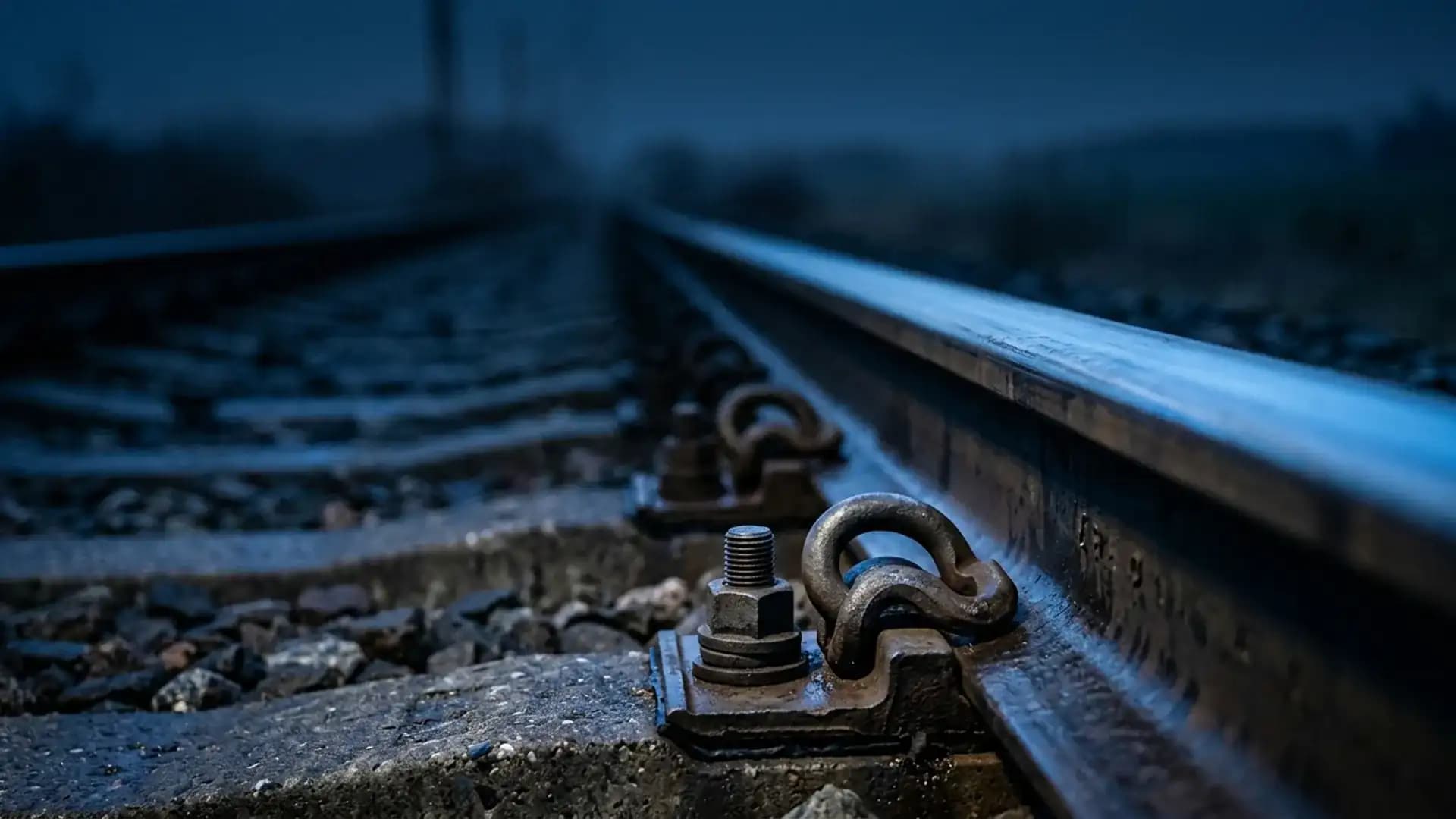
The system counts and verifies every bolt, screw, and spring clip on every joint. Loose, missing, or rotated elements that are invisible from a moving train cab — and easy to miss on a hurried foot inspection — are flagged automatically with location pin and confidence score.
Foreign-object and obstacle triage
Branches, debris, dropped cargo, even dummy ordnance — the system identifies what's on the track within minutes of an alert, so dispatchers know whether to halt traffic for hours or wave it through after a 30-second visual confirmation.
Digital twin of the line
Every flight feeds a longitudinal dataset that lets operations plan maintenance against the actual rate of degradation, not against a fixed inspection calendar. Crack growth, ballast displacement, vegetation encroachment — all tracked frame-over-frame.
How it actually runs
Four operational pillars that make the AI work in the field.
A great model is useless if the drone is grounded charging, the data sits in a queue, or the network can't respond to a real-time alert. The pillars below are what closes the loop between a defect existing and a dispatcher acting on it.
Continuous availability
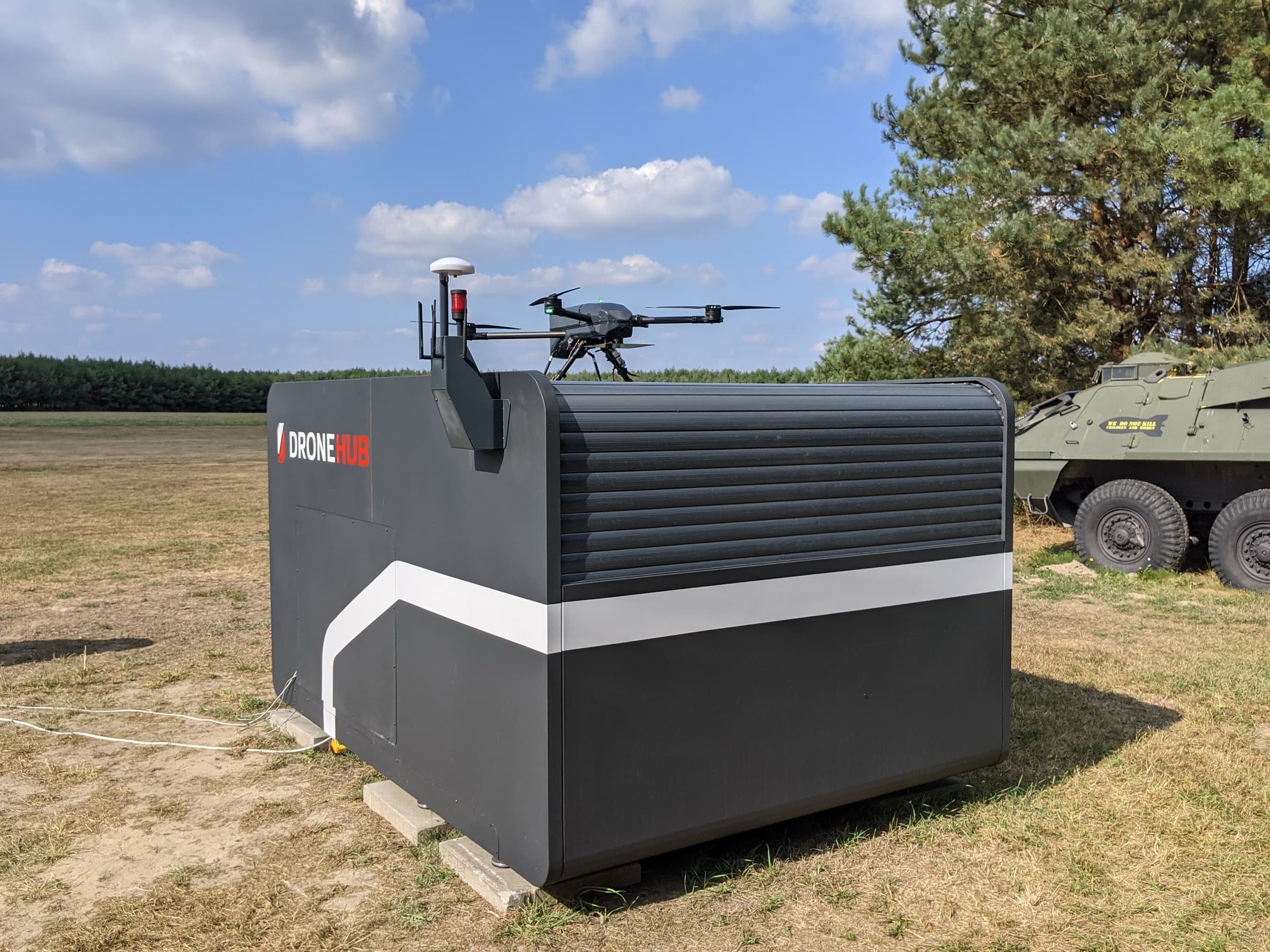
Robotic battery swap inside the dock takes 2 minutes — versus the roughly 20–35 minutes a drone-in-a-box that charges in place spends on the pad. One drone can run mission after mission, holding near-persistent surveillance across its assigned 20-kilometer corridor.
On-demand mission triggers
Three trigger modes operate in parallel: scheduled patrols against the inspection calendar, randomized prevention patrols, and on-demand response to dispatcher alerts (radio-stop, severe weather, intrusion sensor, third-party signal).
Edge + cloud split
First-pass classification runs on the drone's Nvidia compute. Only frames that warrant human review hit the cloud — operators see anomalies, not raw video. Reduces analyst load by orders of magnitude versus traditional CCTV-style monitoring.
Sovereign data path
Every image, every detection, every audit log stays inside EU and US infrastructure. No hyperscaler dependency, no foreign-jurisdiction telemetry — a non-negotiable for any operator whose track carries dual-use traffic.
The hardware
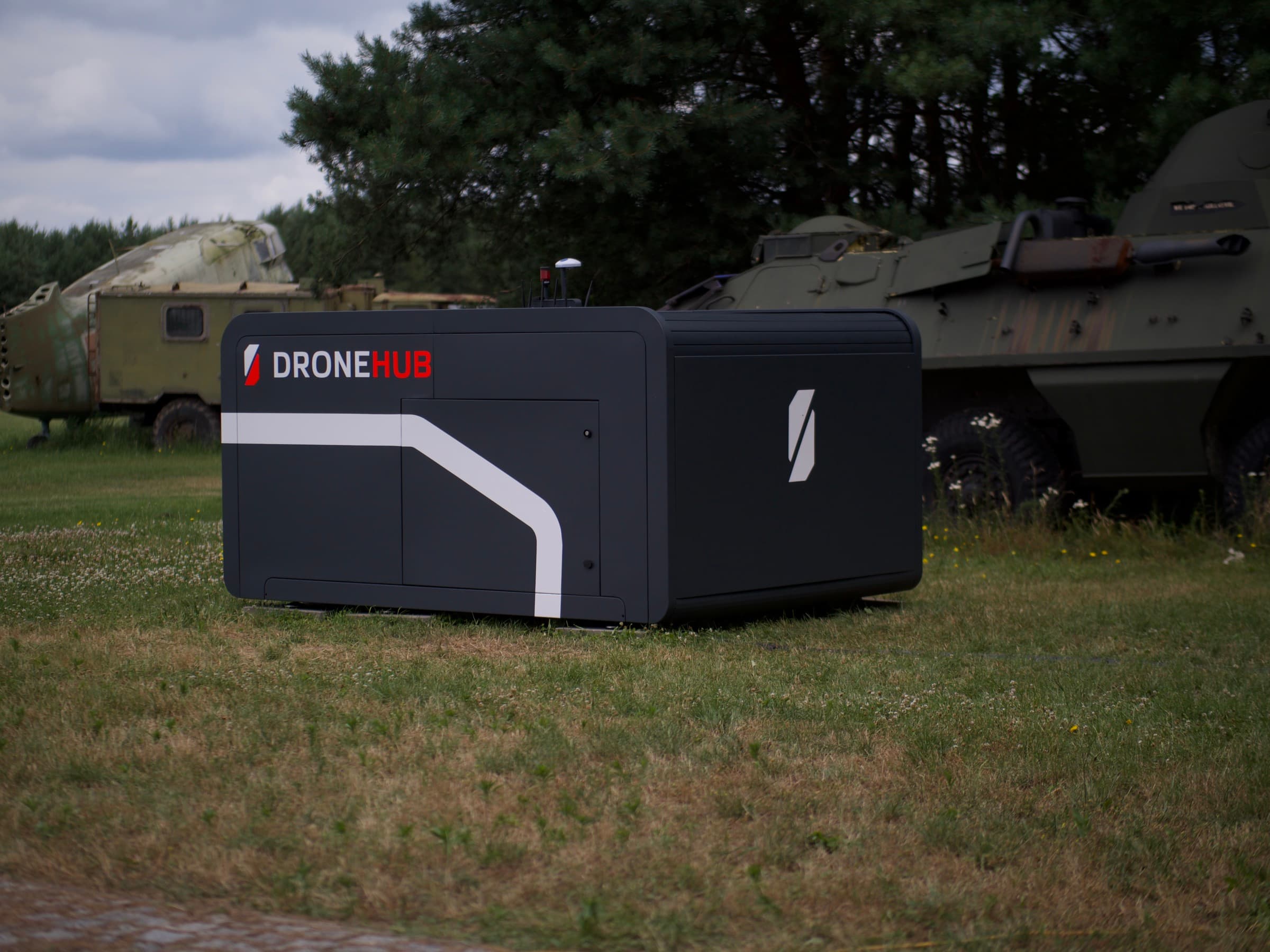
The drone-in-a-box that does the walking.
Dual-use significance
Commercial rail today. Critical infrastructure tomorrow.
The same AI that flags a loose fastener flags a planted obstacle. The same drone-in-a-box that runs nightly inspection patrols runs a sweep ahead of a military supply train. The same anomaly model that distinguishes corrosion from a fresh cut on a rail can also distinguish a normal trackside object from one that wasn't there yesterday.
That's what makes Deutsche Bahn the most important reference in the portfolio: a national-scale commercial deployment whose entire technology stack transfers directly to NATO eastern-flank rail protection, border-corridor surveillance, energy-grid monitoring, and any other critical-infrastructure use where the inspection cost is high and the cost of a missed defect is higher.
For US programmes evaluating dual-use AI infrastructure — SBIR, STTR, AFWERX, DIU — the Deutsche Bahn deployment answers the question “has your AI ever been validated on critical infrastructure at national scale?” Yes. On the densest rail network in Europe. With the measurements documented.
What this means for you
The stack that built this is licensable.
If you operate or fund a network where assets-to-inspect outpace people-to-inspect-them, the same stack adapts: pipelines, transmission lines, ports, airfields, sovereign borders, defense logistics corridors. The drone-in-a-box hardware, the Sentinel AI platform, the docking systems, the dispatcher integration — all available to license as building blocks for your programme, not as a turnkey black box.
FAQ
Deutsche Bahn programme — frequently asked
What is the Deutsche Bahn programme?
It is Dronehub's flagship AI rail-inspection engagement. Drones capture the track and lineside infrastructure, and Dronehub's in-house anomaly-detection AI flags defects. The headline performance figures are per-fastener detection above 95% accuracy with reports inside 15 minutes. It anchors the company's 'the AI is the product, not the airframe' thesis with a named, demanding counterparty.
Is the $500M figure a measured saving?
No. It is a modelled potential — an estimate of what AI-driven anomaly detection could be worth at the scale of a large national railway, not a reported or measured result. It illustrates the size of the opportunity, not a validated outcome.
Did Dronehub build the inspection AI itself?
Yes. The anomaly-detection stack (Sentinel) — models, training pipeline, inference infrastructure, anomaly taxonomy, and operator UI — is built and owned in-house rather than licensed from a third party. That ownership is what makes the IP licensable and the data path sovereign by design.
Can the same inspection capability be licensed for other networks?
Yes. The architecture is re-pointable across asset classes — rail fasteners, transmission-line insulators, pipeline corridors, port perimeters. Operators and integrators can license the IP and the analytics platform to deploy under their own brand and contracts.
Can the Deutsche Bahn AI inspection stack be applied to a high-voltage transmission grid like TenneT's?
Yes. The same autonomous capture plus anomaly-detection architecture re-points from rail fasteners to transmission-grid assets — insulators, conductors, pylons, and right-of-way vegetation. The relevant counterparties are the European transmission system operators (TSOs) such as TenneT, 50Hertz, and Amprion, where the inspection problem is the same linear-asset, coverage-and-cadence mismatch. The grid-operator framing lives on our energy and utilities page.
Does this prove national-scale deployment?
It should be read for exactly what it is — a significant engagement and a modelled potential, not proof that the system has been validated across an entire national network. The structural case (the coverage-and-cadence mismatch, the linear-asset fit, the analytics-first architecture) is strong; network-scale results are work to be earned in deployment.
From the blog
Browse all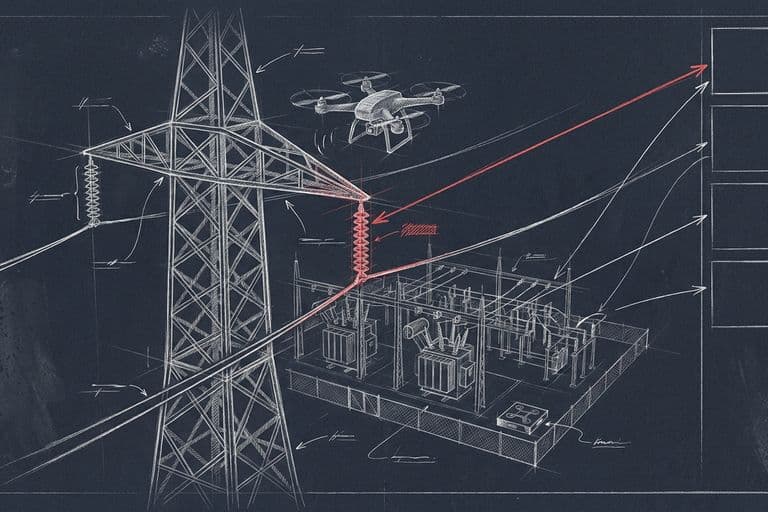 UPDATED · SEP 2026
AI Power-Line & Substation Inspection Compared: Software, Drones and Docks (2026)
AI power-line and substation inspection compared: analytics software, drones and docks, selection criteria, a side-by-side table and public pricing.
Read UPDATED · SEP 2026
What Drone-in-a-Box Costs in 2026: Dock, Drone, Software, Licence
Published 2026 drone-in-a-box prices: dock kits from under $5,000, DJI Dock 3 near $15,800, Skydio bundles to $58,000, plus software, installation and permits.
Read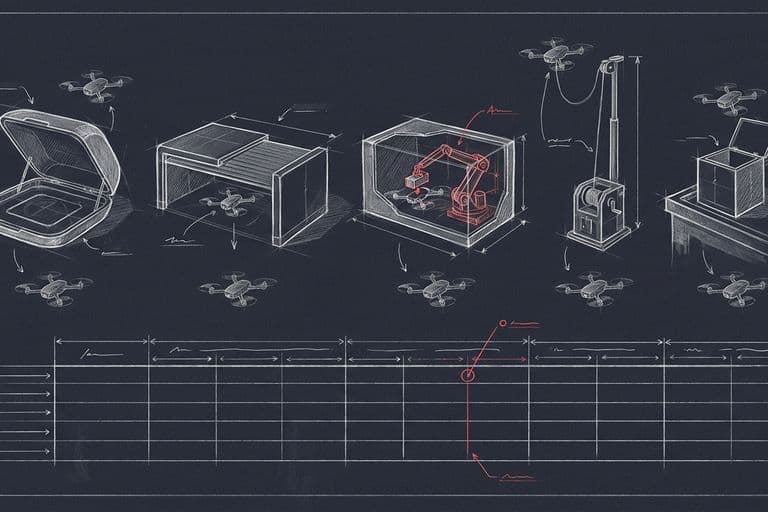 UPDATED · SEP 2026
Drone-in-a-Box Systems Compared 2026: 18 Docks for US and European Buyers
18 drone-in-a-box systems side by side, from Dronehub and Skydio to DJI — turnaround, weather rating, NDAA and Blue UAS status, where each is sold, and every public price we could verify.
Read