Back to home
Flagship product

Drone-in-a-Box
built for assets that don't sleep.

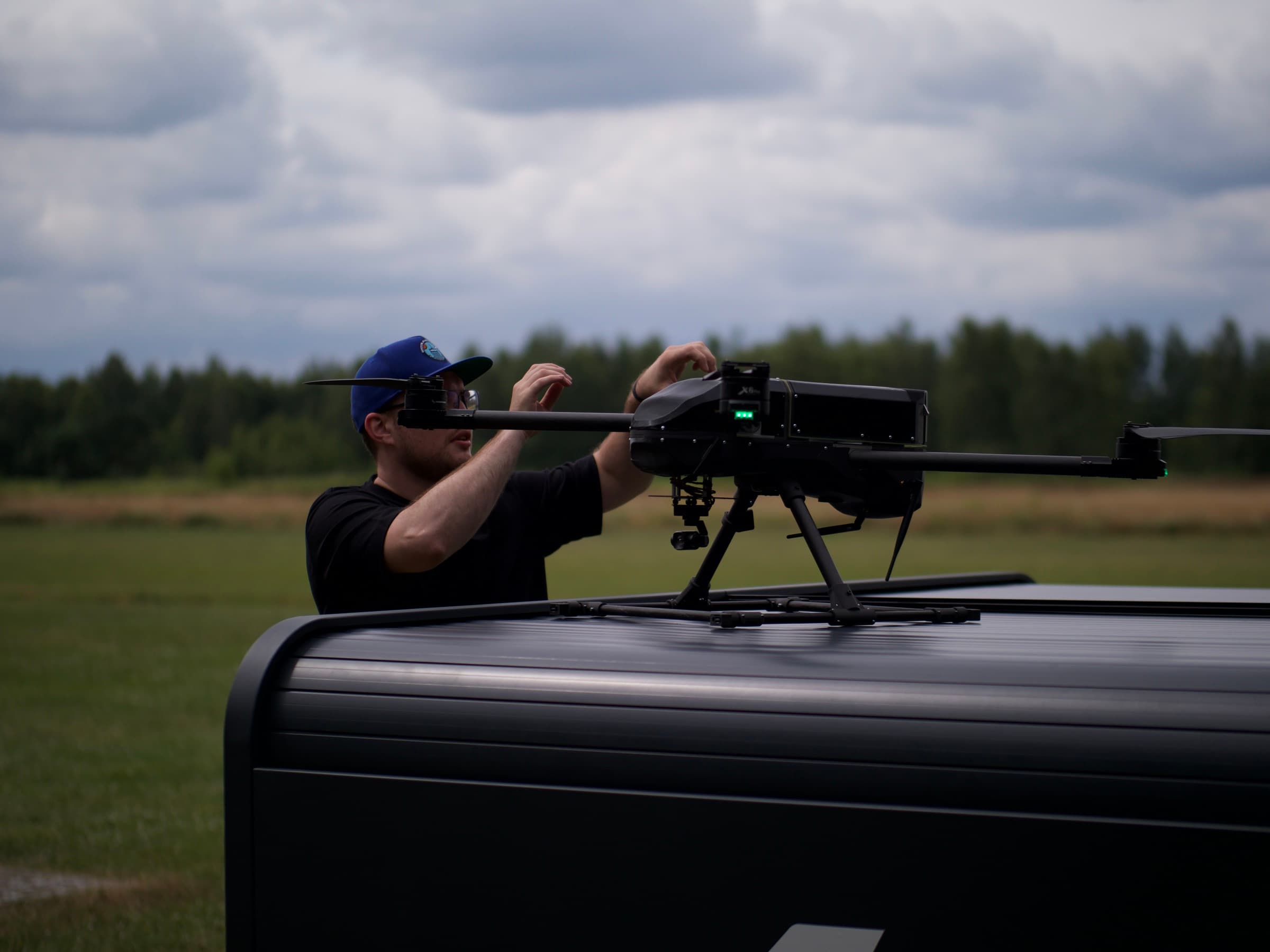
The autonomous drone-in-a-box that runs Deutsche Bahn's national-scale AI rail inspection. Robotic 2-minute battery swap (vs 40–60 minutes for competing systems). 24/7/365 by design. Nvidia edge compute, in-house AI anomaly detection (Halo Cloud), EU + US data sovereignty. Manufactured in our European factory.

Three ways to use it: buy the system outright, license the patent-pending IP and ship under your brand, or co-develop a mission-specific variant under SBIR/STTR or EU consortium funding.

In plain English

What is a drone-in-a-box?

A drone-in-a-box is an autonomous drone deployment system where the aircraft, charging infrastructure, and command logic are integrated into a fixed or mobile enclosure. The drone takes off on its own, completes its mission — inspection, surveillance, delivery — returns, lands, recharges or swaps battery, and is ready for the next mission, with no operator in the loop.

It is the difference between “owning drones” (which still requires a pilot, base station, and human dispatch for every flight) and “owning autonomous drone infrastructure” (which runs itself, 24/7, including the loop-close — landing, charging, re-arming). Drone Industry Insights names Dronehub a global category leader for this product class.

Headline specs

Battery swap
2 min
Robotic, inside the dock
Mission coverage
~20 km
Per drone, per mission
Report latency
≤15 min
Post-flight to operator
Availability
24 / 7
365 days, by design
Operating temp
−20 → +45 °C
All-weather outdoor
AI accuracy
95%+
On critical defects

What it is

Six engineered subsystems — designed together, shipped together, owned by us end-to-end.

The drone-in-a-box only delivers its promised availability when the hardware, the software, the AI, and the data path are designed as one system. That's why we built each layer ourselves — and why the platform is licensable as IP, not just as a finished product.

  • The dock

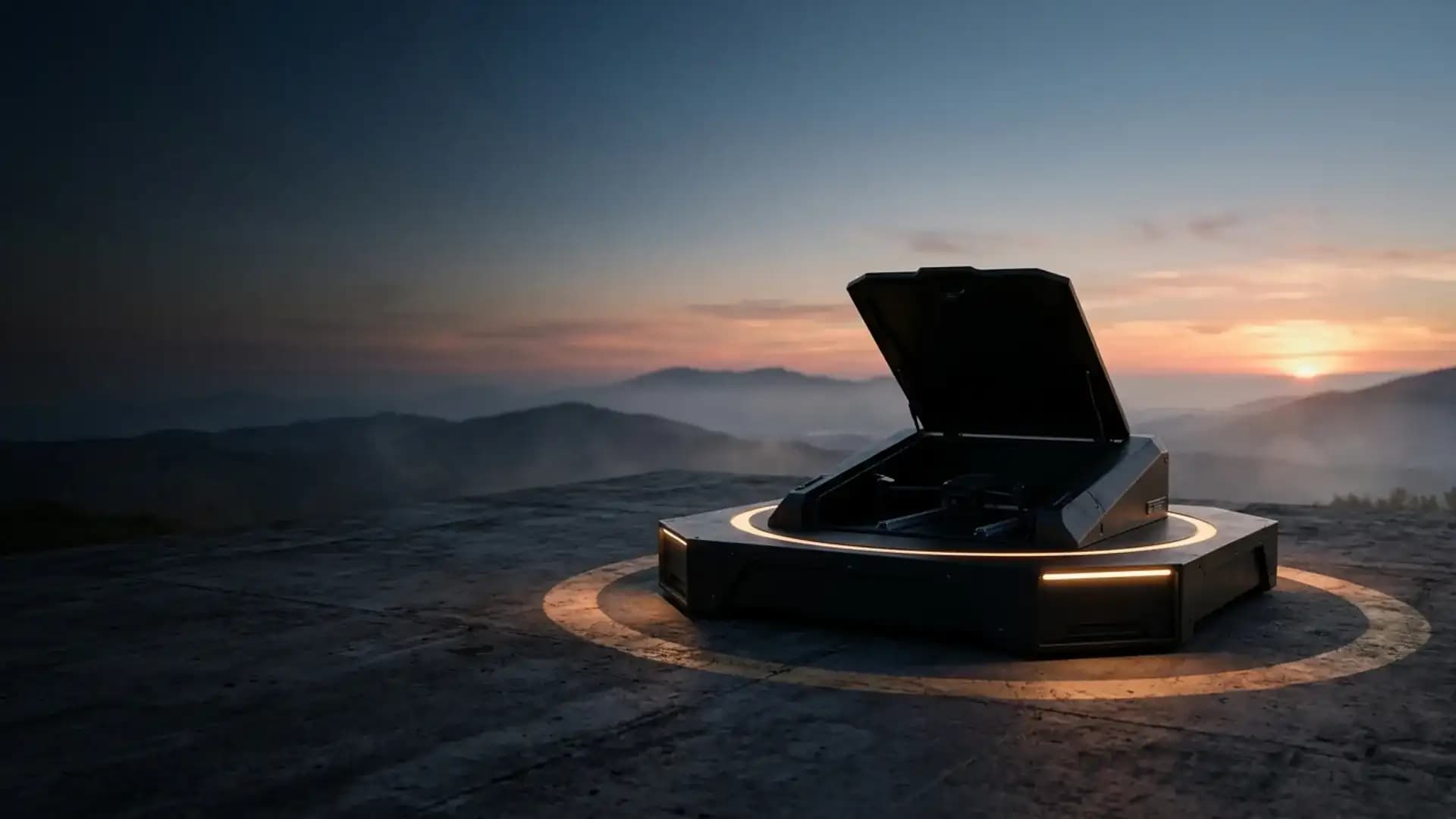
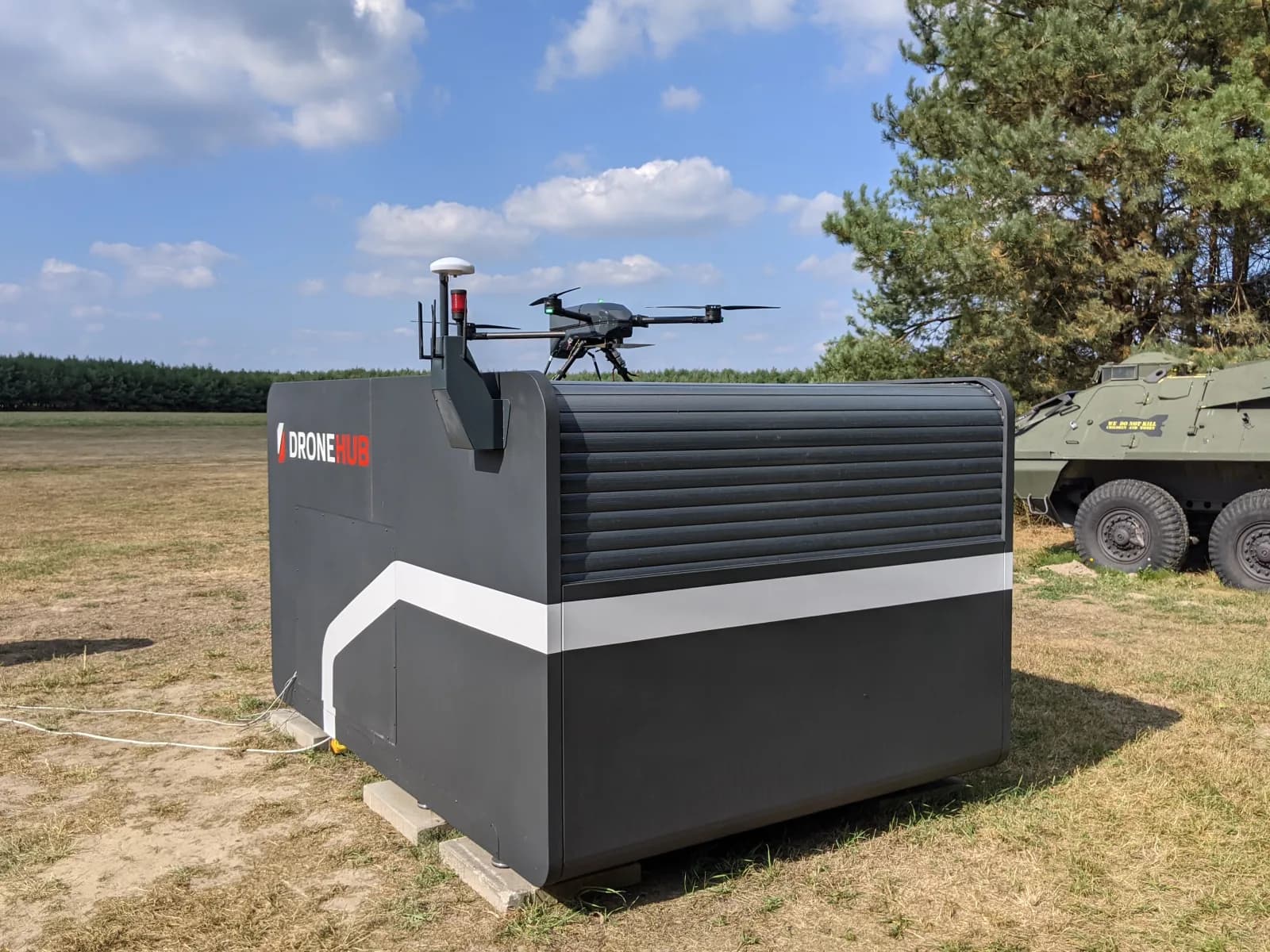
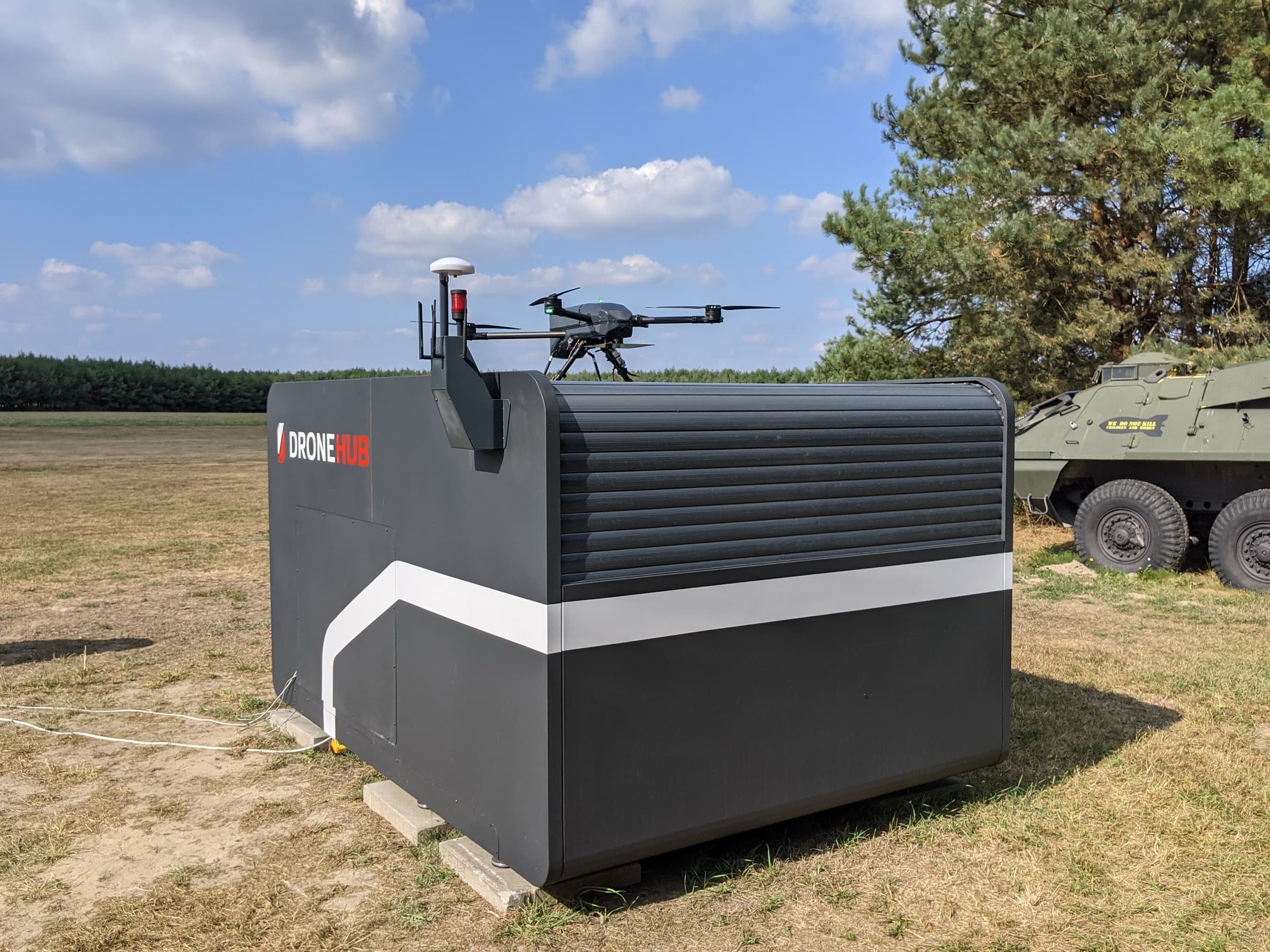
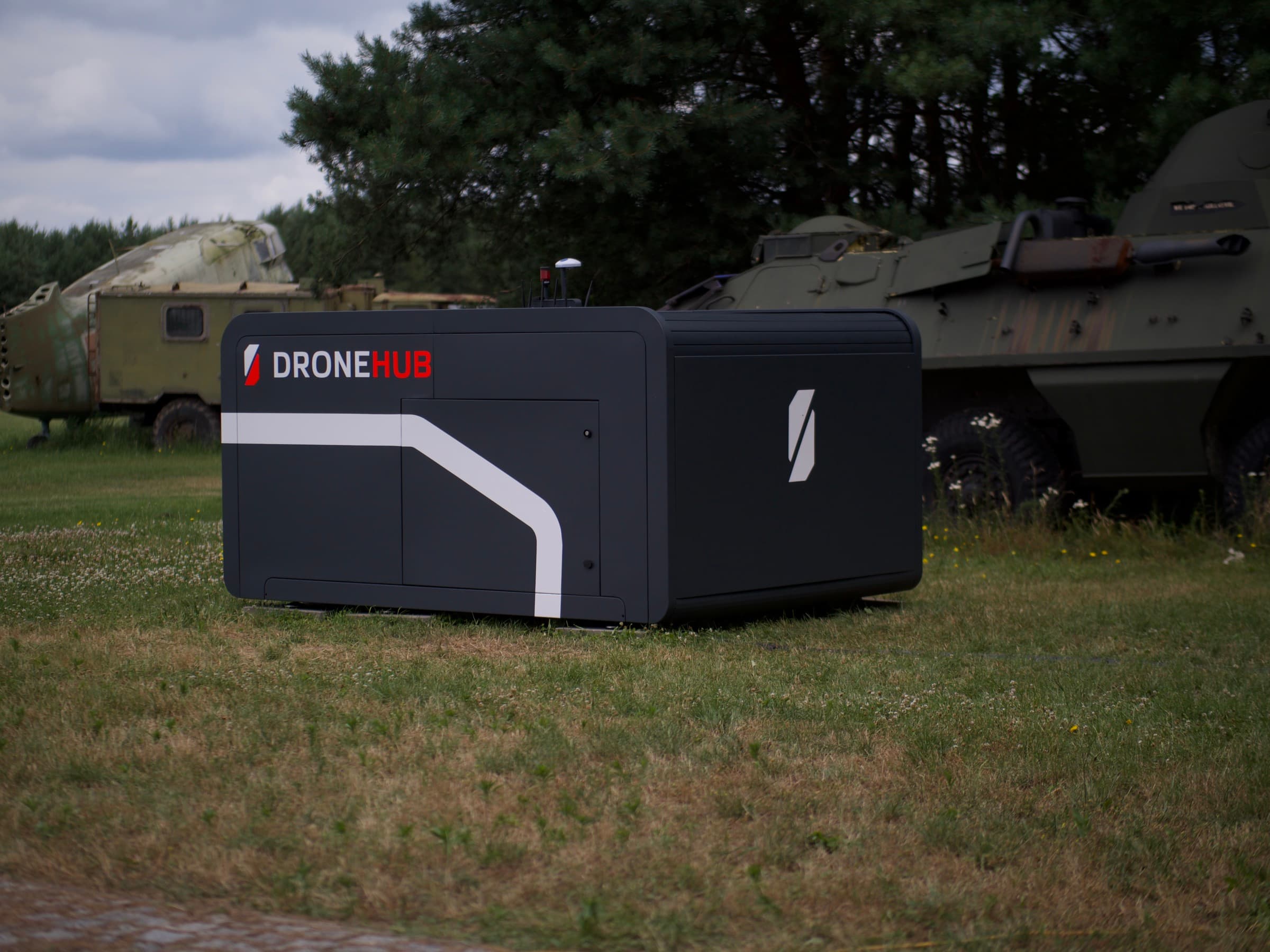
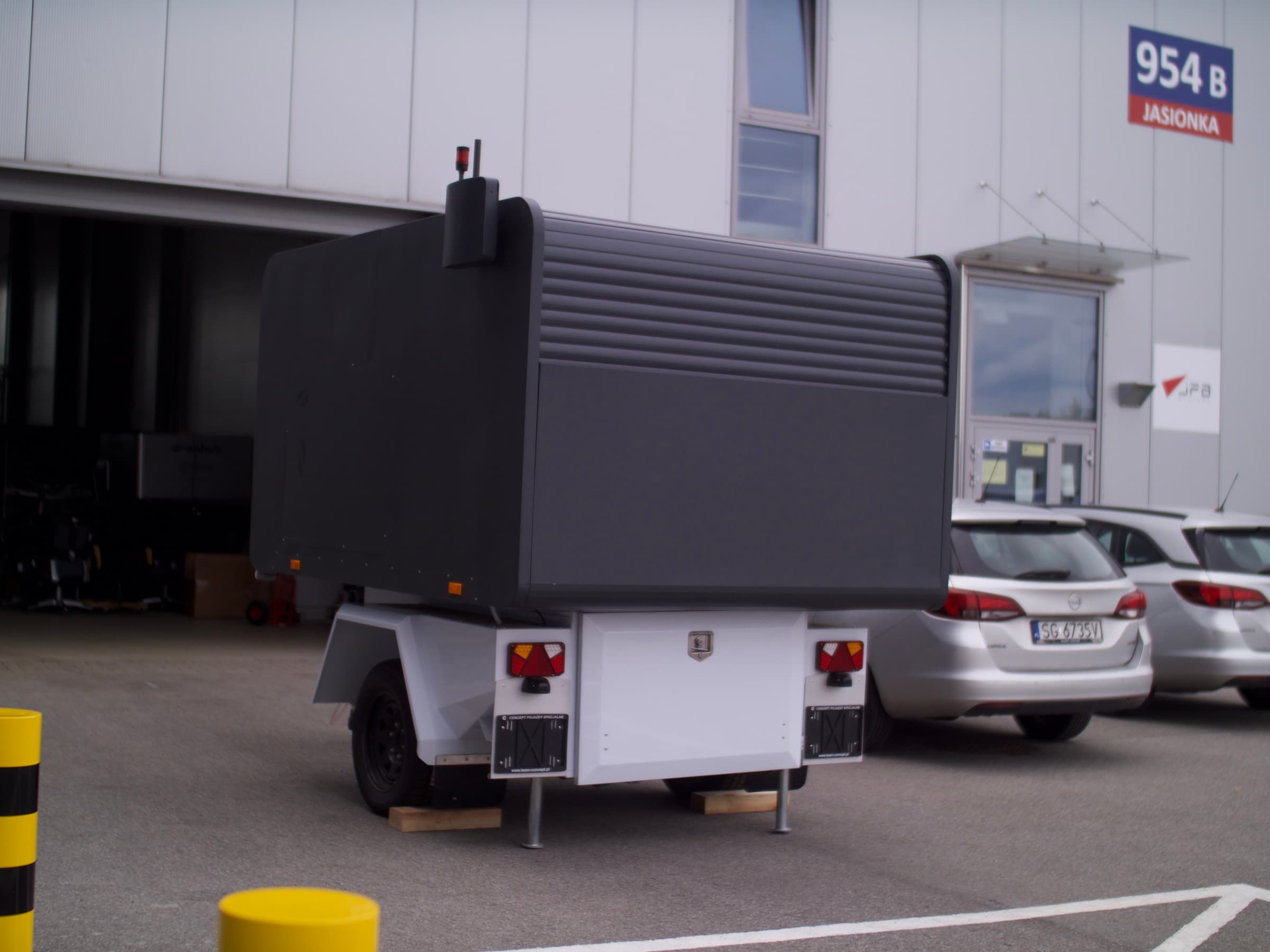
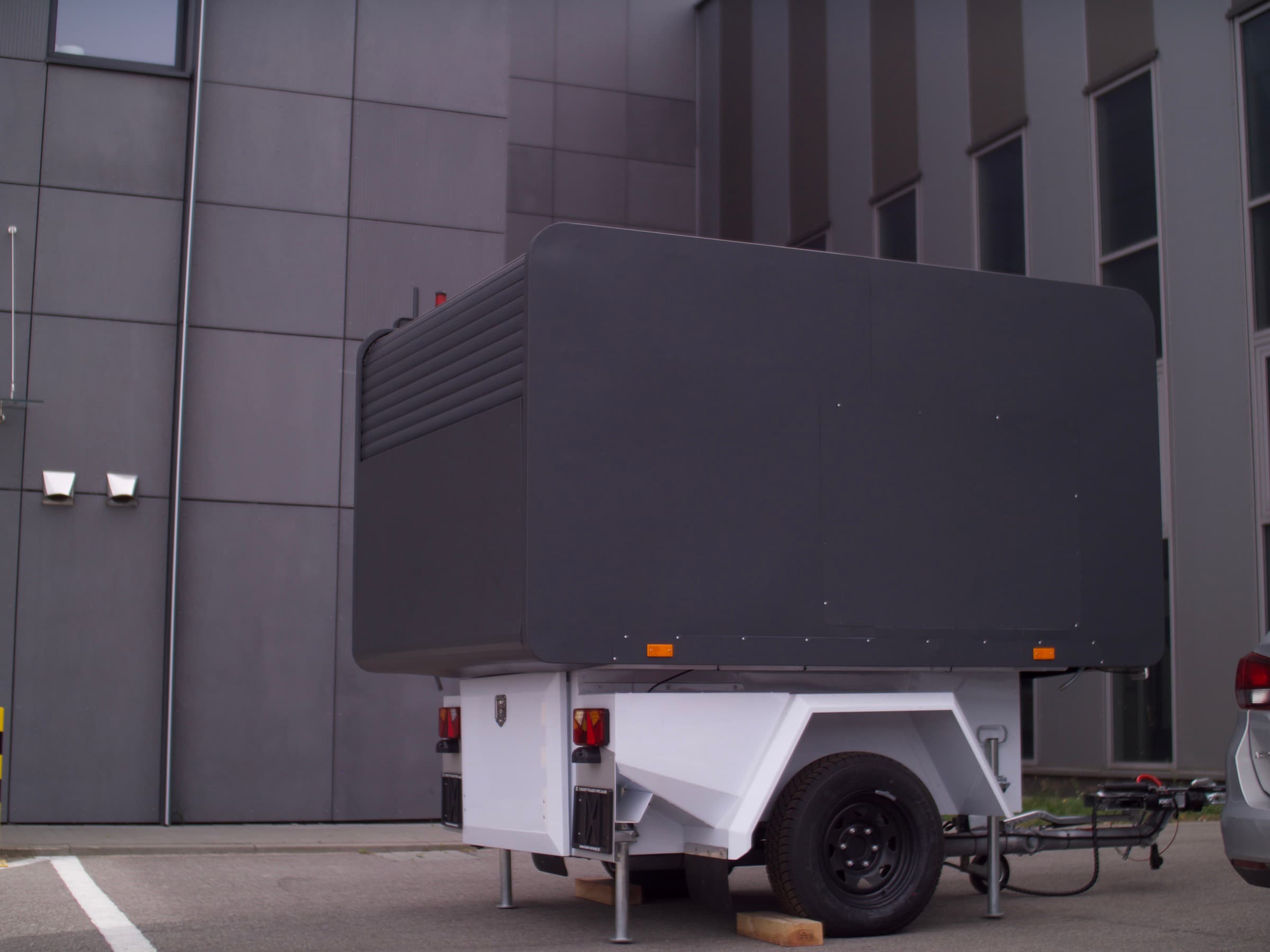
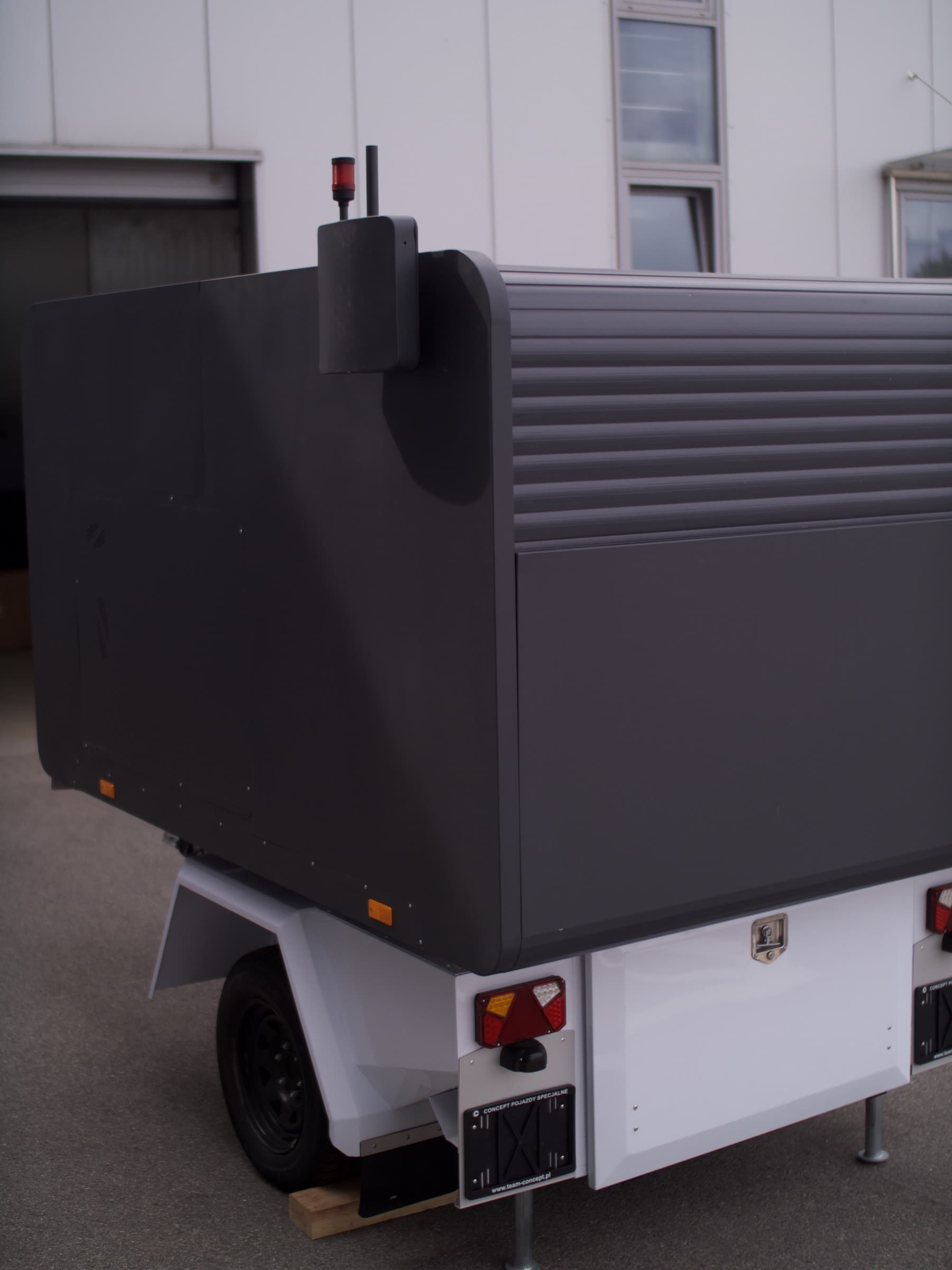
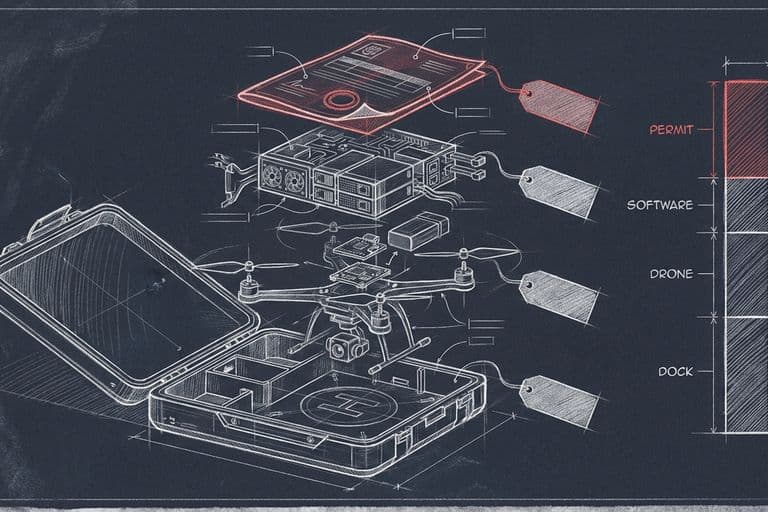
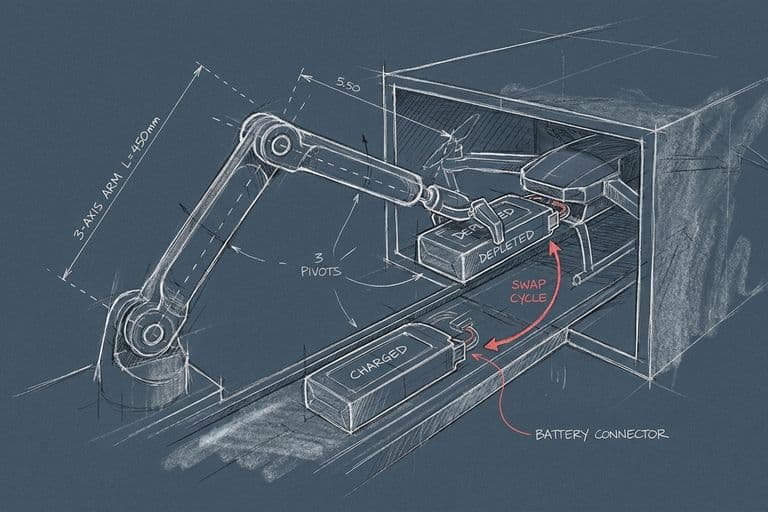
    Weatherproof outdoor enclosure with environmental conditioning, satellite link, redundant power, and the robotic battery-swap mechanism. Lands the drone, swaps the pack in 2 minutes, and stages the drone for the next mission — no human in the loop.

  • The airframe

    Multirotor platform engineered for repeated dock-and-fly operations. Onboard Nvidia compute for first-pass classification, redundant flight controllers, and Galileo-authenticated GNSS where the use case demands sovereign positioning.

  • Robotic battery swap

    The 2-minute swap is what makes 24/7 operation possible. Competing systems lose 40–60 minutes per cycle to in-station charging — over a 24-hour window that compounds into hours of dead time per docked unit.

  • Halo Cloud — the AI

    Our in-house anomaly-detection platform. Trained on a proprietary corpus from real deployments, taxonomized against operator failure modes, and tuned to flag only frames that warrant human review. Reduces analyst load by orders of magnitude.

  • Edge + cloud split

    First-pass classification runs on the drone's Nvidia compute. Only flagged frames are sent to Halo Cloud for review and audit. Bandwidth-thin operation works over LTE, mesh, or even SATCOM where ground infrastructure is degraded.

  • Sovereign data path

    Imagery, telemetry, detections, and audit logs stay inside EU + US infrastructure. No hyperscaler in adversarial jurisdictions, no foreign-controlled SaaS dependency. Suitable for regulated, defense-grade, and critical-infrastructure workloads.

Why this one

Four hard numbers that separate this stack from the catalog.

When the question is “why your drone-in-a-box and not the one we already know about?”, this is the answer. Concrete numbers, not architecture diagrams.

  • Battery swap (vs 40–60)
    2 min

    Robotic mechanical swap inside the dock. Competing drone-in-a-box systems plug in and wait 40–60 minutes. Over 24 hours that's 20+ extra missions per dock — the difference between a surveillance asset and a token deployment.

  • AI stack (not OEM)
    In-house

    We built Halo Cloud. Models, training pipeline, inference infrastructure, anomaly taxonomy, and operator UI — all developed against deployments. That ownership is why the IP is licensable, the models adapt to your network, and the data path is sovereign by design.

  • Supply chain
    Zero CN/RU/IR

    No components from China, Russia, Iran, or sanctioned states. NDAA Section 848 compatible. Engineered upstream from the BOM — not patched after a procurement audit catches a part.

  • Made in NATO Europe
    Jasionka, PL

    Our own factory in Jasionka, Poland — a $1.4M Polish R&D Centre grant-upgraded facility. Audit trail, per-unit serial tracking, weekly progress reports. Not Shenzhen-with-a-sticker.

Operating envelope

Built for the conditions a real deployment actually faces.

Sub-zero winters on Czech mountain passes. Continental European summers. Coastal humidity and salt-fog. Degraded RF in industrial environments. The dock conditions the system for all of it — the drone doesn't care what week of the year it is.

  • Sub-zero winter
  • High-temperature summer
  • Rain and humidity
  • Wind to operational limit
  • Degraded RF / GNSS environment
  • Low-bandwidth / SATCOM

Where it's run

Three reference deployments. Public partners. Citable outcomes.

Not screenshots in a deck. Real operators, real environments, real measurement windows. Click through to the case study for the technical detail and the procurement story behind each.

  • Deutsche Bahn — rail inspection at national scale

    The flagship deployment. AI-driven per-fastener defect detection above 95% accuracy, reports inside 15 minutes, measured on Germany's 33,000-km rail network. Up to $500M in modelled annual savings at full coverage. The validation that this stack works beyond demos.

    Read the case study
  • SIS-SREM — ski-slope safety, Dolni Morava (Czech Republic)

    Our earliest deployment, funded by the European Space Agency Business Applications programme. Drone-in-a-box monitoring an alpine ski-slope environment — terrain mapping, hazard detection, and emergency response triage. Eight years of continuous operating data.

    SIS-SREM case study
  • Honeywell · U-Space4UAM consortium

    13-partner EU urban air mobility programme led by Honeywell. We contributed drone-in-a-box hardware and flew first across the entire consortium — co-flying with Lilium, Vertical Aerospace, and EU national air navigation services.

    U-Space4UAM case study

See it in action

The system flying, swapping, inspecting — on its own.

Archival footage from the product line. Autonomous charging, cargo delivery, and perimeter security — three facets of the same drone-in-a-box platform.

Autonomous charging · gas-station model for any industrial drone
Autonomous cargo delivery · end-to-end package logistics
Perimeter security · autonomous patrol from a fixed dock

Where it fits

Six asset classes where this platform pays back inside two years.

The rule of thumb: wherever the cost of inspecting a kilometre of asset, or a hectare of perimeter, multiplied by inspection frequency, is higher than $30K per year — this stack pays for itself fast. Below are the six classes where we've already proven it or are actively engaging.

  • Rail and pipeline corridors

    Linear infrastructure where the asset count outpaces the inspector count. Per-fastener / per-weld / per-clamp anomaly detection. Calendar-based inspections replaced by continuous AI-driven sweeps.

  • Energy grid and substations

    Transmission corridors, substation perimeters, generation facilities. Thermal + visible-spectrum capture, vegetation encroachment tracking, intrusion detection. Where a missed defect becomes a regional outage.

  • Border, perimeter, and base defense

    Fixed-site protection at sovereign borders, ports, airfields, defense installations. Persistent surveillance + on-demand response triggered by ground-sensor alerts, radar contacts, or dispatcher escalation.

  • Industrial sites and ports

    Plant perimeter, stockyard inventory, port container monitoring, fenceline inspection. Replaces the security patrol with an audit-grade visual log — and replaces foot inspection with a per-asset condition record.

  • Convoy and corridor overwatch

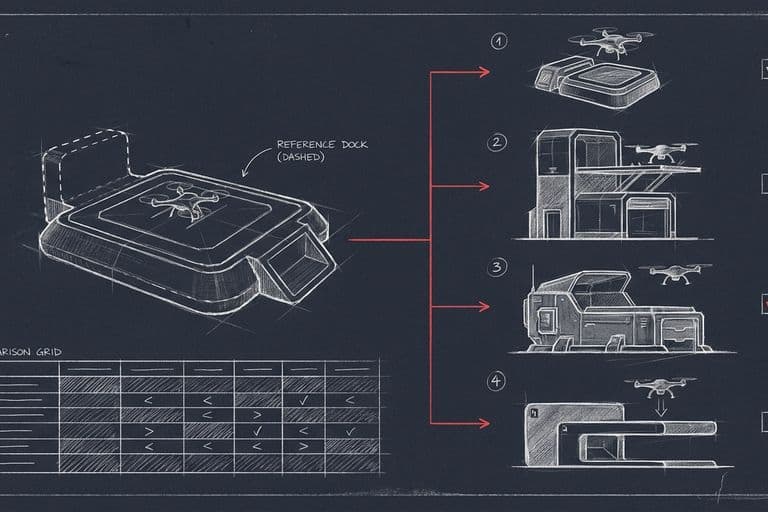
    Paired with UAV Nomad — our mobile drone-in-a-box — the stack extends to moving operations: convoy overwatch, mobile command perimeter, contested-logistics corridor protection.

  • Custom autonomous infrastructure

    Through R&D engagement, we adapt the platform to your asset class — wind farms, telecommunications towers, water infrastructure, dam inspection, agricultural high-value crops, anywhere the inspection-cost / missed-defect-cost ratio justifies autonomy.

How a mission actually runs

From the trigger to the operator-readable report — under 15 minutes, no human in the loop.

The whole point of the drone-in-a-box is that the loop closes automatically. A trigger fires, the dock launches, the drone runs the route, lands, swaps battery, and the report hits your operator UI before the dispatcher's next coffee.

  1. 01

    Trigger

    Scheduled patrol, randomized prevention sweep, or on-demand response — dispatcher alert, ground-sensor signal, severe weather, or third-party radio stop.

  2. 02

    Launch

    Dock conditions the drone, releases the latch, drone lifts off and acquires its mission corridor. Total launch time under 30 seconds.

  3. 03

    Capture

    Multirotor flies the corridor at inspection altitude. Onboard Nvidia compute classifies frames in real time — only flagged frames are queued for cloud review.

  4. 04

    Classify

    Halo Cloud runs the second pass: anomaly typing, confidence scoring, location pin, comparison against the previous mission's baseline.

  5. 05

    Recharge

    Drone returns to dock, robotic mechanism swaps the battery pack in 2 minutes. The next mission is staged before the operator UI has even loaded the previous report.

  6. 06

    Report

    Operator sees anomalies, not raw video — annotated frames, severity tier, location, and recommended action. Audit-grade log retained on EU+US infrastructure.

Three ways to use it

Buy. License. Co-develop.

The same platform unlocks three different engagement structures. Pick the one that matches what your organization actually needs — and what your funding source actually supports.

Buy the system

Direct purchase of the manufactured drone-in-a-box. Hardware, AI stack, operator UI, deployment support. Shipped worldwide from our Jasionka factory under sovereign-supply-chain terms. Standard commercial agreement, no joint-development required.

Asset operators · industrial primes · enterprise customers

License the IP

Take our patent-pending technology and integrate it under your brand, your contracts, your customer base. Hardware design, autonomy software, AI models, docking systems — assignable as building blocks for your portfolio.

OEMs · system integrators · enterprise platforms

Co-develop a custom variant

Joint R&D engagement — we adapt the platform to your domain, your environment, your data requirements. Available as US small-business prime (SBIR/STTR), EU consortium partner, or technical sub under your prime.

SBIR/STTR · AFWERX · DIU · EU Horizon · defense agencies

Next move

Ready to scope a deployment, evaluate the IP, or open a co-development conversation?

Tell us the asset class, the inspection cadence, the geography, and the funding source. We'll come back with a technical fit, an indicative price band, and the engagement model that matches.