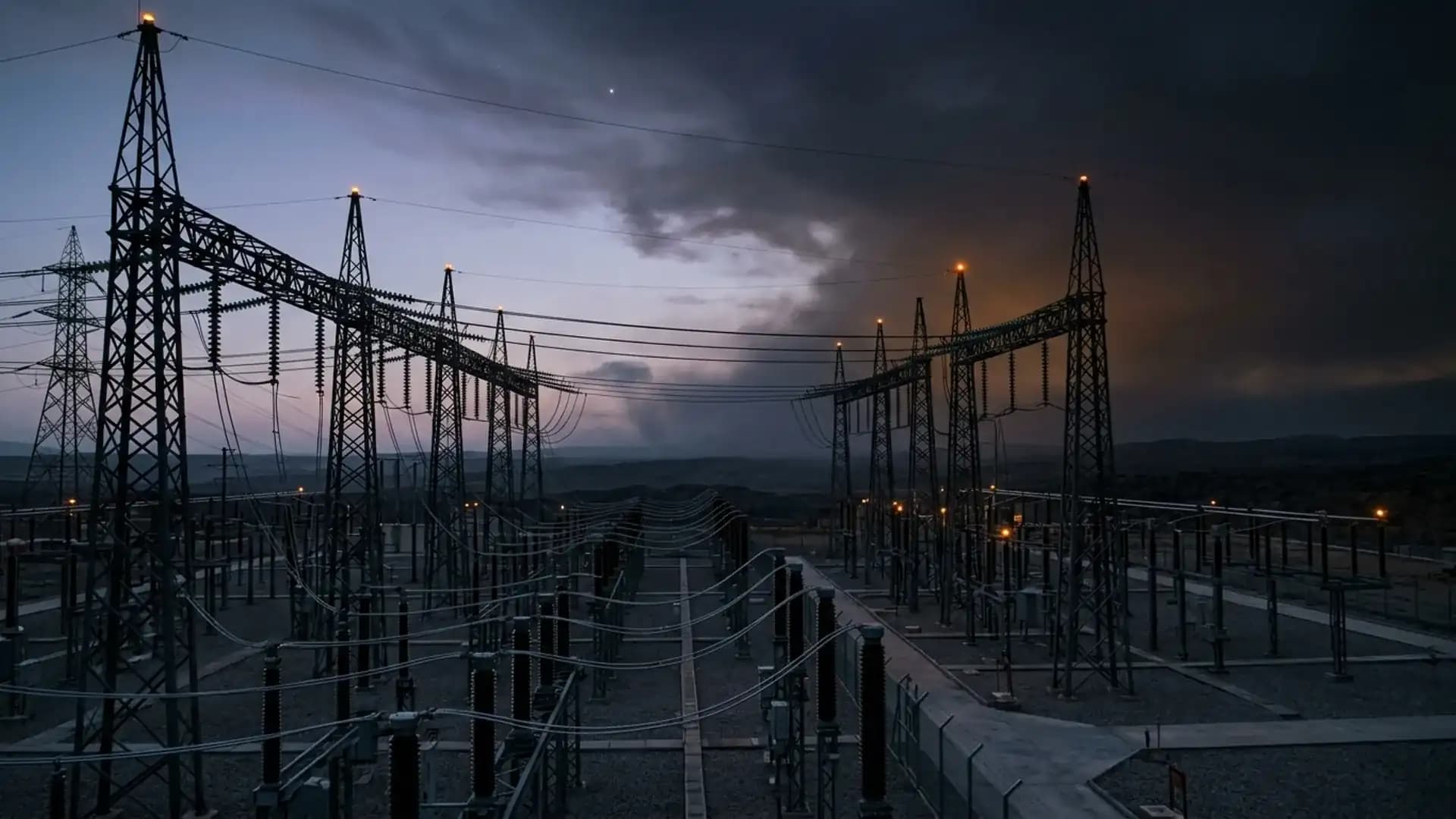
Grid. Transmission.
Pipelines. Generation.
Persistent autonomous inspection for the asset classes where missed defects become regional outages. Same drone-in-a-box and Sentinel AI stack proven on Germany's national rail network — re-pointed at the energy infrastructure that powers it.
Why energy
The asset class where the cost of a missed defect compounds fastest.
A loose fastener on a rail line is a maintenance event. A loose conductor on a high-voltage line is a wildfire risk, a multi-state outage trigger, and a regulatory liability. A leaking pipeline is an environmental event with eight- figure remediation costs. Energy infrastructure is the asset class where the inspection-cost / missed-defect-cost ratio justifies autonomy faster than almost anywhere else.
The same dynamic applies upstream: ageing transmission workforce, growing inspection backlog under post-storm reviews, regulatory pressure for cadence inspections (FERC, ENTSO-E, national TSOs), and increasing public exposure to outage-related damages. The cost of doing nothing keeps rising. Continuous AI-driven autonomous inspection is the only operating model that scales with software rather than headcount.
The hardware
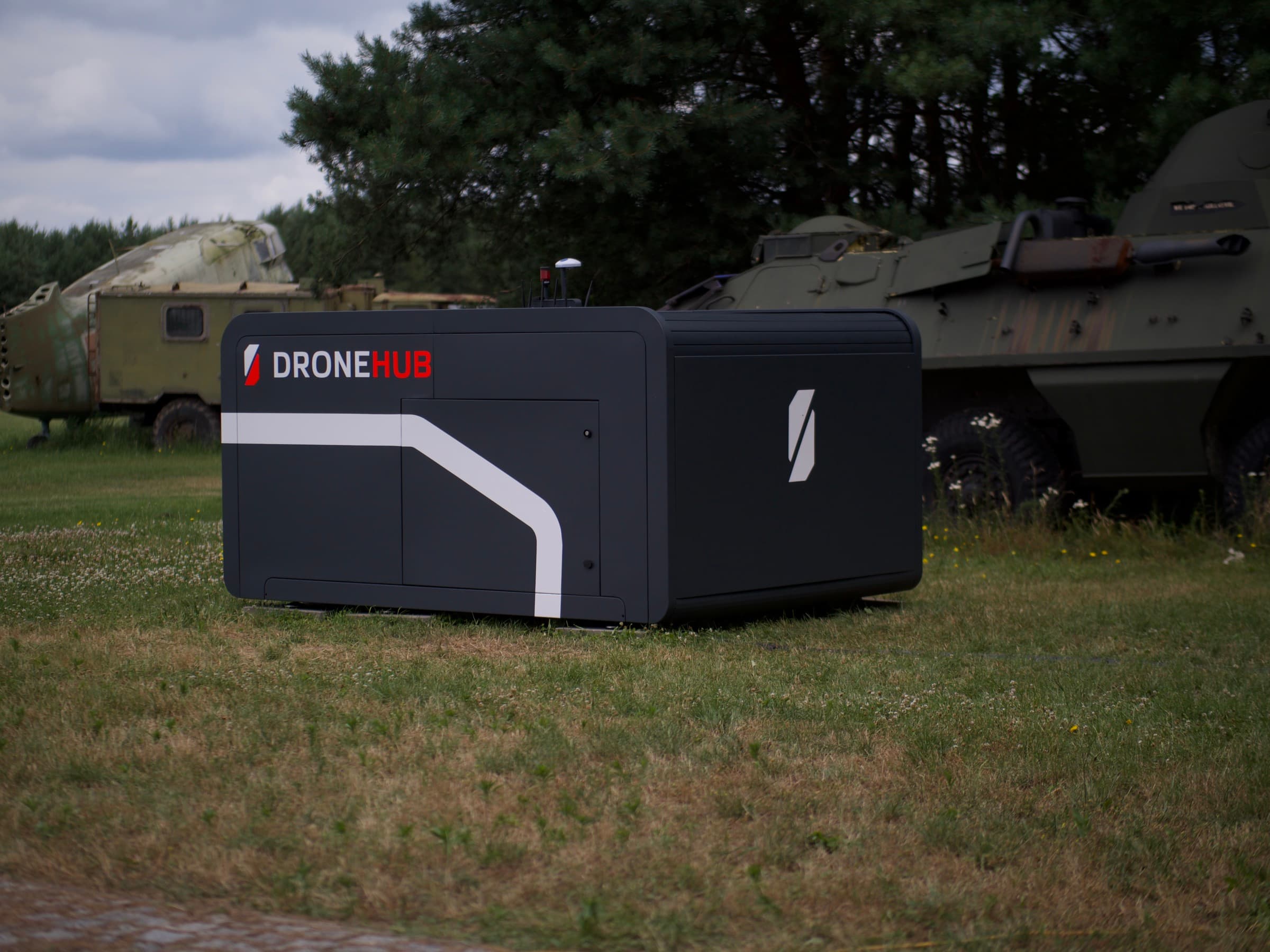
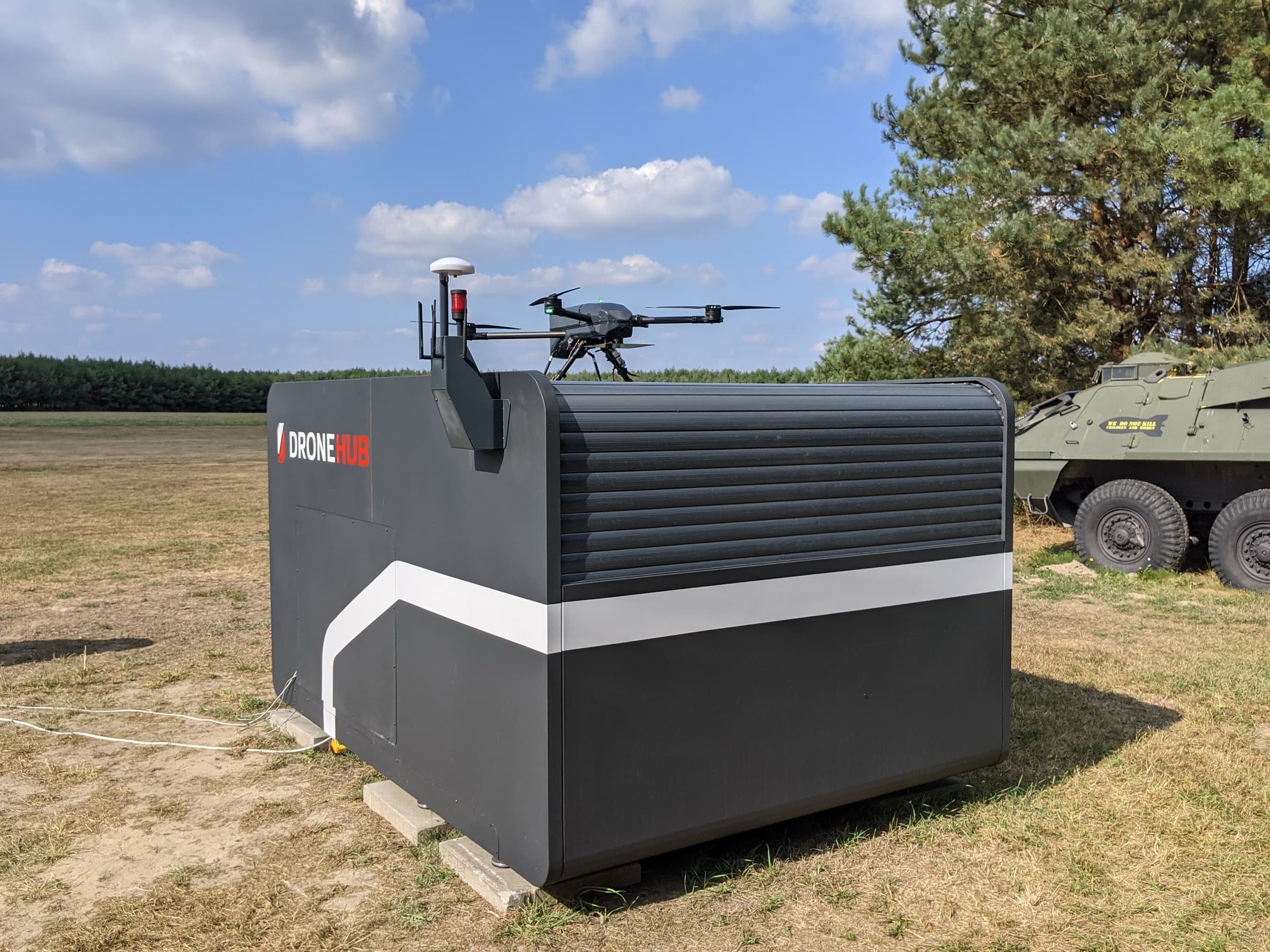
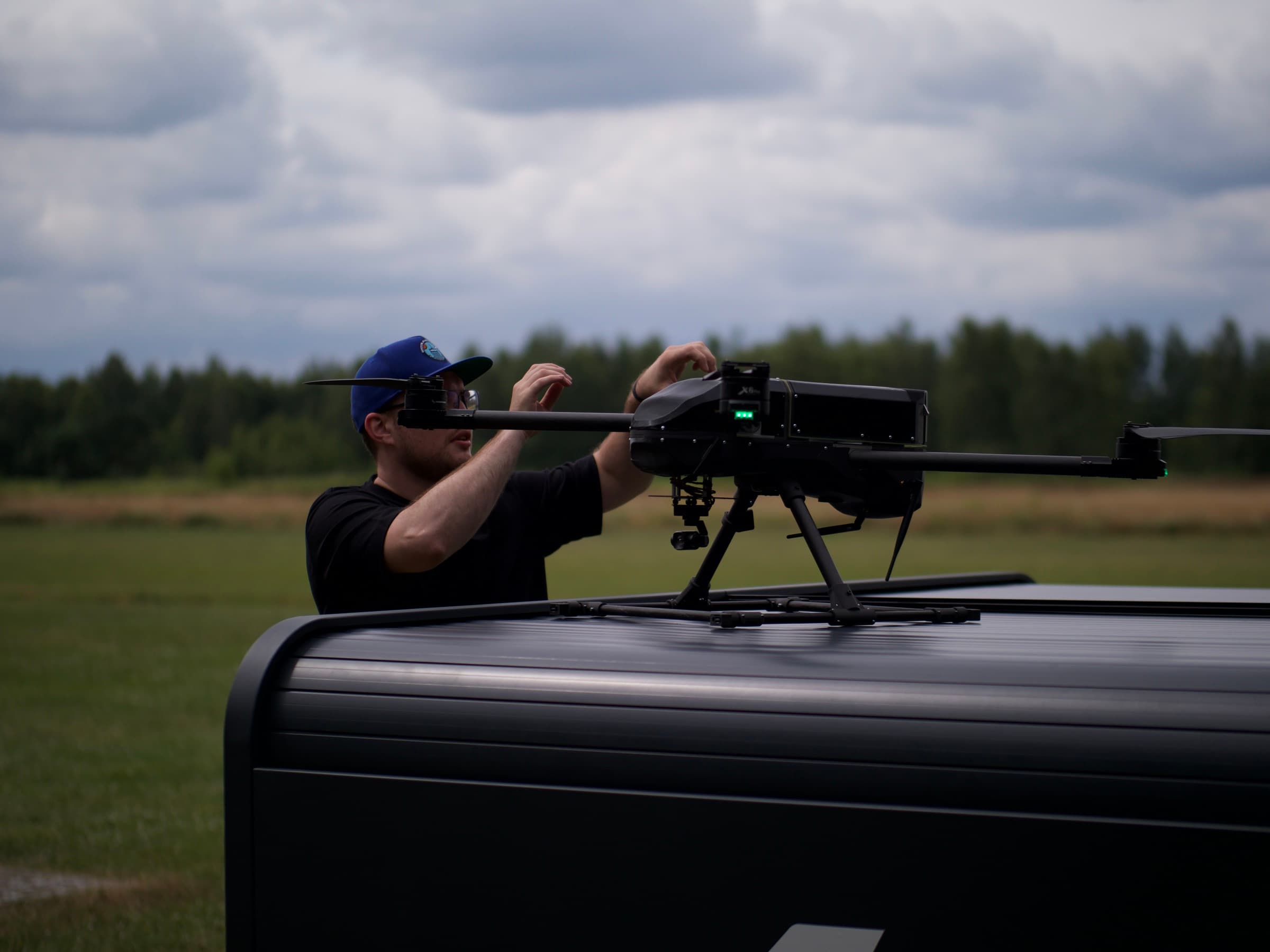
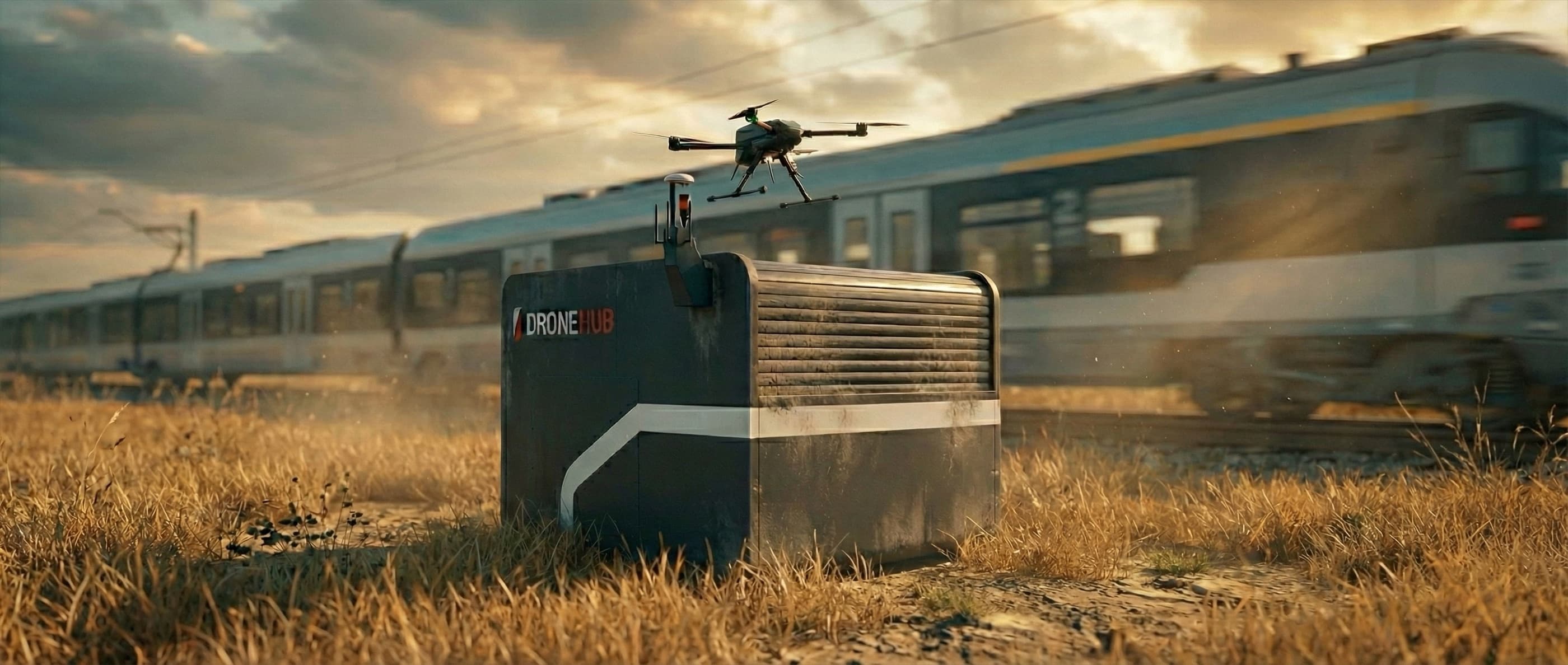
Stationary drone-in-a-box, deployed along the corridor.
What it does
Four capability blocks, four energy-infrastructure problem classes.
Transmission-corridor sweep
Persistent autonomous inspection of high-voltage transmission lines, towers, conductors, and rights-of-way. AI flags vegetation encroachment, conductor sag, broken insulators, hardware corrosion — and gets the report to the operator before the next storm.
Substation and facility perimeter
Substation perimeter security plus condition monitoring of switchyards, transformers, and bus arrangements. Thermal + visible-spectrum imaging detects hotspots before they fail, and intrusion detection runs alongside the inspection mission.
Oil-and-gas pipeline integrity
Pipeline corridor inspection — leak detection (thermal and visible signatures), excavation activity near the right-of-way, third-party-interference monitoring. Same drone-in-a-box deployed every operationally appropriate spacing, same AI stack flagging anomalies.
Renewable generation
Wind-turbine blade inspection, solar-farm thermal imaging, hydro-facility condition monitoring. The drone replaces the human climbing-team for wind, the contracted aerial-photography vendor for solar, and the helicopter team for hydro — at a cadence none of those can sustain.
Where it fits
Three buyer profiles in the energy vertical.
Grid operators (TSO and DSO)
Transmission system operators and distribution system operators with thousands of kilometres of line to inspect on regulatory cadence. The asset count outpaces the inspector count; the AI stack closes the gap and produces the compliance-grade record at the same time.
Oil-and-gas operators
Pipeline corridor inspection, terminal-facility perimeter, refinery flare-stack monitoring. The cost of a missed defect — a leak, a sabotage event, an unauthorized excavation — exceeds the cost of continuous AI-driven coverage by orders of magnitude.
Independent power producers
Wind farms, solar farms, hydro facilities, geothermal plants. Generation assets distributed across geography where central monitoring is hard and on-site human inspection is expensive. The same drone-in-a-box re-points at each asset class.
In the field
Autonomous perimeter security for substations and terminals.
The AI reference
The Sentinel AI stack was proven on rail. The same stack re-deploys on energy.
The Deutsche Bahn deployment validated the per-asset anomaly detection pattern at national scale. Rail fasteners, weld joints, ballast condition, and trackside object identification translate directly into the energy domain: insulators, conductor hardware, vegetation encroachment, pipeline corridor integrity. The architecture is identical — only the taxonomy of anomalies changes per asset class.
Sentinel is trained per-deployment on the operator's own asset class. The model improves with your data; the data stays inside EU + US infrastructure; the IP behind the model is licensable rather than rented.
Next move
Tell us the asset class. We'll come back with a fit and a phasing plan.
Transmission line, pipeline, substation, generation plant — tell us the kilometre count, the inspection cadence, and the existing condition-monitoring stack. We'll come back with a deployment fit, an indicative ROI horizon, and the engagement model that matches your funding source.
FAQ
Drone inspection for energy — frequently asked
What is drone inspection for oil and gas pipelines?
Autonomous drones run pipeline-corridor inspection, terminal-facility perimeter, and refinery flare-stack monitoring, with AI flagging anomalies. The cost of a missed defect — a leak, a sabotage event, an unauthorised excavation — exceeds the cost of continuous AI-driven coverage by orders of magnitude.
Can the same stack inspect a transmission grid (TSO/DSO)?
Yes. Transmission and distribution system operators such as TenneT, 50Hertz, and Amprion have thousands of kilometres of line to inspect on a regulatory cadence; the same drone-in-a-box and AI stack proven at national-scale rail closes the asset-count-versus-inspector-count gap and produces the compliance-grade record.
Does it cover renewable generation?
Yes — wind farms, solar farms, hydro, and geothermal. The same drone-in-a-box re-points at each distributed asset class, where central monitoring is hard and on-site human inspection is expensive.
More on energy inspection
Browse all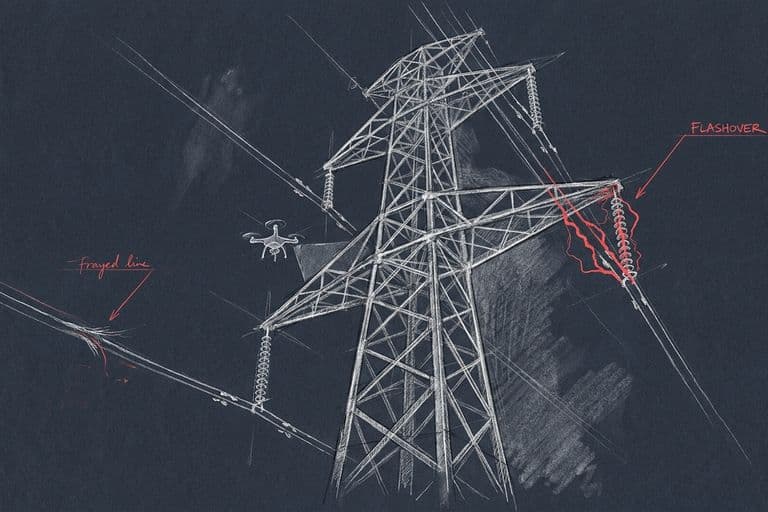 UPDATED · MAY 2026
Energy Grid + AI Inspection: Same Stack, Different Anomalies
Sentinel re-points from rail to energy grid by changing the per-asset taxonomy — the architecture stays. Transmission, substations, conductors at scale.
Read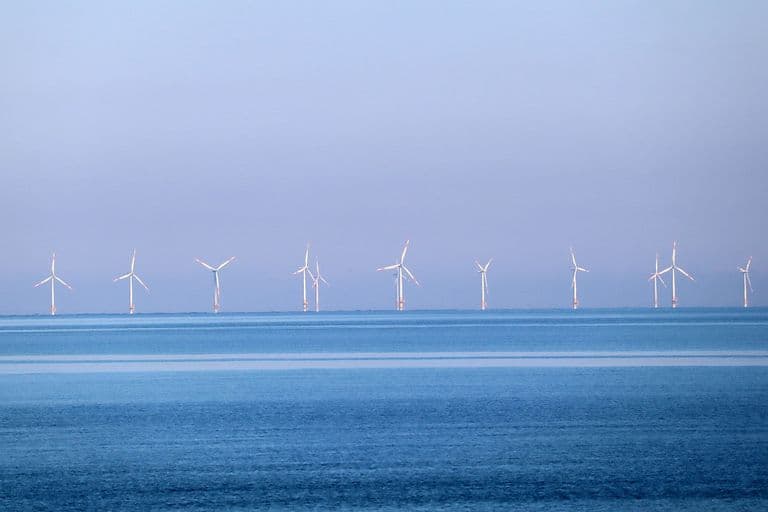 UPDATED · MAY 2026
Wind Farm Drone Inspection: When Manual Climbing Teams Become Uneconomic
Drone inspection cuts wind-turbine blade survey time from six hours to fifteen minutes per turbine — and works offshore where boat access is the real bottleneck. The same Sentinel AI stack that runs Deutsche Bahn rail inspection re-points at wind.
Read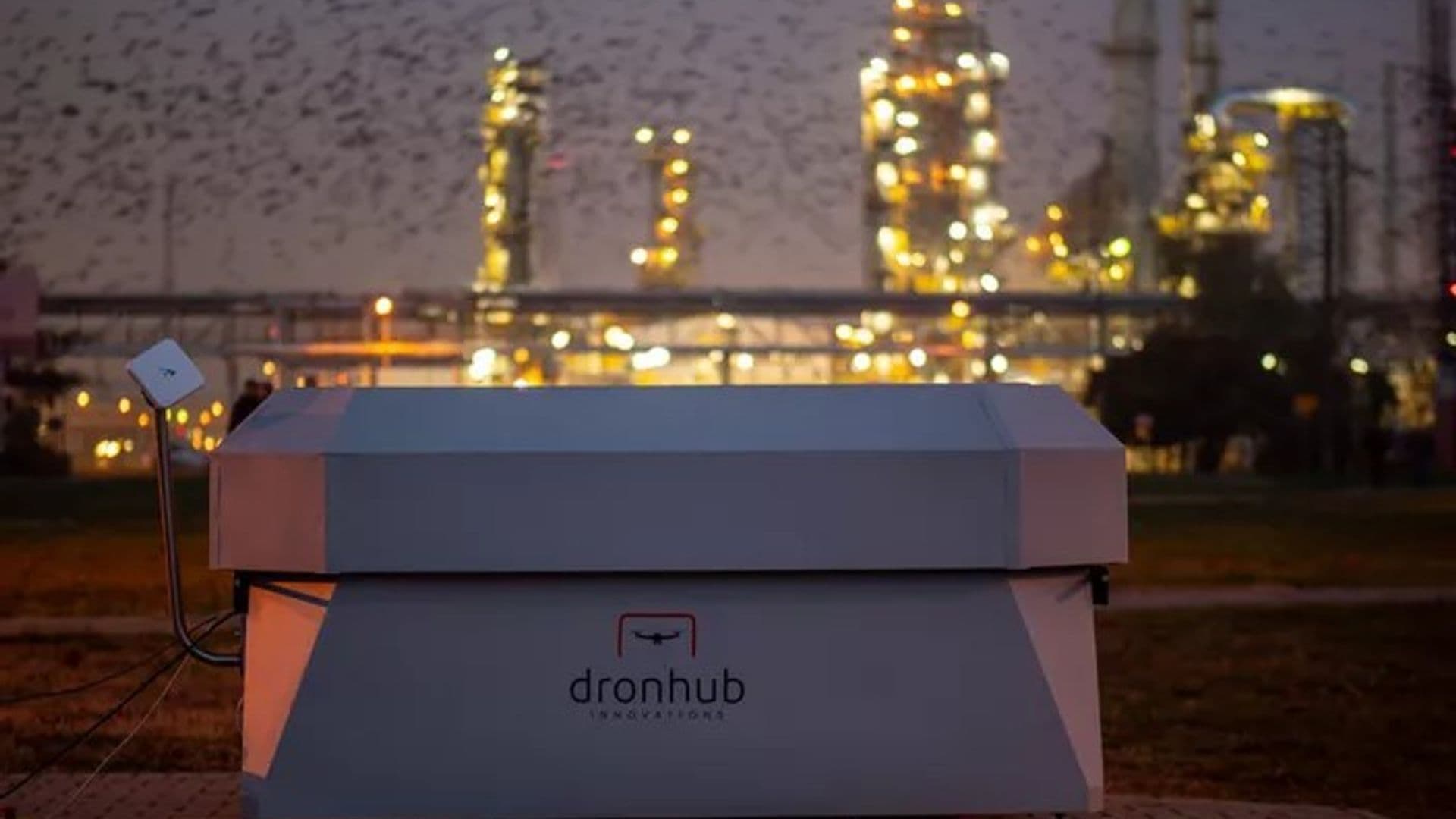 UPDATED · MAY 2026
PKN Orlen Refinery Inspection: A Named Reference for Hazardous-Site Drone Ops
Eastern Europe's largest refinery operator deployed Dronehub's autonomous inspection across critical-infrastructure assets. The use case that proves drone-in-a-box scales from rail to volatile chemical plants — same Sentinel stack, different anomaly taxonomy.
Read