Key facts
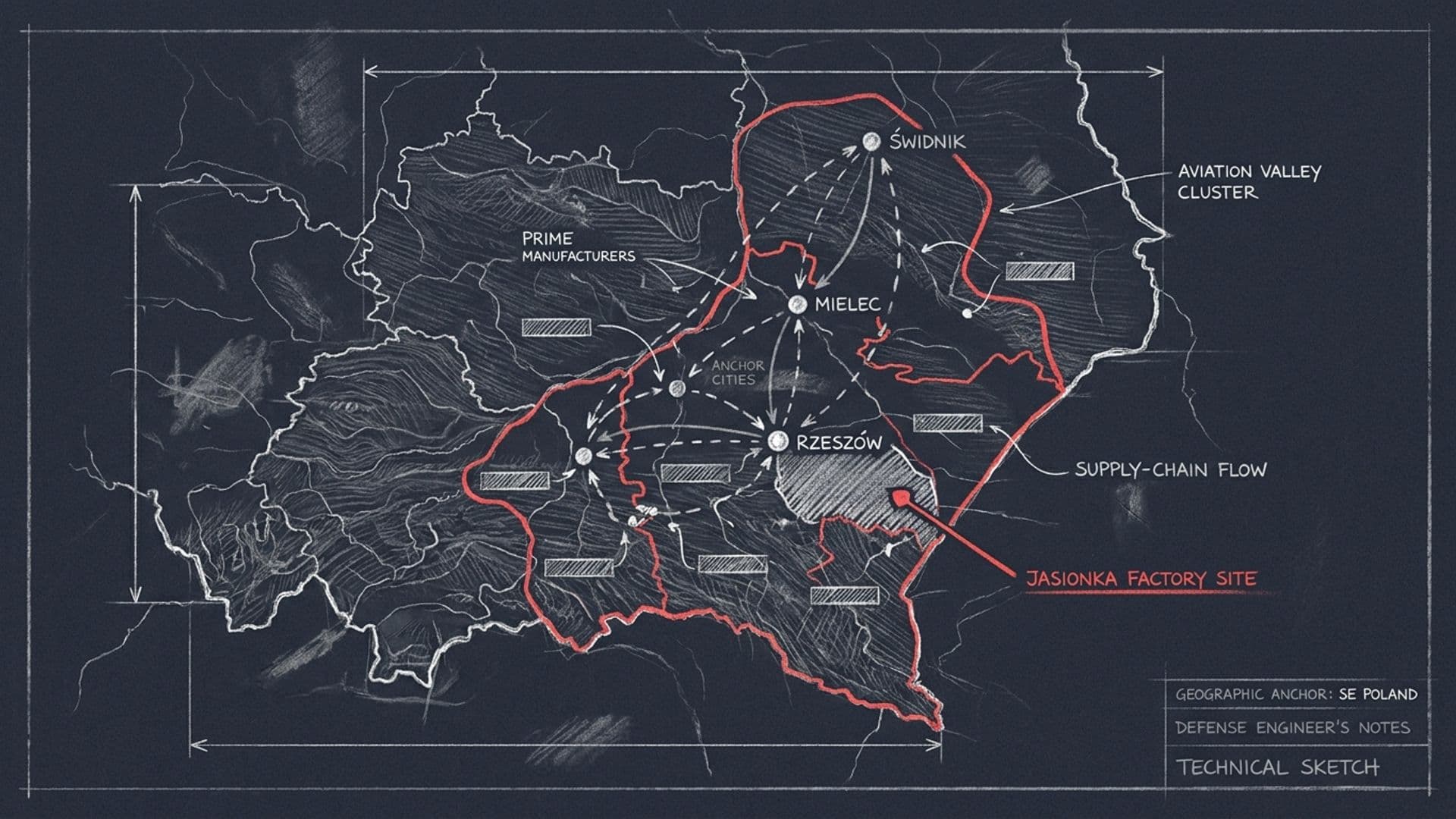
Aviation Valley in southeastern Poland is the densest aerospace and defense supply cluster in NATO Europe outside the major prime hubs (Toulouse, Munich, Hamburg, Rome). The cluster anchors around Rzeszów, Mielec, and Świdnik, spanning roughly 100,000 square kilometres of southeastern Poland.
Source · Polish aerospace cluster industrial mapping
The cluster integrates aerospace primes (PZL Mielec, PZL Świdnik, PZL Warsaw), tier-1 suppliers serving F-16, F-35, Black Hawk, and a wide range of NATO defense platforms, specialised tier-2 manufacturing, certified materials supply, and a deep engineering bench.
Source · Aviation Valley membership and capability mapping
The cluster's defense-procurement heritage spans decades — Polish, NATO, and US defense customers across multiple programme generations have sourced from Aviation Valley primes and sub-tier suppliers, producing the certification posture and supply-chain discipline that procurement-grade work requires.
Source · Aviation Valley defense industrial history
3 more key facts
Polish defense industrial strategy is formally aligned with EDIS (European Defence Industrial Strategy, published March 2024) — Aviation Valley operations sit inside the EDIS frame for EU defense procurement, with national-level programmes (Polish Shield modernisation, NCBR R&D programmes) channelling into and out of the cluster.
Source · Polish defense industrial strategy alignment with EDIS
Dronehub's Jasionka factory ($7.5M production line, fully operational since 2025) sits inside Aviation Valley, sourcing components from the cluster's tier-1 and tier-2 supplier network and inheriting the cluster's certification posture and procurement-grade audit discipline.
Source · Dronehub Jasionka factory operations record
Aviation Valley operates under Polish, EU, and NATO procurement frameworks that map to Section 848-equivalent compliance for US defense buyers — non-Chinese, non-Russian, non-Iranian supply chain by structural default, with documented BOM provenance and certification audit trails.
Source · Aviation Valley supply-chain compliance documentation
In this piece
Aviation Valley is the densest aerospace and defense supply cluster in NATO Europe outside the major prime hubs. For US federal-civil and defense buyers evaluating non-US manufacturing options under Section 848-equivalent compliance, Aviation Valley is the structural answer. This post is the buyer-oriented briefing — what the cluster is geographically, what's in it, why the defense-procurement heritage matters, and how the Section 848 alignment actually works.
The post is the geographic-and-industrial-base companion to the broader EU manufacturing narrative. Where that piece walked through the strategic case for EU drone manufacturing in 2026, this one zooms in on the specific cluster that produces most of Dronehub's manufactured output.
What Aviation Valley is
Aviation Valley (Dolina Lotnicza in Polish) is the aerospace and defense industrial cluster anchored in southeastern Poland, primarily around three anchor cities:
Rzeszów — the regional capital of Podkarpackie Voivodeship and the cluster's administrative centre. Population around 200,000. Home to Rzeszów University of Technology, one of the cluster's two major engineering-pipeline universities. The Rzeszów-Jasionka airport is one of Poland's significant regional airports and serves as the cluster's logistics anchor; the Dronehub Jasionka factory sits adjacent to the airport.
Mielec — historic centre of Polish aviation manufacturing, dating to the 1930s. Home to PZL Mielec (now part of Sikorsky / Lockheed Martin), the Black Hawk manufacturing facility serving NATO and allied customers. The Mielec Special Economic Zone status provides policy incentives for aerospace and defense investment.
Świdnik — helicopter manufacturing centre. Home to PZL Świdnik (now part of Leonardo), serving European and global helicopter procurement.
The cluster spans roughly 100,000 square kilometres covering Podkarpackie and adjacent voivodeships. Within this geographic envelope, the cluster integrates primes, tier-1 suppliers, certified manufacturing, materials suppliers, engineering services, and the workforce-pipeline universities — all within a few hours' drive of each other. The geographic concentration is the cluster's defining structural property.
The cluster operates as a coordinated industrial ecosystem rather than as scattered individual manufacturers. The Aviation Valley association (Stowarzyszenie Grupa Przedsiębiorców Przemysłu Lotniczego "Dolina Lotnicza") provides coordination, supply-chain integration, joint procurement, and policy-engagement functions. Member companies range from major primes to specialised SMEs, with the membership integrating across the supply-chain tiers.
What's actually in the cluster
The industrial base inside Aviation Valley spans the aerospace and defense supply chain at meaningful depth.
Major aerospace primes with Polish heritage:
- PZL Mielec — now part of Sikorsky / Lockheed Martin. Manufactures Black Hawk helicopter variants for NATO, US, and global customers. The Polish facility is one of Sikorsky's major manufacturing operations outside the US.
- PZL Świdnik — now part of Leonardo. Helicopter manufacturing serving European and global procurement.
- PZL Warsaw — engine manufacturing (not geographically inside Aviation Valley but tightly integrated into the cluster's supply chain).
International primes with significant cluster presence:
- Lockheed Martin — multiple operational footprints across the cluster, including the PZL Mielec relationship and direct manufacturing operations.
- Pratt & Whitney — engine maintenance and manufacturing operations.
- Collins Aerospace — multiple business units operating in the cluster.
- MTU Aero Engines — German engine manufacturer with cluster manufacturing presence.
- Safran — French aerospace group with cluster operations.
Polish defense-industrial group:
- PGZ (Polska Grupa Zbrojeniowa) — the Polish state-owned defense holding company. Multiple operating companies inside the cluster spanning land systems, ammunition, defense electronics, and integration.
Specialised SME tier:
- Several hundred SMEs covering precision machining, composites, electronics integration, harness production, surface treatment, certified materials supply, and specialised aerospace manufacturing. The SME tier is the cluster's tier-2 and tier-3 supply layer that feeds the prime contracts.
Engineering and research:
- Rzeszów University of Technology — engineering-pipeline university with strong aerospace-engineering programmes. Multiple research collaborations with cluster primes and SMEs.
- AGH University of Science and Technology in Kraków — major Polish technical university feeding engineering talent into Aviation Valley.
- Other research institutions — including the Polish Air Force University, the Aviation Institute (Instytut Lotnictwa), and various technology-transfer organisations.
The combined industrial-base depth is the cluster's defining property. A drone manufacturer building inside Aviation Valley has access to certified machining, composite manufacturing, electronics integration, harness production, materials supply, and engineering services — all from suppliers with decades of defense-procurement heritage and procurement-grade certification posture.
Why the defense-procurement heritage matters
Procurement-grade work requires certified processes, audit-trail integrity, and operational discipline that come from decades of working under defense procurement frameworks. A new manufacturing operation can build these from scratch, but the build cycle is long, the failure rate is meaningful, and the resulting certification posture takes years to mature.
Aviation Valley primes and their tier-1 suppliers have been on this maturation curve since the 1990s. Initial Polish military procurement work in the post-Cold-War period built the foundation. Poland's NATO accession in 1999 expanded the procurement audience to NATO programmes. Continuing US defense supply-chain integration through the 2000s and 2010s deepened the certification posture. By the 2020s, Aviation Valley primes operate at the procurement-grade level that DoD, allied MoDs, and NATO procurement frameworks require as baseline.
The implications for a drone manufacturer (or any aerospace-and-defense manufacturer) operating inside the cluster:
Quality systems are mature. AS9100 certification (the aerospace-and-defense quality management standard) is baseline across the cluster's primes and tier-1 suppliers. The audit processes, the corrective-action workflows, the regulatory compliance posture — all at procurement-grade discipline.
Supply-chain traceability is structural. Component provenance tracking, certified-materials documentation, and audit-trail integrity for defense procurement audits — all baseline rather than per-programme builds.
Workforce is trained. The engineering and manufacturing workforce in Aviation Valley has experience with defense procurement frameworks. Inducting new engineers and technicians into procurement-grade workflows is faster because the cluster's workforce pipeline produces personnel who understand the discipline from day one.
Supplier-network discipline holds. Tier-2 and tier-3 suppliers inside the cluster operate at the discipline level the primes require. The supplier discipline is not a per-prime build — it's a structural property of the cluster.
For Dronehub's Jasionka factory, sitting inside Aviation Valley means inheriting all of this without having to build it. The factory's certification posture, supply-chain provenance, and operational discipline are at procurement-grade from day one because the cluster's environment supports it.
How Aviation Valley aligns with US Section 848
NDAA Section 848 (codified at 10 U.S.C. 4871 note) restricts US DoD procurement of UAS with components from China, Russia, Iran, and other covered nations. Aviation Valley operates under Polish, EU, and NATO procurement frameworks that exclude these origins by structural default.
Specifically:
Polish procurement framework — excludes covered-nation components from defense procurement under both national-level and EU-level rules. The Polish defense industrial base operates inside the broader EU + NATO frame on this dimension.
EU EDIS framework — published March 2024, established sovereign-supply-chain restrictions for EU defense procurement, applying equivalent covered-nation rules across EU member states. Polish defense industrial strategy is formally aligned with EDIS; Aviation Valley operations sit inside the EDIS frame.
NATO procurement frameworks — define eligible suppliers and component-origin restrictions consistent with broader NATO supply-chain considerations.
For US Section 848 purposes, a drone manufactured at Jasionka inside Aviation Valley is Section 848-compliant by architecture rather than by per-component verification. The documentation pack is a procurement-grade audit material:
- Bill of materials provenance — every component traceable to non-covered-nation origin, with supplier certification documentation
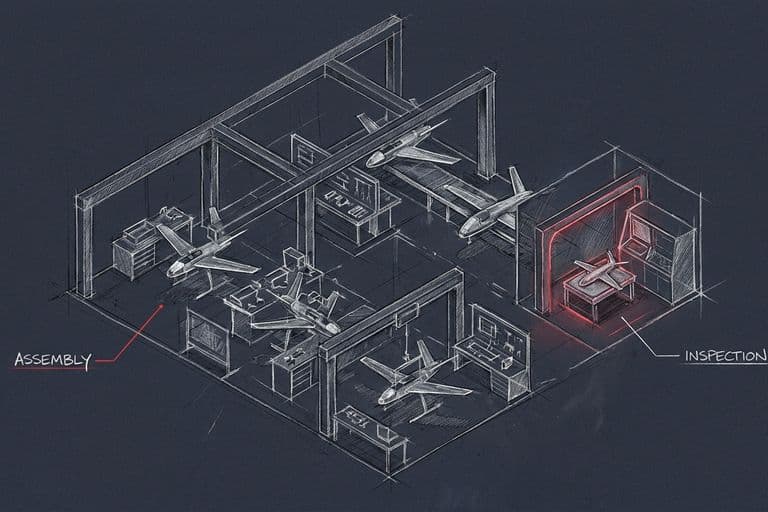
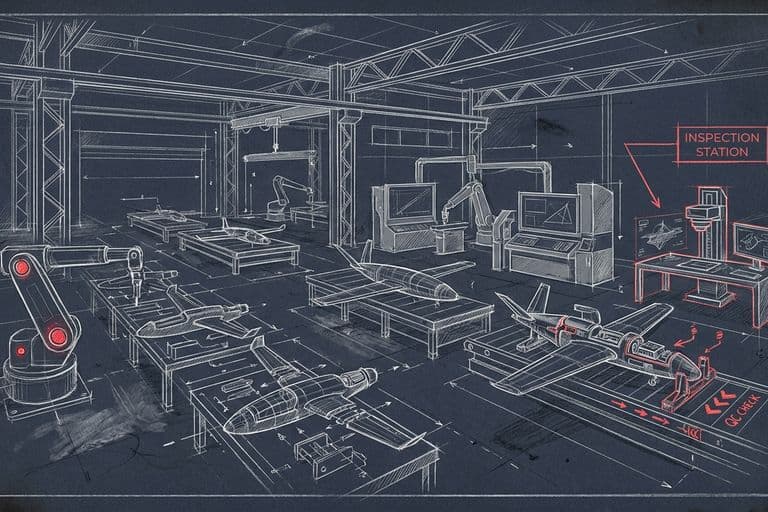
- Manufacturing process traceability — assembly happens inside the cluster's certified facilities under documented procurement-grade workflows
- Software supply chain — software components from sovereign-origin suppliers, with build-infrastructure inside sovereign jurisdictions
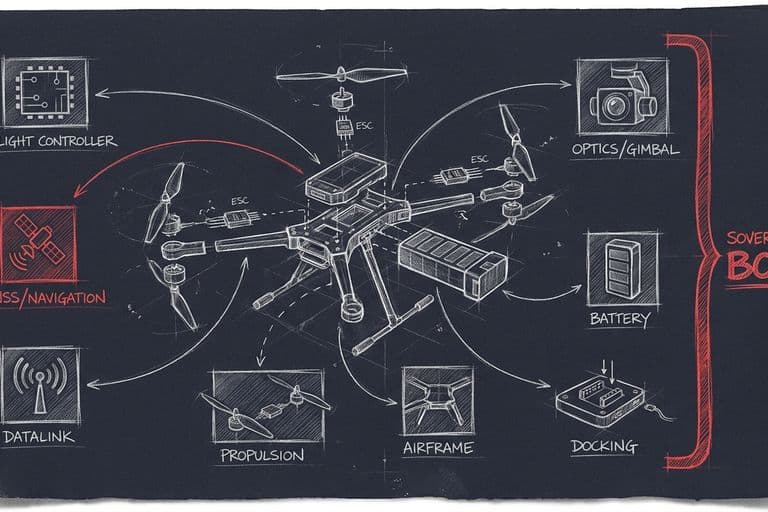
- Hardware supply chain — flight controllers, GNSS receivers, RF data links, ground-station hardware all from NATO-allied or US-origin suppliers
For US federal-civil and defense buyers evaluating non-US manufacturing options under Section 848-equivalent compliance, Aviation Valley produces the cleanest compliance posture in EU manufacturing. The documentation survives DoD diligence on first review.
How Aviation Valley aligns with EDIS
The European Defence Industrial Strategy (EDIS), published by the European Commission in March 2024, formalised the EU-domiciled-industrial-partner preference for EU defense procurement. Aviation Valley operations sit inside the EDIS frame by structural default.
The EDIS-aligned procurement pathways that flow through Aviation Valley:
EDF (European Defence Fund) — €8 billion 2021-2027 budget with continuing programming through 2028-2034. EDF directs R&D and capability-deployment funding toward EU-domiciled industrial partners under EDIS-aligned eligibility. Multiple Aviation Valley primes lead or participate in EDF consortia.
NATO DIANA — NATO's dual-use accelerator pipeline. Polish DIANA-affiliated sites are part of the Aviation Valley network, with Aviation Valley-based SMEs and primes participating in DIANA cohorts.
National-MoD procurement — Polish MoD modernisation programmes (Polish Shield / Tarcza Polski, the broader modernisation envelope) channel through Aviation Valley primes and SMEs. Other EU national MoDs source from Aviation Valley primes (PZL Mielec serving multiple NATO customers, PZL Świdnik serving European helicopter procurement).
Horizon Europe — civilian-and-dual-use R&D under the EU's flagship research programme, with Aviation Valley primes participating in Cluster 4 (Digital, Industry, Space) and Cluster 5 (Climate, Energy, Mobility) programmes.
For US buyers evaluating dual-use platforms that also need EU-procurement eligibility, Aviation Valley manufacturing satisfies both frameworks simultaneously without requiring separate certification work.
Procurement implication for US buyers
For US federal-civil and defense buyers — Aviation Valley manufacturing is procurement-grade via the Dronehub dual-domicile structure.
Dronehub Inc. (Delaware C-Corp, SBIR/STTR-eligible US small business) handles the commercial relationship and the US-side procurement contracting. Dronehub Sp. z o.o. (Polish entity) handles the Jasionka manufacturing inside Aviation Valley. The two entities operate under a clean parent-subsidiary relationship that satisfies SBIR control requirements while maintaining the EU manufacturing base.
The Section 848 compliance documentation, the supply-chain provenance audit trail, and the certification posture inherited from the cluster all satisfy US federal procurement diligence on first review. The procurement-grade audit pack is a standing artefact, not a per-deal build.
For US buyers, this is the lowest-friction path to sovereign-supply non-US manufacturing that satisfies the federal procurement frame:
- For SBIR/STTR awardees — the US C-Corp manages the prime relationship; the Polish entity handles manufacturing under documented Section 848 compliance
- For AFWERX Open Topics — same structural pattern, with the SME small-business status satisfied by the US entity
- For DIU Commercial Solutions Opening — direct commercial procurement under sovereign-supply-chain frameworks
- For DoD direct contracting — at programme scale where the manufacturing volume requires the cluster's industrial-base depth
- For US federal-civil buyers (DHS, DoE, DOT, NASA, FAA, USCG) — same procurement pathway, with the relevant federal-agency compliance frames mapping onto Section 848-equivalent requirements
The manufacturing context lives at /manufacturing. The corporate dual-domicile structure context is at /about. The EU manufacturing strategic case is at /blog/eu-drone-manufacturing-matters-2026. The sovereign-supply-chain frame is at /blog/sovereign-supply-chain-not-optional. The Section 848 procurement guide is at /blog/ndaa-section-848-compatible-drones-procurement-guide. For a manufacturing or procurement conversation, open the contact form.
FAQ
- What is Aviation Valley geographically?
- Aviation Valley is the aerospace and defense industrial cluster anchored in southeastern Poland, primarily around Rzeszów (the regional capital), Mielec, and Świdnik. The cluster spans roughly 100,000 square kilometres covering the Podkarpackie Voivodeship and adjacent areas. The geographic concentration produces dense supply-chain depth — primes, tier-1 suppliers, certified manufacturing, materials suppliers, and engineering services all within a few hours' drive of each other. The cluster includes the Rzeszów-Jasionka airport (one of Poland's major regional airports) and operates as a Special Economic Zone with policy incentives for aerospace and defense investment.
- What companies are actually in Aviation Valley?
- The major aerospace primes with Polish heritage: PZL Mielec (now part of Sikorsky / Lockheed Martin, manufacturing Black Hawk variants), PZL Świdnik (Leonardo's Polish operation, helicopter manufacturing), PZL Warsaw (engine manufacturing). International primes with significant cluster presence: Lockheed Martin (multiple operational footprints), Pratt & Whitney (engine maintenance and manufacturing), Collins Aerospace, MTU Aero Engines, Safran. Polish defense-industrial group: PGZ (Polska Grupa Zbrojeniowa) — the Polish state-owned defense holding — has multiple operating companies in the cluster. Plus several hundred SMEs covering precision machining, composites, electronics integration, harness production, and specialised aerospace manufacturing. The combined industrial-base depth is the cluster's defining property.
- Why does the cluster's defense-procurement heritage matter?
- Because procurement-grade work requires certified processes, audit-trail integrity, and the operational discipline that comes from decades of working under defense procurement frameworks. A company that has been supplying NATO defense customers under structured procurement programmes for 20-30 years has the quality systems, the supply-chain traceability, the regulatory-audit posture, and the workforce discipline that new entrants don't have. Aviation Valley primes and their tier-1 suppliers have been on this curve since the 1990s — initially supplying Polish military procurement, then NATO programmes after Poland's NATO accession in 1999, then increasing US defense supply-chain integration. The certification posture is at procurement-grade as a baseline rather than something that has to be built per programme.
- How does Aviation Valley align with US Section 848?
- Structurally. NDAA Section 848 restricts US DoD procurement of UAS with components from China, Russia, Iran, and other covered nations. Aviation Valley operates under Polish, EU, and NATO procurement frameworks that already exclude these origins by structural default. A drone manufactured at Jasionka using Aviation Valley supply-chain components is Section 848-compliant by architecture — the documentation pack is a procurement-grade audit material that survives DoD diligence on first review. For US federal-civil and defense buyers evaluating non-US manufacturing options, Aviation Valley produces the cleanest Section 848 compliance posture in EU manufacturing.
- How does Aviation Valley align with EDIS?
- Directly. The European Defence Industrial Strategy (EDIS), published by the European Commission in March 2024, formalised the EU-domiciled-industrial-partner preference for EU defense procurement. Polish defense industrial strategy is formally aligned with EDIS; Aviation Valley operations sit inside the EDIS frame. EDF (European Defence Fund) procurement, NATO DIANA programmes, national-MoD procurement across EU member states, and the broader EDIS-aligned procurement pipeline all map onto Aviation Valley-manufactured supply. The cluster is one of the structural anchors of the EU defense industrial base that EDIS depends on.
- What's the procurement implication for US buyers?
- Aviation Valley manufacturing is procurement-grade for US federal-civil and defense buyers via the Dronehub dual-domicile structure. Dronehub Inc. (Delaware C-Corp, SBIR/STTR-eligible US small business) is the commercial relationship; Dronehub Sp. z o.o. (Polish entity) handles the Jasionka manufacturing inside Aviation Valley. The Section 848 compliance documentation, the supply-chain provenance audit trail, and the certification posture inherited from the cluster all satisfy US federal procurement diligence on first review. For US buyers, this is the lowest-friction path to sovereign-supply non-US manufacturing that still satisfies the federal procurement frame.