
AUDROS
Autonomous counter-UAS and public-safety system. An Eagle One interceptor drone fires a capture net at hostile UAVs, with physical-collision as fallback. CBRN incident-response variant scored 98 out of 100 by the European Defence Agency. The first project in history where the European Space Agency and the European Defence Agency jointly funded a small-business company.
- Programme
- AUDROS
- Initiated
- 2020
- Public reveal
- Jul 2022
- EDA score
- 98 / 100
- Co-funders
- ESA + EDA (joint)
- Lead
- Dronehub
- Tested in
- Czech Republic (NATO)
- Mission profile
- C-UAS + CBRN + public safety
Why this matters now
The counter-UAS market exists because the drone threat stopped being theoretical.
Between 2020 and 2025 the airspace threat picture transformed. Commercial drones started carrying improvised payloads. Battlefields in Eastern Europe and the Middle East normalized drone-borne munitions at consumer cost. Critical infrastructure — refineries, substations, ports, prisons — became routine targets for surveillance and disruption. The threat scaled faster than the answers.
Most counter-drone products on the market are either RF jammers (illegal over crowds, useless in degraded electromagnetic environments, blunt instruments in dense urban airspace) or kinetic shoot-down systems (legally unusable outside warzones, catastrophic when miss). The market needed a third option: kinetic interception with attribution preservation, deployable in regulated airspace, integrated with public-safety command stacks.
AUDROS is that third option — and it was funded by two EU agencies who agreed it didn't exist yet.
The problem
A hostile drone over a stadium, a prison, or a substation. Thirty seconds to decide. Nothing to shoot it down with.
The counter-UAS problem isn't detection — radar, RF sensing, and acoustic arrays solve detection. The problem is the response gap. Once you've detected a hostile UAV inside regulated airspace, your legal and practical options collapse fast.
RF jamming is illegal over civilian crowds in most jurisdictions, and useless against autonomous drones running on pre-loaded waypoints with degraded GPS. Kinetic munitions (firearms, autocannons, missiles) are legally unusable outside a declared theater of operations — and even there, a misfired round over a populated area becomes the news event, not the drone.
What the operator actually needs: a system that can intercept a hostile drone in flight, bring it down intact for forensic review, do this without endangering people on the ground, and feed the entire engagement back into the public-safety command stack as a documented incident.
That product was a gap in the market in 2020. ESA and EDA jointly funded the development to close it — and selected Dronehub as the lead. Five years later, the market gap is wider, not narrower. The product is more relevant, not less.
The system
Four engineering pillars that close the response gap.
AUDROS is not a single device. It's an end-to-end interception and response system — built so the responder team can act inside the thirty-second decision window without losing legal cover or forensic evidence.
Eagle One — net-capture interceptor
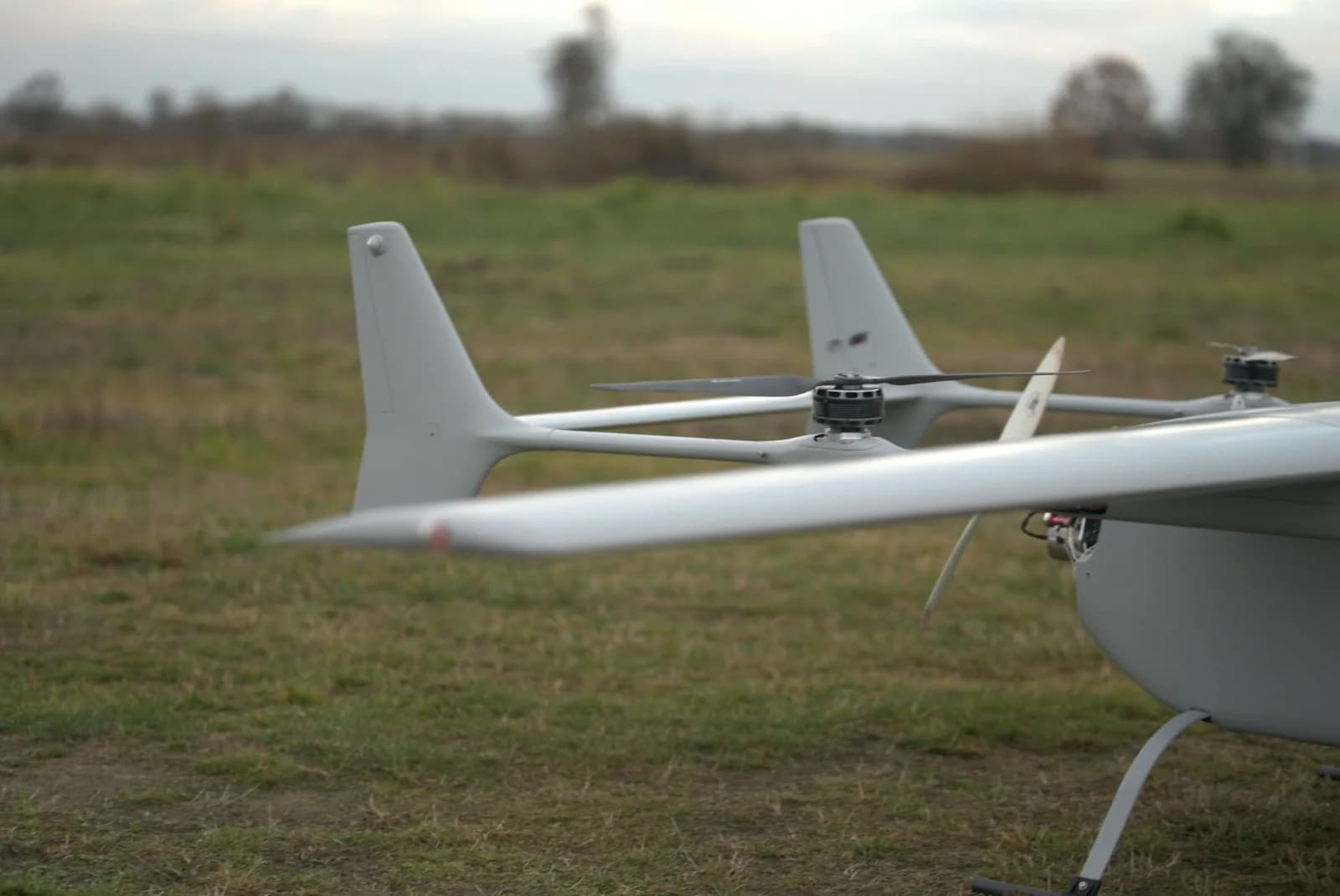
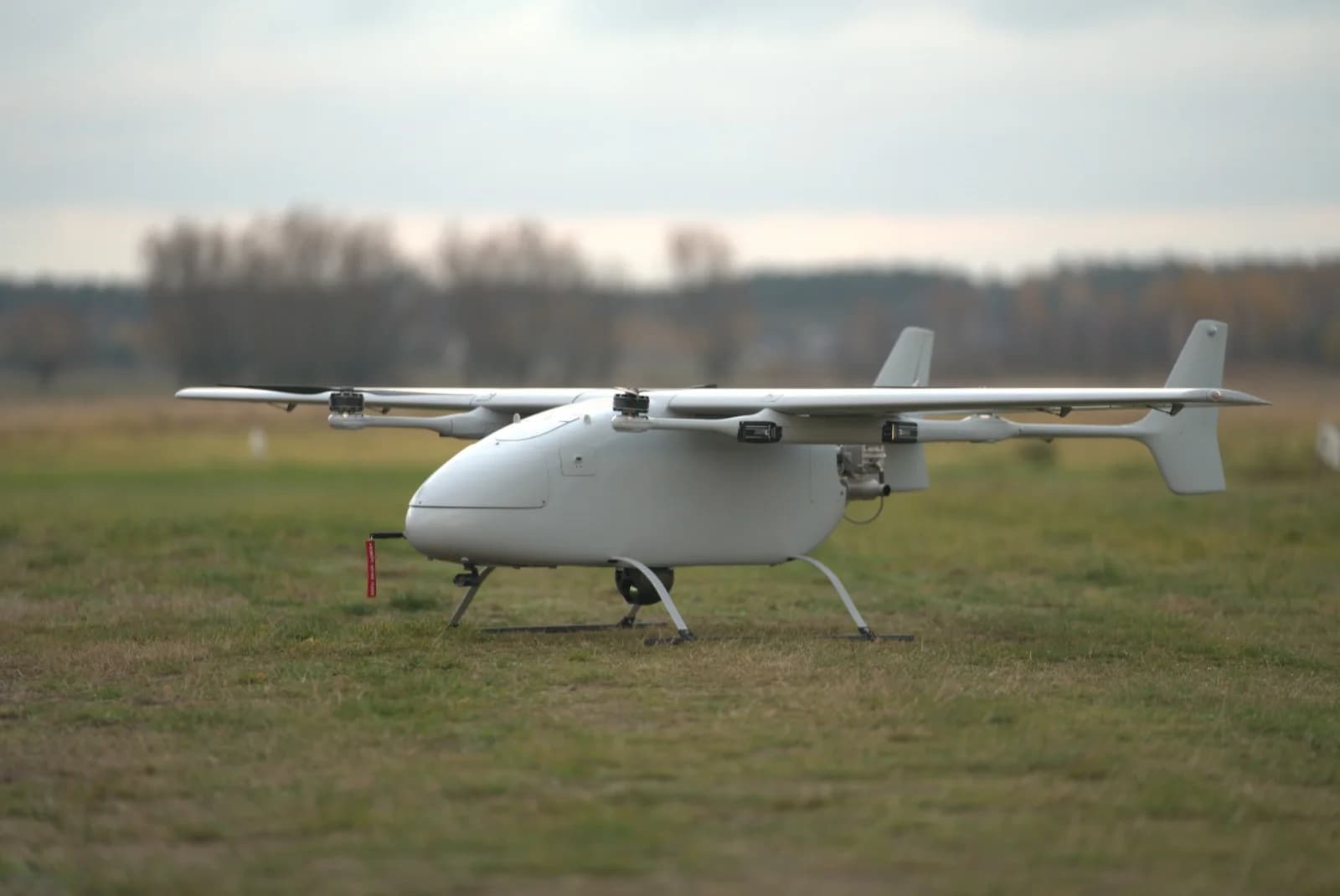
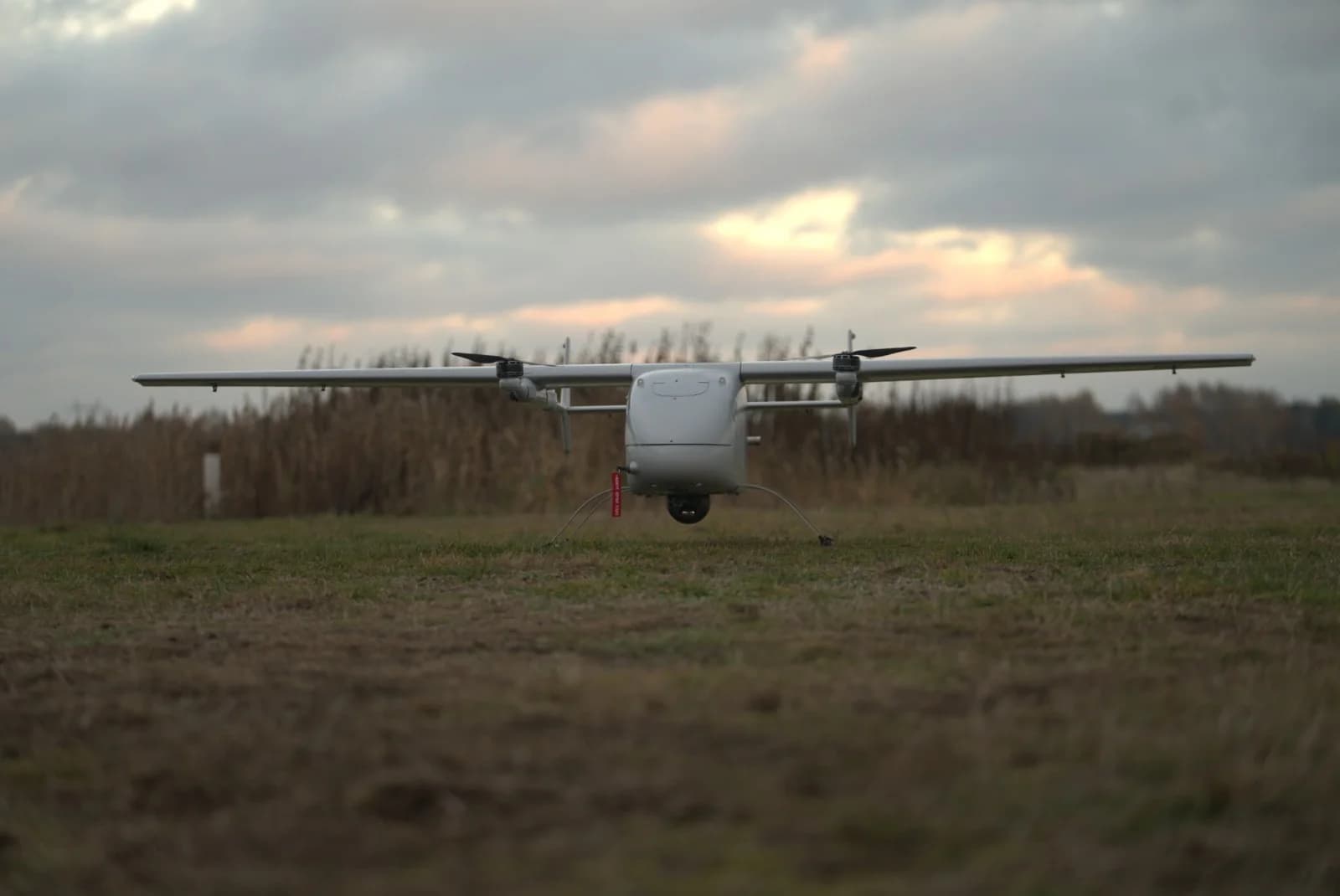
A drone-on-drone kinetic system. The Eagle One interceptor fires a capture net at the target UAV, ensnaring its rotors and bringing it down intact under a parachute drogue. Capture preserves forensic evidence — payload, electronics, geolocation history — for the responder team. Physical-collision fallback handles targets that net deployment can't catch.
Works in regulated airspace
Most commercial counter-drone products rely on RF jamming or kinetic munitions that can't be deployed over populated areas or in controlled airspace. AUDROS is engineered for the airspace where the threat actually appears — above prisons, public gatherings, transportation corridors, critical-infrastructure perimeters.
CBRN incident response
Chemical, biological, radiological, nuclear. AUDROS includes a CBRN-response variant — sensor-equipped UAVs that survey contamination plumes, locate sources, and feed live aerial telemetry into the dispatcher stack. The European Defence Agency scored Dronehub 98/100 on the CBRN counter-UAS programme.
Live situational awareness for dispatchers
The second mission profile is public-safety support. During a traffic incident, civil-unrest event, VIP convoy, or large public gathering, the drone network feeds real-time aerial imagery directly into the command stack — replacing static CCTV and a delayed helicopter with on-demand, location-precise aerial intelligence.
The platform
Fixed-wing endurance behind the interceptor mission.
The CBRN dimension
98 out of 100 — on the hardest c-UAS scenario the European Defence Agency tests.
CBRN is the threat class where the response stakes are highest and the operator's tolerance for error is lowest. A chemical agent dispersed by drone over a city, a radiological source transported over a border, a biological agent released near a water-treatment intake — every scenario is one where the drone cannot be jammed (autonomous payload delivery), cannot be shot down (collateral damage on the chemical plume), and cannot be ignored.
AUDROS handles the CBRN scenario along two axes. The interception axis catches the hostile UAV in flight, mid-payload-delivery, using the net-capture mechanism. The response axis deploys sensor-equipped UAVs into the contamination plume to survey, locate, and map the event without exposing first responders. The full chain — detection, interception, post-event survey, dispatcher integration — is what the European Defence Agency scored 98/100.
That score is the artifact your downstream procurement officer will recognize. Every other counter-drone vendor pitching them will be claiming similar capability. Almost none of them will be able to back the claim with an allied-defense-agency scoring artifact at this confidence level.
Where it deploys
Six verticals where the AUDROS stack is the right answer to the wrong drone.
Corrections — anti-smuggling
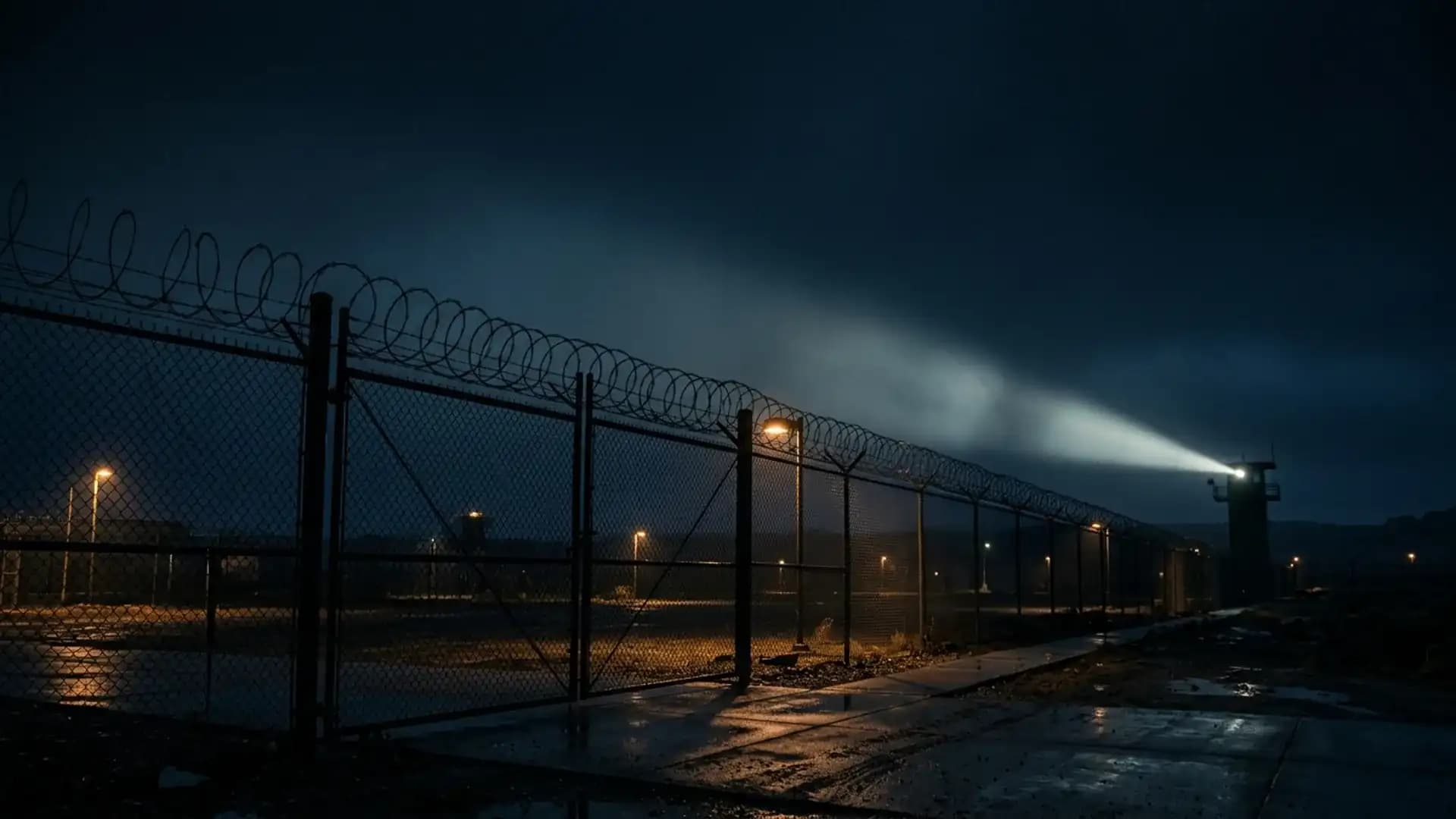
Drone-borne contraband (drugs, phones, weapons) into correctional facilities is now a primary smuggling vector globally. AUDROS provides perimeter-by-perimeter counter-UAS for individual facilities, with net capture instead of jamming — operated by the agency the law authorises, which in the US since July 2026 can be a certified state or local correctional agency.
Road safety + traffic incidents
Major-incident response — multi-vehicle collisions, hazmat events, freeway pile-ups — gains an immediate aerial picture for dispatchers. Reduces clearance time, supports investigator workflow, and integrates with traffic-management systems.
Civil unrest + crowd management
Stadium events, summits, protests, head-of-state visits. AUDROS supports the public-safety side (situational awareness) and the counter-UAS side (intercept hostile UAVs over crowds, where jamming and kinetic munitions are not options).
VIP and convoy escort
Moving-protection details — diplomatic, executive, military — require persistent aerial overwatch with intercept capability if a hostile UAV appears en route. AUDROS pairs naturally with UAV Nomad — our mobile drone-in-a-box — for sustained operation along convoy corridors.
CBRN incident response
Chemical and radiological-leak events at industrial facilities, transport accidents, or worst-case scenarios. AUDROS surveys the plume, maps the source, and provides decision-grade data without exposing first-responder personnel to the contamination.
Critical-infrastructure perimeter
Energy substations, refineries, dams, ports, defense installations. Persistent counter-UAS overwatch at sites where a single hostile drone — surveillance, payload, or kinetic — represents a national-security event.
Why this credential is rare
Four reasons AUDROS is the strongest defense reference in our portfolio.
First-ever joint ESA + EDA SME programme
The European Space Agency funds civilian space technology. The European Defence Agency coordinates EU defense R&D. They are two distinct agencies with separate evaluation pipelines. AUDROS is the first project in history where both agencies jointly supported a small-business company. The credential is impossible to fake and very hard to repeat — and it sits squarely on top of Dronehub.
EDA score: 98 out of 100
On the CBRN counter-UAS programme, the European Defence Agency scored Dronehub 98 out of 100. That score is the artifact of a full technical, security, supply-chain, and capability review — the same kind of review your US programme office or your defense prime will run. The conclusion has already been drawn.
Tested with the Czech military
The interceptor was tested with the Military Technical Institute Brno and the Military Research Institute Brno — both Czech government defense-research bodies, NATO-allied. Real test conditions, real military adversarial review, real validation outcomes. Not a demo for a friendly investor — a defensible test campaign with an allied government.
Seven-partner technical consortium
Dronehub led the consortium. Fly4Future delivered the Eagle One net-capture interceptor. GINA Software handled the command and dispatcher integration. BizGarden contributed systems engineering. Plus two Czech military-research institutes. Coordinating that across two EU agencies and two countries is the work that hardens future European Defence Fund (EDF) and Horizon Europe proposals — and the experience is already in our team.
The consortium
Named partners. Public record. Defensible composition.
- Dronehub (Poland) — consortium lead, airframes, autonomy stack, integration
- Fly4Future (Czech Republic) — Eagle One interceptor and net-capture mechanism
- GINA Software (Czech Republic) — command and dispatcher integration
- BizGarden (Czech Republic) — systems engineering
- Military Technical Institute Brno (Czech Republic) — defense test authority
- Military Research Institute Brno (Czech Republic) — operational evaluation
- European Space Agency — co-funder
- European Defence Agency — co-funder
What this means for you
The c-UAS stack and the credentials behind it are licensable.
For a US programme office evaluating dual-use c-UAS technology for SBIR/STTR, AFWERX, or DIU — AUDROS is the answer to “has your team built a counter-UAS system that an allied defense agency has independently validated?” Yes. ESA + EDA jointly funded it. EDA scored 98/100. The Czech military tested it. The capability transitions directly into a US programme structure.
For an EU defense prime building an EDF or NATO DIANA consortium on c-UAS — AUDROS gives you the SME partner with the deepest allied-defense-agency credential, the consortium-leading experience, the deployed forensic-capture technology, and the patent-pending IP behind it.
For a critical-infrastructure operator (prisons, refineries, ports, airports, energy substations): AUDROS is an R&D programme and is not offered for purchase or licence today.
From the blog
Browse all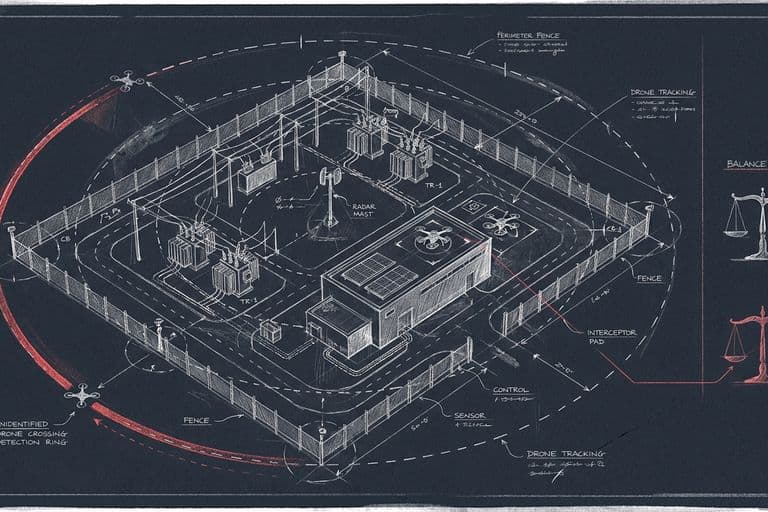 UPDATED · SEP 2026
Counter-UAS Without Jamming: Critical-Infrastructure Vendors and the Legal Map (EU and US, 2026)
Counter-drone protection for critical infrastructure without jamming: detection, non-jamming mitigation, who may use it in the EU and US, and 16 vendors.
Read- UPDATED · JUN 2026
Counter-UAS Methods Compared in 2026: Detection, Jamming, Kinetic, and Net Capture
A side-by-side comparison of counter-drone methods — detection, RF jamming, GNSS spoofing, kinetic, net capture, directed energy, and protocol takeover — by RF-dependence, collateral risk, permits, and effectiveness against autonomous drones.
Read 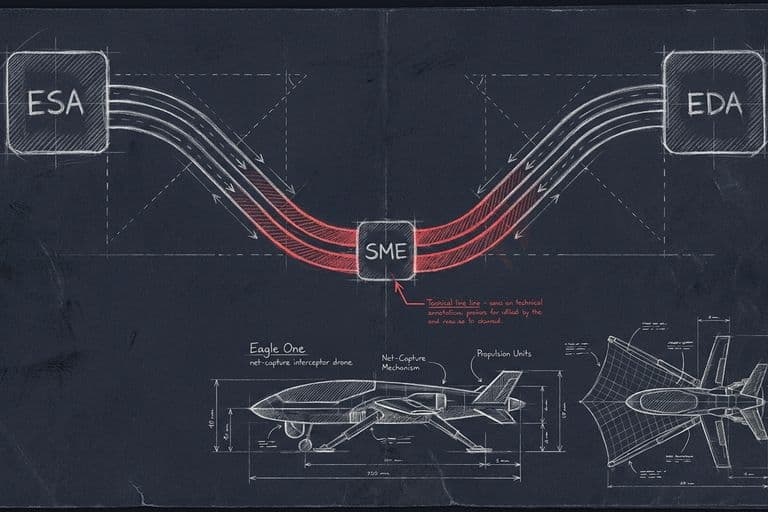 UPDATED · MAY 2026
Why ESA + EDA Jointly Funded an SME: The AUDROS Story
AUDROS was the first project in history where the European Space Agency and the European Defence Agency jointly funded a small business. Here's how it happened.
Read