Key facts
PKN Orlen is the largest refinery operator in Central and Eastern Europe, running operations across Poland, Czech Republic, Germany, Lithuania, Slovakia, and Canada.
Source · PKN Orlen corporate profile
A refinery is classified by ENISA and national CIP regulators as critical infrastructure — the inspection cadence, audit trail, and personnel-safety requirements are determined by the regulator, not the operator.
Source · EU NIS2 Directive, critical-infrastructure designation
Autonomous drones replace human inspection in hazardous zones (volatile vapours, working-at-height tank tops, flare-stack proximity) — measurably reducing the cumulative personnel-exposure footprint of an annual inspection cycle.
Source · Industrial-inspection operations safety benchmarks
2 more key facts
The Sentinel AI stack runs anomaly detection across an asset taxonomy that includes thermal hotspots, tank-seam corrosion, flare-stack condition, perimeter intrusion, and pipeline-corridor leakage signatures.
Source · Sentinel anomaly taxonomy
Per-segment inspection cost drops by an order of magnitude versus contracted helicopter or manned aerial inspection, with cadence increased from quarterly to continuous.
Source · Industry inspection-cost benchmarks, autonomous drone-in-a-box deployments
In this piece
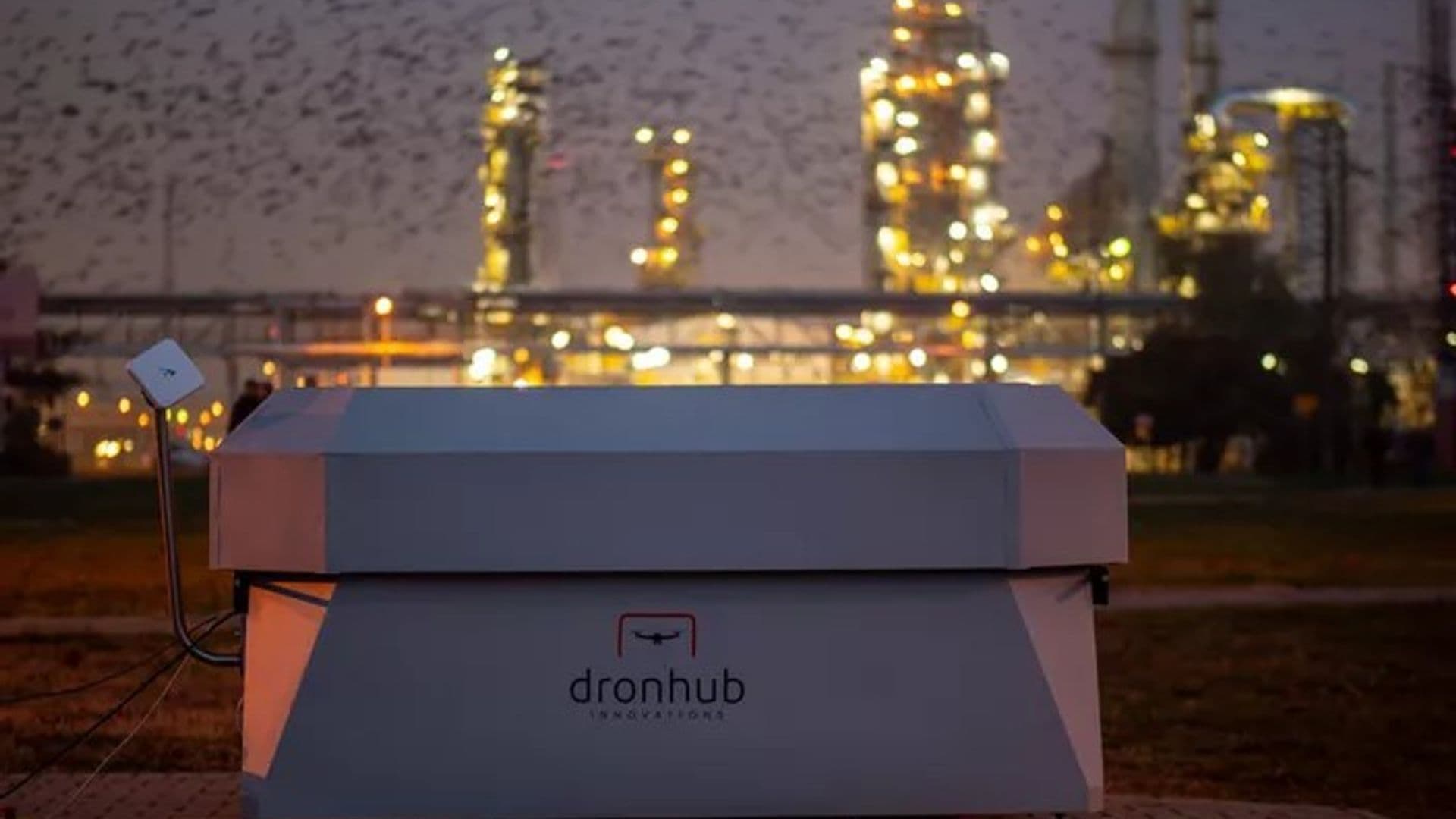
One of Eastern Europe's largest refinery operators deployed Dronehub's autonomous inspection across critical-infrastructure assets that don't tolerate downtime. PKN Orlen — a fuels-and-energy company running operations across six countries — is the named client that proves drone-in-a-box scales out of rail-corridor inspection into the harder problem of volatile, regulated, high-hazard chemical sites.
This post explains what autonomous inspection actually replaces at a refinery, why this use case carries regulatory weight under NIS2 and equivalent US frameworks, and how the Sentinel AI stack re-points from per-fastener rail defects to thermal hotspots, tank-seam corrosion, and pipeline-corridor leakage signatures without re-architecting the underlying platform.
What inspection looks like at a refinery before autonomy
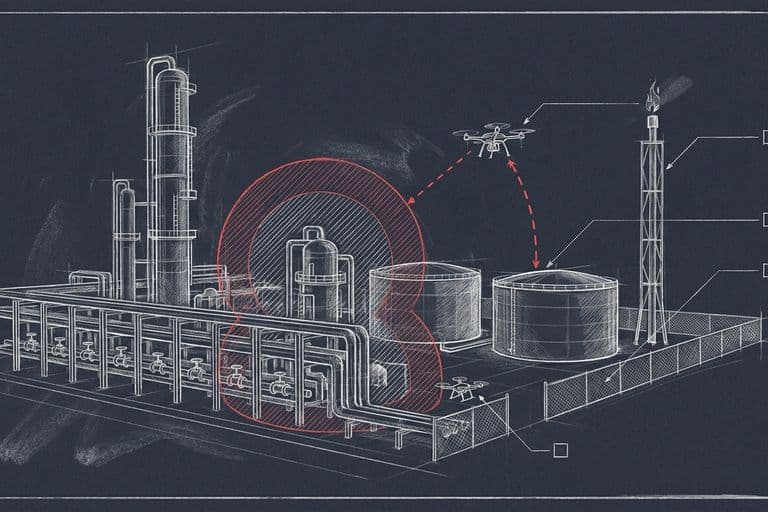
A refinery footprint runs to hundreds of hectares. Tank farms — dozens or hundreds of bulk storage tanks, each tens of metres tall. Pipe racks running kilometres across the plant. Flare stacks at altitude. Fenceline perimeter that has to be patrolled because the asset is critical infrastructure.
Manual inspection of this footprint involves three concurrent workflows, each constrained by its own ceiling:
- Scheduled human inspection. Crews in PPE, working at height, walking tank-roof walkways, climbing flare-stack platforms, checking pipe-rack supports. Slow, expensive, periodic. Statistically guaranteed to miss the defect that propagates between inspections.
- Contracted aerial inspection. Helicopter or fixed-wing operator on a long-term contract, flying quarterly or annually. Limited to fair-weather days. Operator's data, not the refinery's. No persistent coverage.
- Security patrol. Manual rounds of perimeter and internal control zones. Slow to detect intrusion or unauthorised vehicle presence, especially across the multi-kilometre fenceline most refineries have.
The cumulative cost — labour, helicopter contract, security headcount, PPE, regulatory paperwork — is substantial. The cumulative coverage gap — the time-and-space windows in which assets aren't being inspected — is also substantial. And the cumulative personnel-exposure footprint — hours-at-height, hours-in-vapour-zone — is non-trivial both ethically and from an insurance perspective.
The regulatory frame
A refinery is not just an asset. It's an asset that ENISA and national CIP regulators classify as critical infrastructure. Under the EU NIS2 Directive, large industrial operators are required to demonstrate continuous monitoring, audit-grade incident logging, and resilience to both physical and cyber threats.
The US framework (CISA, EPA, DHS S&T) places equivalent obligations on refineries inside the energy critical-infrastructure sector. The operator can't reasonably argue that inspection cadence determined by helicopter-contractor availability is "continuous monitoring." Regulators increasingly want what autonomous inspection actually provides: high-cadence, audit-trailed, sovereign-data-path coverage across the full asset footprint.
This shift moves drone-driven inspection from "OPEX optimisation" to "regulatory enabler." The procurement budget moves from facilities to compliance.
What the Sentinel stack does for refineries
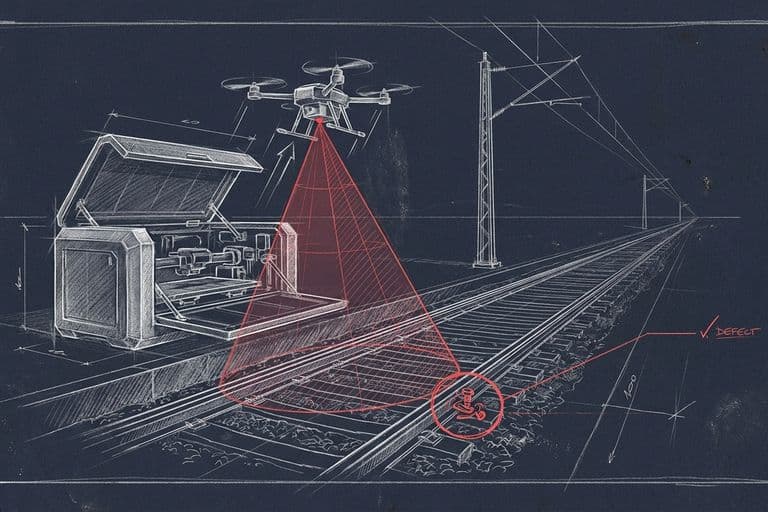
The same architectural pattern that runs at Deutsche Bahn — drone-in-a-box hardware on the asset, edge first-pass classification on the drone, cloud review of flagged frames, sub-15-minute operator-readable reports — applies one-for-one to refinery inspection. What changes is the anomaly taxonomy:
- Thermal hotspots on tank skin — early indicator of internal corrosion, scaling, or fluid stratification. Caught months before the visible-spectrum inspection would flag it.
- Tank-seam and pipe-joint corrosion — sub-millimetre damage detected via high-resolution visible-spectrum imagery, tracked frame-over-frame across inspection cycles.
- Flare-stack condition — top-of-stack anomalies, deflector wear, lining degradation. Inspection of flare-stack tops is among the highest-hazard manual operations on the plant; replacing it with drone inspection is among the highest-ROI safety improvements.
- Vapour-cloud detection — thermal + visible-spectrum signature analysis flags leaks earlier than fenceline sensors typically catch them.
- Pipeline-corridor leakage — same thermal pattern detection applied to the linear infrastructure between plant and storage / transit.
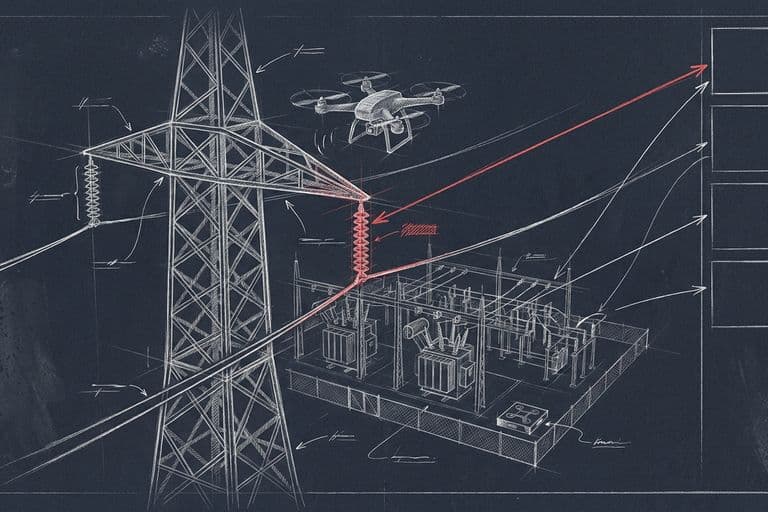
- Perimeter intrusion and vegetation — sweep of fenceline with intrusion-detection escalation; vegetation encroachment on rights-of-way flagged for clearance work.
Each anomaly is location-pinned, severity-scored, time-stamped, and pushed into the operator's maintenance / security / compliance stacks. The receiving operator gets the evidence trail in audit-grade form — which is the format regulators and insurers want.
Reference + licensing
PKN Orlen is a publicly citable named reference. For procurement evaluators at other refinery operators — Lotos, Saudi Aramco, ExxonMobil, BP, Shell, refining-sector independents — that's a concrete buyer-reference at the largest refinery operator in Central and Eastern Europe, in NATO-allied jurisdiction, on a critical-infrastructure asset class.
The platform is licensable: drone-in-a-box hardware (manufactured at Jasionka, NATO-allied supply chain, NDAA Section 848 compatible), Sentinel AI stack (sovereign data path, in-house models that train against the operator's specific asset class), and the deployment playbook honed across PKN Orlen plus the Deutsche Bahn national-scale validation.
For US energy programmes evaluating critical-infrastructure protection — DHS S&T, DoE national-lab partnerships, the relevant SBIR/STTR topic areas — the same stack qualifies under Dronehub Inc. (Delaware C-Corp, SBIR/STTR-eligible, EB1A-resident founder). The PKN Orlen reference is the proof of operational deployment at scale on a regulated, high-hazard asset; the federal-pathway eligibility is structural.
The full energy-vertical context is on /industries/energy. The drone-in-a-box platform sits on /drone-in-a-box. For a refinery-deployment conversation under NDA, open the contact form.
FAQ
- What does autonomous inspection actually replace at a refinery?
- Three workflows. First, scheduled human inspection of tank farms, flare stacks, and pipe racks — workers in PPE, working at height, sometimes in toxic-vapour zones. Second, contracted aerial inspection by helicopter or fixed-wing — expensive and limited to fair-weather days. Third, security patrol of perimeter and fenceline — manual rounds replaced by drone sweeps with intrusion-alert escalation. The combined replacement is a fraction of the cost at an order of magnitude higher cadence.
- Why is this a critical-infrastructure use case?
- Refineries are designated critical infrastructure under EU NIS2 and the equivalent US CISA frameworks. The inspection cadence, audit-trail requirements, and personnel-safety standards are regulator-set. A missed defect on a flare stack, a leak on a pipeline corridor, or a sabotage event at the perimeter all carry regulatory weight in addition to operational cost. Autonomous inspection produces the continuous coverage and the audit-grade evidence record that the regulatory framework now requires.
- What anomalies does the AI detect on a refinery?
- Thermal hotspots on tank skin (early-warning for internal failure), corrosion at tank seams and pipe joints, flare-stack condition deviations, vapour-cloud signatures (visible-spectrum + thermal), pipeline-corridor leakage, vegetation encroachment on rights-of-way, intrusion or unauthorised vehicle presence at perimeter. Each anomaly is location-pinned, severity-scored, and pushed to the operator's maintenance and security stacks in under fifteen minutes from flight landing.
- How does the Sentinel stack scale from rail to refinery?
- The architecture is identical to the Deutsche Bahn deployment — edge first-pass classification on the drone's Nvidia compute, cloud review of flagged frames, sub-15-minute reports, sovereign data path. What changes is the per-asset anomaly taxonomy. Rail looks for loose fasteners and ballast displacement; a refinery looks for thermal hotspots, seam corrosion, and intrusion events. Re-training against the operator's specific asset class is incremental work; the platform layer doesn't move.
- Can other refinery operators license this?
- Yes. The drone-in-a-box hardware, the Sentinel AI platform, the docking systems, and the deployment playbook are all licensable. Dronehub manufactures at the Jasionka factory inside NATO-allied supply chain — relevant for refinery operators whose critical-infrastructure compliance includes supply-chain integrity. The PKN Orlen reference is publicly citable; Dronehub will run a NDA-protected technical conversation for any major operator evaluating the stack.