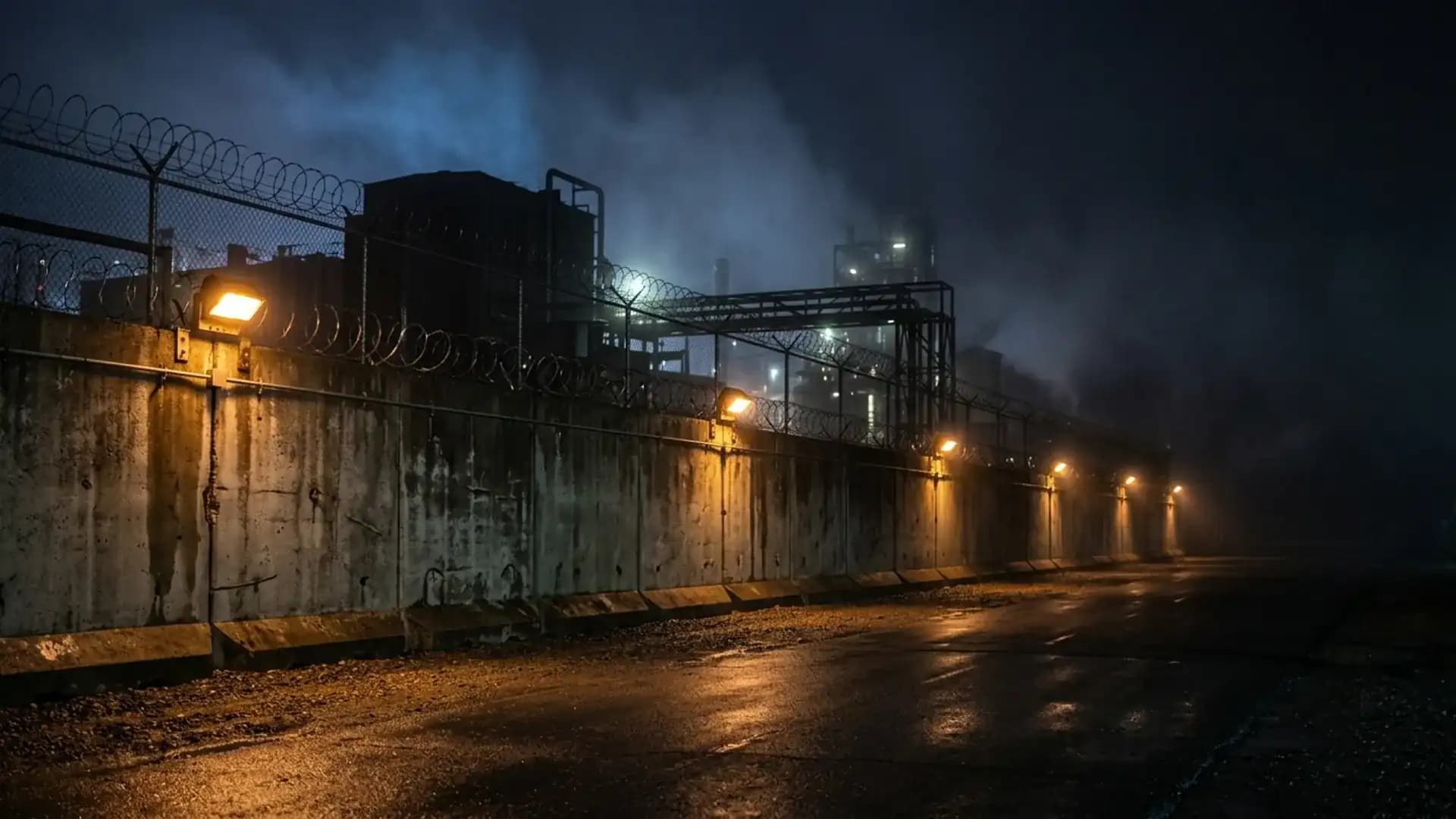
Same stack — ports,
airfields, dams, water.
Autonomous protection and inspection for the asset classes that don't tolerate outages. Drone-in-a-box for fixed-site perimeter. AUDROS counter-UAS for the airspace. Sentinel AI for condition monitoring. Sovereign supply chain by design — zero components from China or sanctioned states.
Why CIP
The assets where a single failure makes the front page.
Critical-infrastructure protection sits at a different point on the risk curve than general commercial inspection. A missed defect in a substation insulator is a regional outage. An unauthorized UAV over an airfield is an hour- long traffic shutdown. A breach at a water-treatment plant or a port-perimeter incursion is a national-news event. The cost of being wrong is asymmetric.
The economic model that follows is simple: persistent autonomous coverage of the asset, paired with kinetic airspace protection for hostile UAVs, is significantly cheaper than the consequence of a single incident — and meaningfully cheaper than the labour-based alternative. The same drone-in-a-box hardware that runs at national scale on Germany's rail network, paired with the AUDROS c-UAS stack scored 98/100 by the European Defence Agency, runs the full perimeter + airspace job for a CIP operator at one indivisible engagement.
The data path stays sovereign by design — EU + US infrastructure only — which matters when the CIP operator in question is itself a regulated entity, a public authority, or a national-security-adjacent operation.
The fixed-site hardware
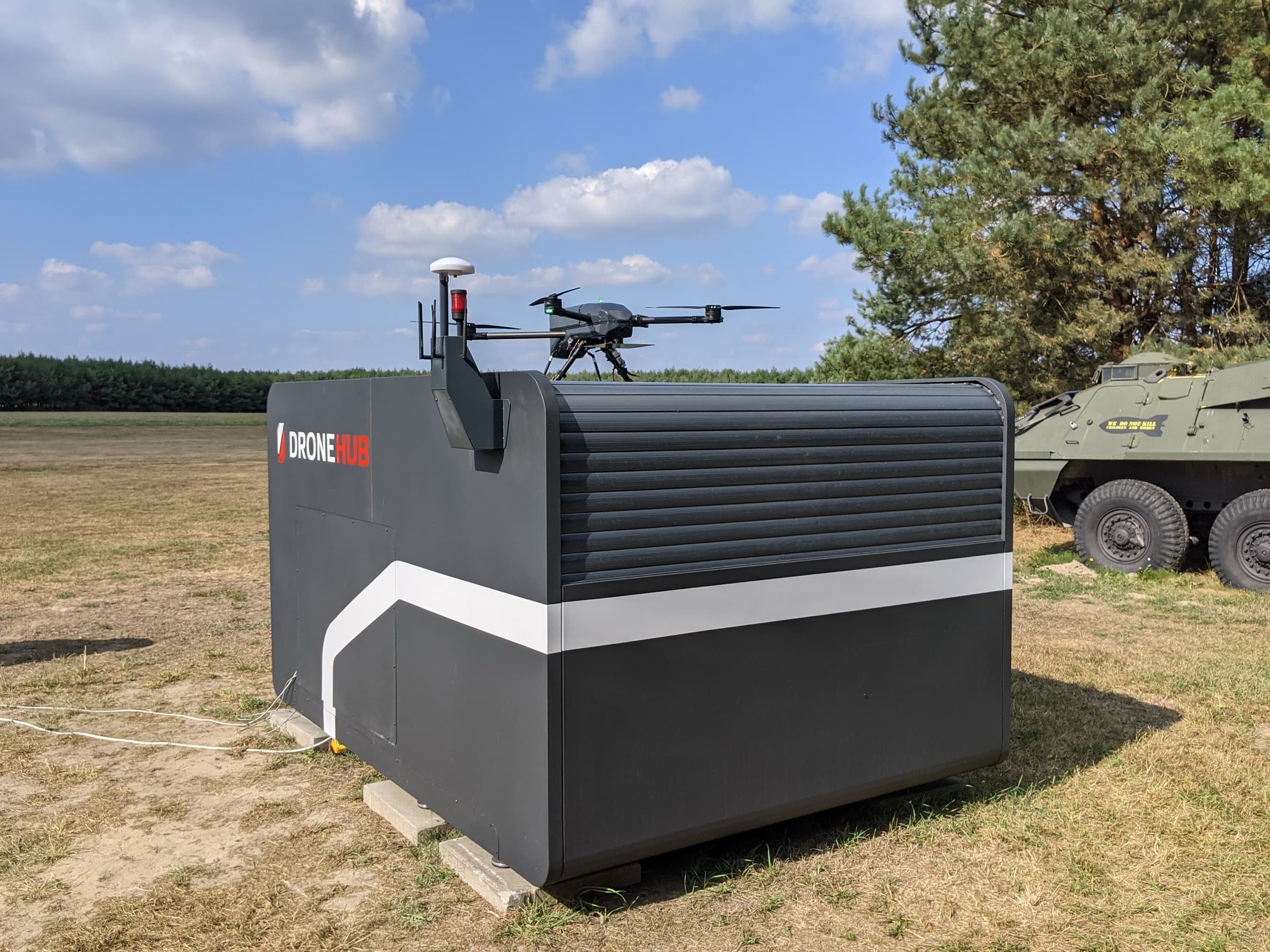
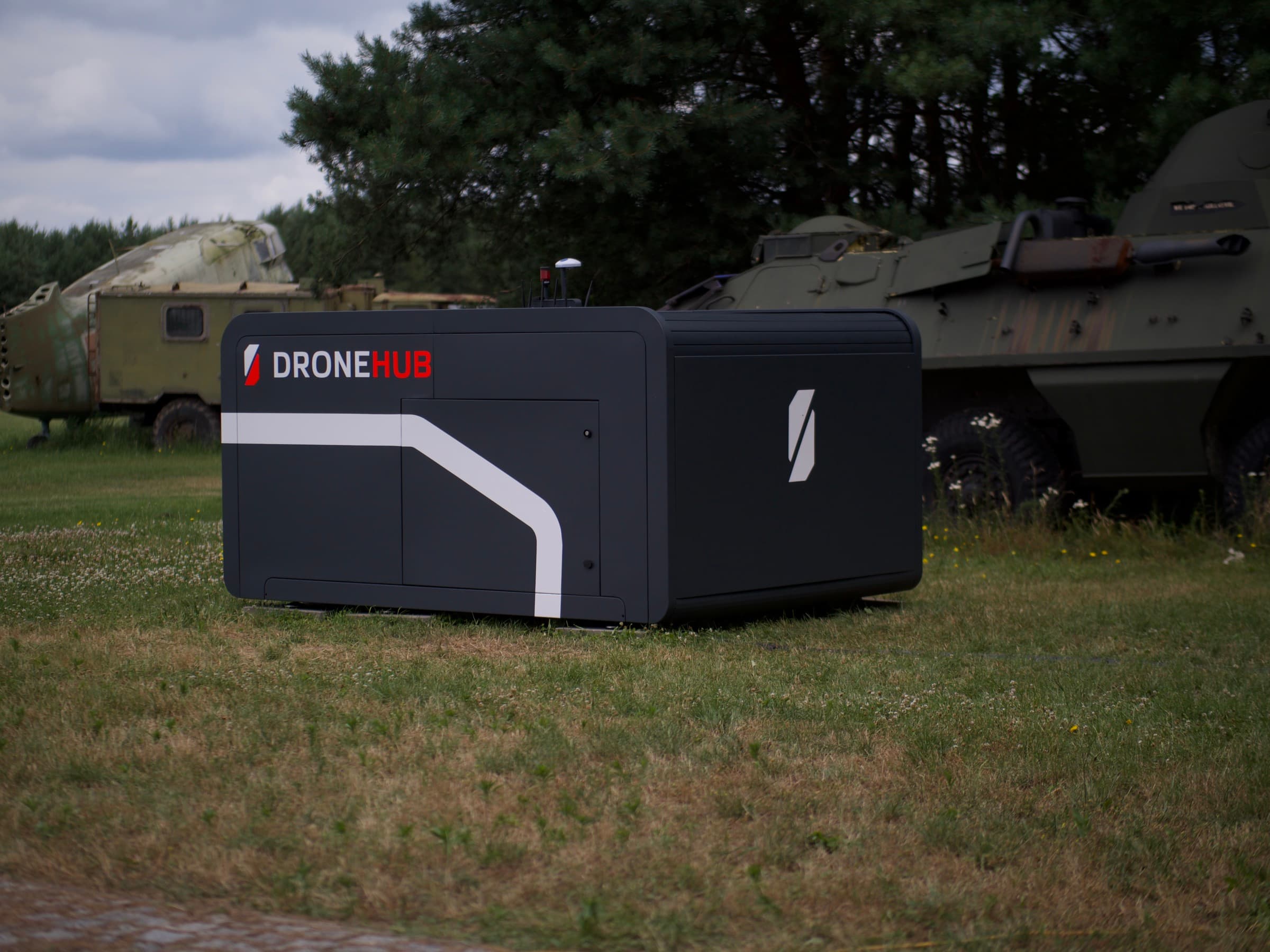
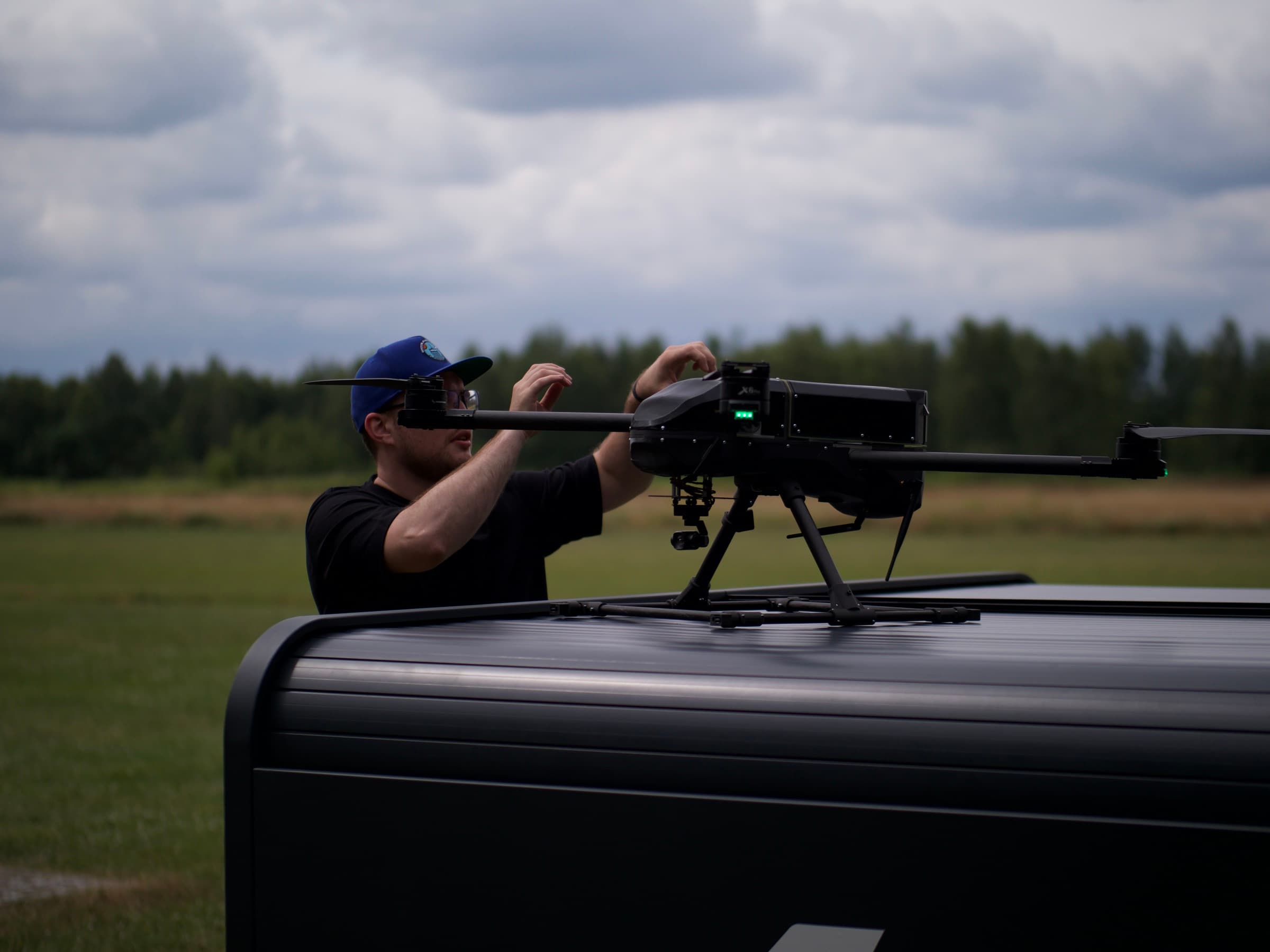
Autonomous drone-in-a-box at the asset edge.
What it does
Four capability layers — one integrated deployment.
The CIP deployment isn't a perimeter system + a c-UAS system + an inspection system + a sovereign-data product. It's one integrated stack with four operating modes, all running on the same hardware and the same AI platform.
Persistent perimeter overwatch
Autonomous drone-in-a-box deployed at the asset edge. Scheduled patrols plus on-demand response to alerts from ground sensors, radar, or dispatcher escalation. Operator sees anomalies — intrusion, unauthorized vehicles, fence breach — not raw video.
Counter-UAS airspace protection
Pair the perimeter with AUDROS — our Eagle One net-capture interceptor. Hostile UAVs over a port, airfield, dam, or substation get caught intact for forensic review. Validated to 98/100 by the European Defence Agency on the CBRN counter-UAS programme.
AI condition monitoring
Sentinel AI runs the same per-asset anomaly detection that found 95%+ of critical defects on Germany's rail network — re-pointed at conductors, insulators, dam joints, tank welds, water-treatment infrastructure. Inspection cadence matches the asset's actual risk profile, not a fixed calendar.
Sovereign data path
Imagery, condition data, intrusion logs, telemetry stay on EU + US infrastructure. Zero components from China or sanctioned states. NDAA Section 848 compatible. Suitable for regulated CIP workloads where the data path is itself a procurement requirement.
In operation
Autonomous perimeter patrol.
Where it fits
Six CIP asset classes where the integrated stack maps one-for-one.
Ports and maritime terminals
Container yard inventory, vessel inspection at berth, fence-line and waterfront perimeter, drone-borne security against airspace incursions. Where the cost of a missed contraband event or a 24-hour shutdown easily clears seven figures.
Airports and airfields
Perimeter security against unauthorized incursions (human or UAV), runway / taxiway condition inspection, FOD (foreign-object debris) detection, lighting integrity. Plus counter-UAS — Eagle One interceptors for the airspace anomalies that historically shut runways for hours.
Dams, reservoirs, water utilities
Spillway and joint inspection from above — finding hairline cracks and seepage before they become emergency events. Reservoir intake monitoring, intake screen integrity, water-treatment plant condition surveys. The asset class where catastrophic-failure cost dwarfs any other risk.
Telecom towers and data centers
Tower-condition inspection (cable, antenna, structure) without the safety-climbing schedule and cost. Plus data-center perimeter and roof inspection — HVAC roof units, perimeter access points, parking-area security. Lights-out monitoring for the lights-out facilities.
Government facilities and embassies
Sovereign-installation protection with NDAA Section 848-compatible hardware. Perimeter overwatch, vehicle-borne IED standoff, crowd-event support during state visits. The data path stays sovereign by design.
Petrochemical and industrial sites
Refinery flare-stack monitoring, tank-farm thermal surveys, fence-line condition, leak detection via thermal + visible-spectrum imaging. Continuous coverage replaces the periodic helicopter survey at a fraction of the recurring cost.
Reference deployments
Three deployments behind the CIP stack.
The integrated CIP offering isn't speculative capability — each layer is anchored on a real, funded, deployed system in our portfolio.
Deutsche Bahn — proves the AI at national scale
33,000-kilometre rail network. 95%+ per-fastener defect detection. 15-minute reports. Same Sentinel AI stack, same drone-in-a-box hardware — re-pointable across any per-asset anomaly-detection problem in critical infrastructure.
See case studyAUDROS — counter-UAS for CIP airspace
Eagle One net-capture interceptor with CBRN response variant. Scored 98/100 by the European Defence Agency. The c-UAS layer your perimeter system needs as standard, not as an aftermarket add-on.
See case studyDrone-in-a-box — the fixed-site hardware
Robotic 2-minute battery swap inside the dock, 24/7 availability, edge + cloud compute split. The platform proven on Germany's national rail network, available today for fixed-site CIP deployments.
See case study

Next move
Tell us the asset and the threat model. We'll come back with the integrated deployment plan.
Port, airport, dam, water utility, telco, data center, government facility — describe the geography, the threat model, the existing security stack, and the regulatory constraints. We'll come back with a fit, a phasing plan, and the engagement structure that matches.
FAQ
Critical infrastructure & ports — frequently asked
What is airports and ports infrastructure inspection?
Fixed-site autonomous inspection and protection for ports, airfields, dams, and water infrastructure — assets that do not tolerate outages. Perimeter overwatch, AUDROS-class counter-UAS for the airspace above, and Sentinel AI for condition monitoring, on a sovereign data path.
How does counter-UAS protect a critical-infrastructure perimeter?
AUDROS provides detection and physical interception of hostile drones over the protected airspace: its net-capture interceptor brings a drone down intact, without jamming or munitions. Who may use it depends on the country and on who operates it. In the US and most of the EU, bringing down a drone is reserved to authorised agencies, so a port, airfield or refinery owns the detection layer and hands over to them; in Poland, specialised armed security formations may act at protected sites.
Is the inspection data sovereign?
Yes. The AI and data path are built and owned in-house, on a non-adversarial, NATO-allied supply chain with zero components from China or sanctioned states, which is what regulated critical-infrastructure procurement requires.
More on critical infrastructure
Browse all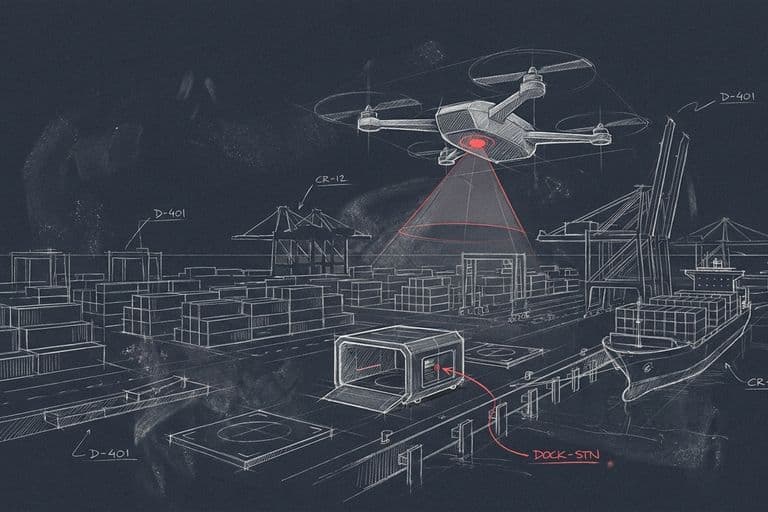 UPDATED · MAY 2026
Drone-in-a-Box for Ports: Perimeter, Condition, C-UAS
Ports need three drone capabilities — perimeter, asset condition, counter-UAS. One drone-in-a-box infrastructure covers all three.
Read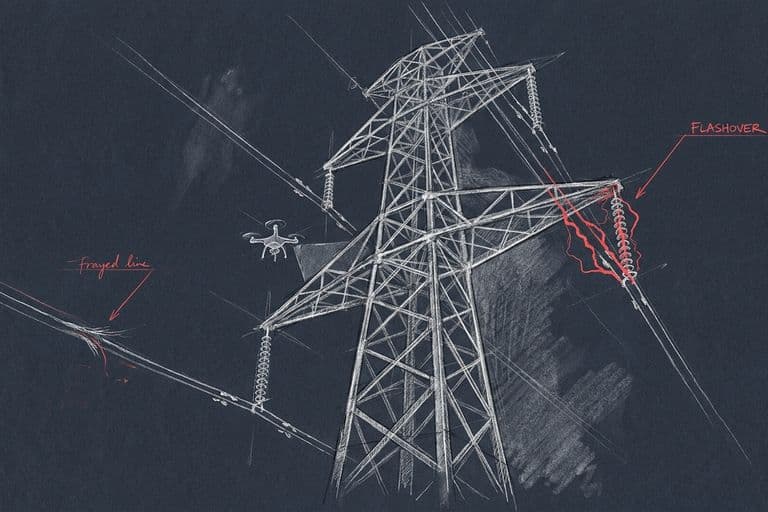 UPDATED · MAY 2026
Energy Grid + AI Inspection: Same Stack, Different Anomalies
Sentinel re-points from rail to energy grid by changing the per-asset taxonomy — the architecture stays. Transmission, substations, conductors at scale.
Read- UPDATED · JUN 2026
Counter-UAS Methods Compared in 2026: Detection, Jamming, Kinetic, and Net Capture
A side-by-side comparison of counter-drone methods — detection, RF jamming, GNSS spoofing, kinetic, net capture, directed energy, and protocol takeover — by RF-dependence, collateral risk, permits, and effectiveness against autonomous drones.
Read