From accident sites
to CBRN events.
Aerial situational awareness for dispatchers. AED defibrillator transport in cardiac emergencies. Counter-UAS interception over crowds. CBRN incident response — scored 98/100 by the European Defence Agency. The use cases that public-safety authorities have already validated under EU programmes are deployable today.
Why public safety
Every minute of response time is measurable in outcome.
Cardiac arrest survival drops roughly ten per cent per minute without defibrillation. Major-incident clearance time scales with how fast the responder team has good situational data. Crowd events go from manageable to catastrophic in the window between when the operator sees the threat and when the response is on the ground. Public safety is the domain where time-to-information converts directly to time-to-outcome.
Drones change that calculation. The drone reaches the scene within minutes of dispatch, in geography that ground response can't cover fast. The AED arrives at the cardiac-arrest victim before the ambulance. The command stack sees the accident from above before the first responder gets there. The same drone — paired with the AUDROS counter-UAS layer — also defends the airspace over the responder team itself.
The use cases above are not speculative. They were validated end-to-end under EU public funding — the Honeywell-led U-Space4UAM programme for civilian applications, the joint ESA + EDA AUDROS programme for the regulatory and defense overlap. The technology is ready. The regulatory pathway is open.
What it does
Four public-safety capability blocks — all proven under EU programmes.
Each capability is anchored on a real funded deployment. The technology and the regulatory pathway both exist.
Live aerial situational awareness
Drone reaches the scene within minutes of dispatch. Feeds real-time imagery into the responder command stack — replacing static CCTV and a delayed helicopter with on-demand, location-precise aerial intelligence. Validated end-to-end under the Honeywell-led U-Space4UAM consortium.
AED defibrillator transport
Cardiac arrest survival drops ~10% per minute without defibrillation. In dense urban geography, ground EMS often can't reach the patient in time. Drone delivery of the AED — validated under U-Space4UAM as a deployable system, not a demonstration. Lives on the line, real regulatory pathway.
Counter-UAS for public events
AUDROS Eagle One net-capture interceptor — designed for the airspace over crowds where RF jamming is illegal and kinetic shoot-down is unthinkable. European Defence Agency scored Dronehub 98/100 on the CBRN counter-UAS programme.
CBRN incident response
Chemical, biological, radiological, nuclear. Sensor-equipped UAVs survey the contamination plume, locate the source, and feed decision-grade data to dispatchers without exposing first responders to the hazard. The capability the EDA scored 98/100.
In the field
Autonomous perimeter patrol, on station.
The AED defibrillator use case
Drone-delivered defibrillator, before the ambulance arrives.
Cardiac arrest is a time-critical emergency. Each minute without defibrillation reduces survival probability by approximately ten per cent. In dense urban geography — traffic, one-way streets, permit-restricted access — ground EMS often cannot reach the patient inside the survival window. Drones can, and AED transport was selected as a U-Space4UAM use case for exactly that reason.
What the U-Space4UAM trials proved wasn't that drones can carry AEDs — that's been shown for years in lab conditions. The programme proved that they can do it inside regulated airspace, with cross-jurisdiction coordination, on a regulatory pathway that terminates in commercial deployment. That's the difference between a demonstration and a deployable system. We have the second.
Where it fits
Six public-safety operational profiles.
Traffic incidents and major-incident response
Multi-vehicle collisions, hazmat events, freeway pile-ups. The drone provides aerial overview to dispatchers within minutes, supporting triage and informing resource allocation. Reduces clearance time, supports investigator workflow, integrates with traffic-management systems.
Civil unrest and crowd management
Stadium events, summits, protests, head-of-state visits. The drone supports the public-safety side (situational awareness, crowd-density estimation) and the counter-UAS side (intercept hostile UAVs over crowds, where alternatives are unusable).
Search and rescue
Cardiac arrest victim location, missing-person searches in mixed terrain, water-rescue coordination. Aerial coverage of geography that ground response can't cover fast — paired with thermal imaging for low-visibility conditions.
Mass-casualty and disaster response
Earthquake, flood, structural collapse, post-conflict reconstruction. The drone provides immediate aerial assessment, supports triage and resource allocation, and integrates with incident-command stacks. Paired with Airvein hangar architecture for cargo logistics in the response zone.
Correctional-facility anti-smuggling
Drone-borne contraband — drugs, phones, weapons — into correctional facilities is now a primary smuggling vector globally. AUDROS-class counter-UAS provides perimeter protection for individual facilities: detection plus net-capture interception, without jamming or munitions, run by the agency the law authorises — in the US since July 2026, that can be a certified state or local correctional agency.
Special events and VIP protection
Diplomatic visits, executive movement, head-of-state escorts, large public gatherings. Persistent aerial overwatch with intercept capability if a hostile UAV appears. Pairs with UAV Nomad — our mobile drone-in-a-box — for sustained operation along a moving event corridor.
The hardware
Drone-in-a-box for persistent overwatch.
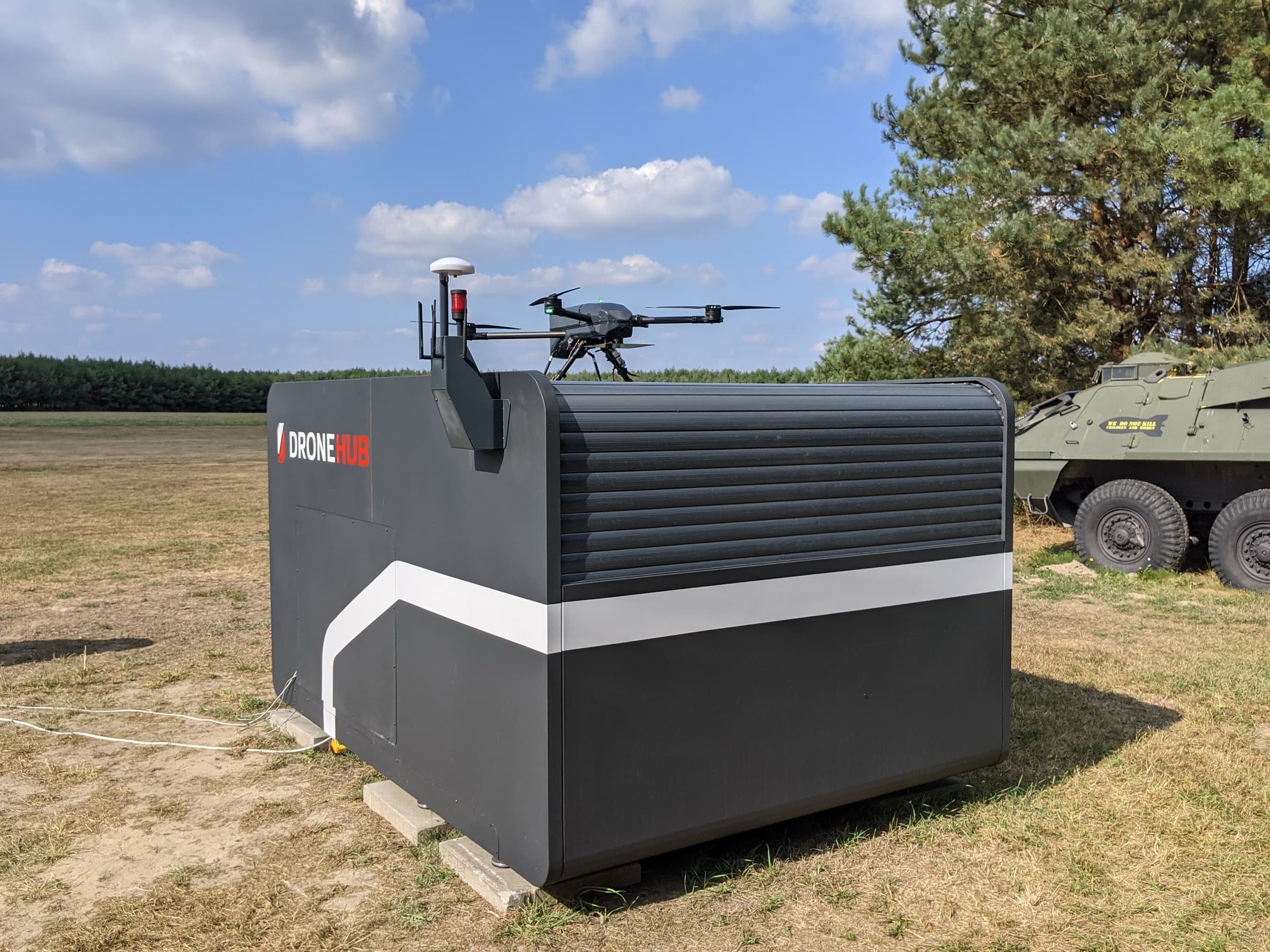
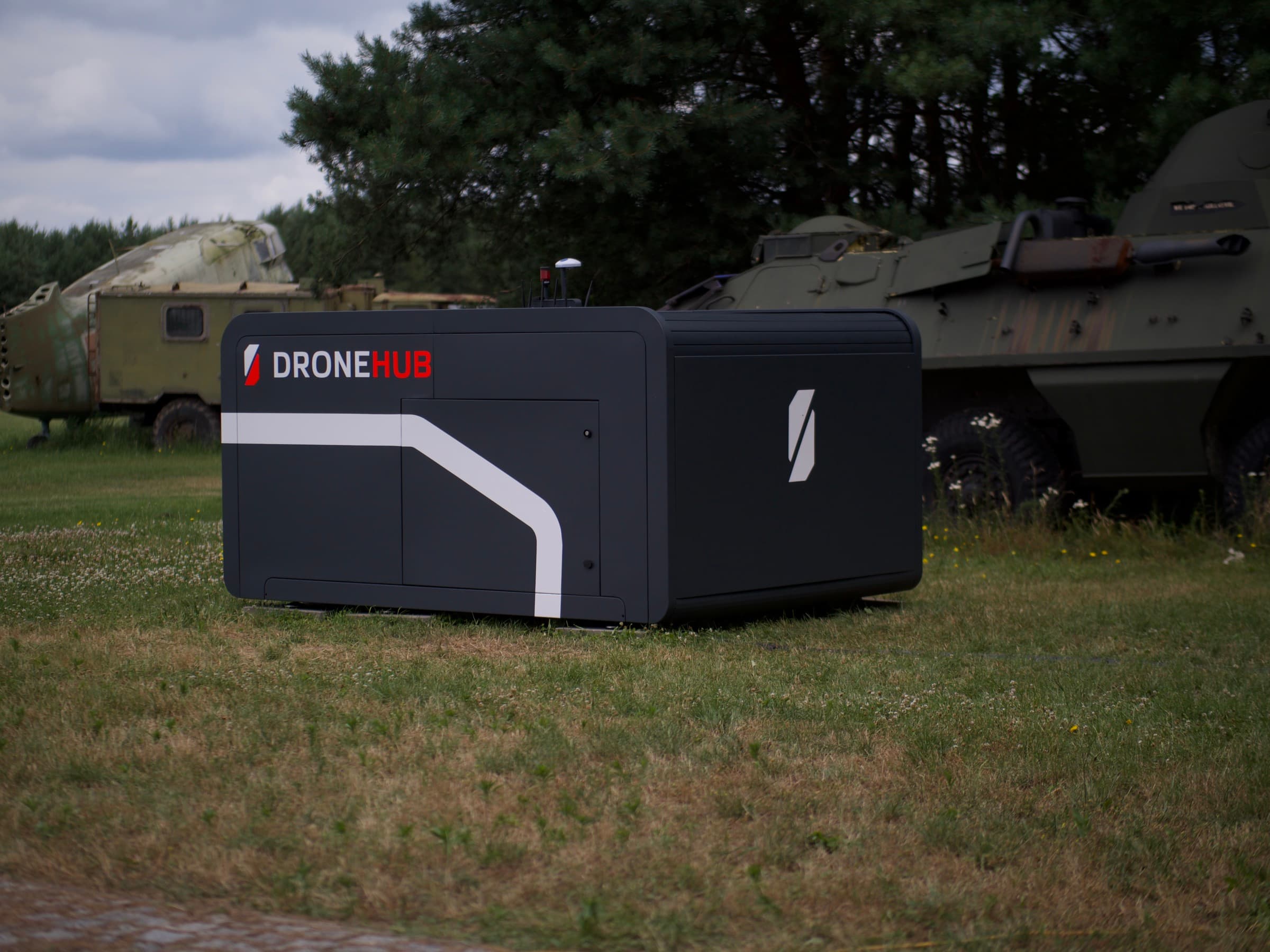
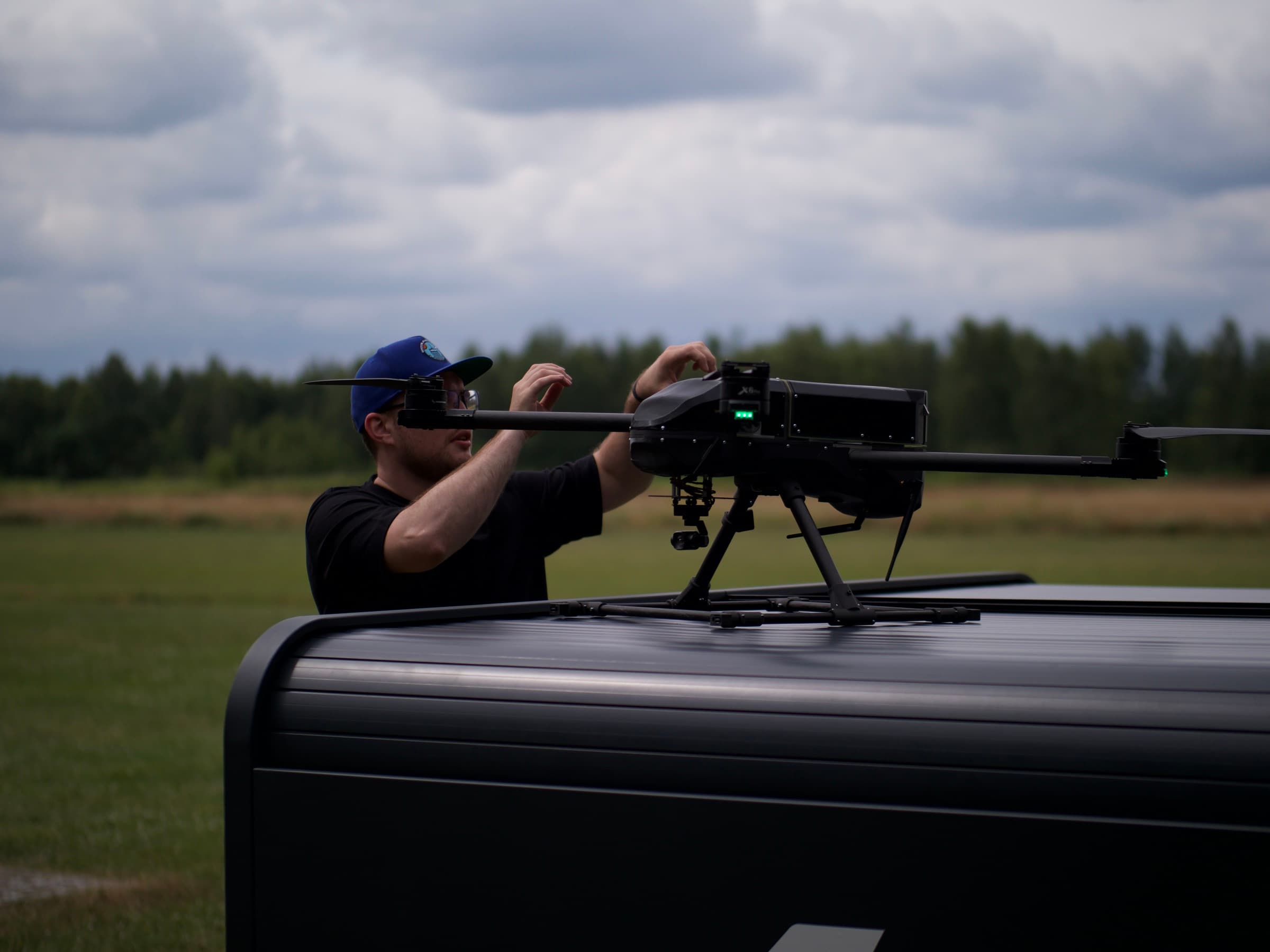
The stationary Monitoring Hub keeps a drone docked, charged and ready to launch on dispatch — for perimeter protection and rapid first-response situational awareness.
Reference deployments
Three reference deployments behind the public-safety stack.
U-Space4UAM — Honeywell-led EU programme
13 partners across 5 countries. Three public-service use cases validated end-to-end, including AED defibrillator transport. The empirical data fed directly into EU U-Space regulatory development. Dronehub flew first across the entire consortium.
See case studyAUDROS — counter-UAS with CBRN response
First-ever joint ESA + EDA SME programme. Eagle One net-capture interceptor with CBRN variant. Scored 98/100 by the European Defence Agency. Six public-safety verticals: corrections, road safety, civil unrest, VIP escort, CBRN, critical-infrastructure perimeter.
See case studySIS-SREM — the public-safety foundation
Dronehub's earliest ESA-funded deployment, at the Dolni Morava resort (Czech Republic). Avalanche risk monitoring, off-piste deviation detection, rapid first-response situational awareness. The architectural seed for the AUDROS programme.
See case study
Next move
Tell us the response problem. We'll come back with the deployment.
Emergency-services authority, civil-protection agency, municipal government, event organizer, correctional system — describe the operational problem and the regulatory constraints, and we'll come back with a deployment fit, a phasing plan, and the engagement model that matches.
FAQ
Public safety & emergency response — frequently asked
How do drones support emergency dispatch and incident response?
Drones give dispatchers aerial overview of multi-vehicle collisions, hazmat events, and major incidents within minutes — supporting triage, resource allocation, and reduced clearance time, and integrating with incident-command and traffic-management stacks.
Can drones be used for AED or defibrillator delivery?
Yes — AED transport was validated under the EU U-Space4UAM project, pairing the Airvein hangar architecture with rapid aerial delivery to cardiac-arrest victims ahead of ground response.
How does counter-UAS apply to public safety?
AUDROS-class counter-UAS protects crowds at stadiums, summits, and head-of-state visits, and secures correctional-facility perimeters against drone-borne contraband — detection plus net-capture interception without jamming or munitions, operated by the agencies each country authorises to bring a drone down.
More on public safety
Browse all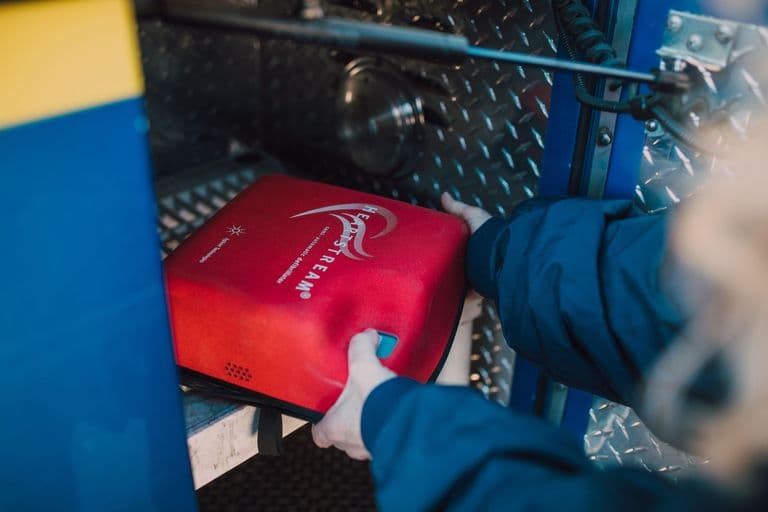 UPDATED · MAY 2026
Drone-Delivered AEDs in Cardiac Arrests: The Sosnowiec Pilot with Pentacomp
Cardiac-arrest survival drops 10% per minute. In dense urban geography, ground EMS routinely misses the survival window. Dronehub and Pentacomp ran a pilot in Sosnowiec, Poland — over 100 AED-transport flights between two docking stations.
Read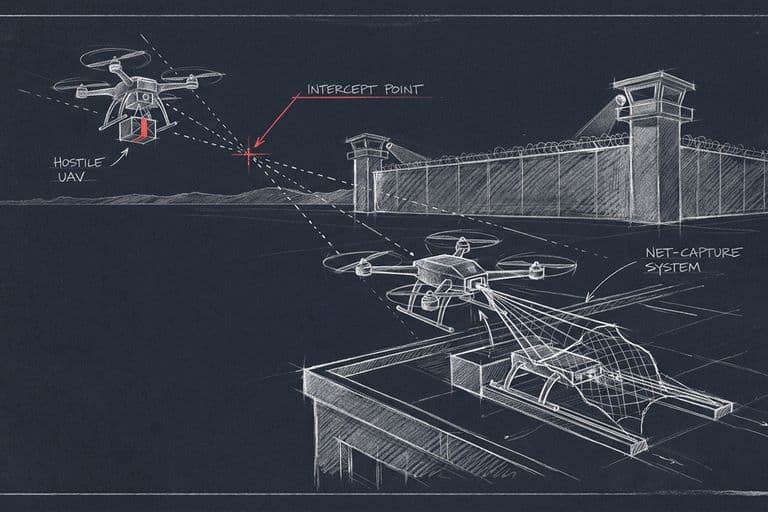 UPDATED · MAY 2026
Prison Anti-Smuggling Drones: The C-UAS That Pays Back Fast
Drone-borne contraband is now a primary prison smuggling vector. Net-capture C-UAS brings the drone down with the evidence intact — and the procurement ROI compounds quickly.
Read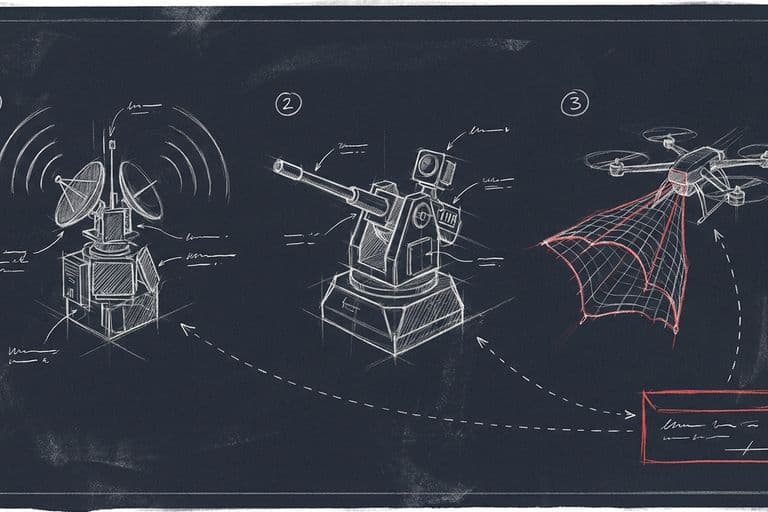 UPDATED · MAY 2026
Counter-UAS in 2026: When to Jam, Shoot, or Capture
Counter-UAS has three modalities — jamming, kinetic, capture. Each has a different legal envelope. A 2026 buyer's guide for defense and infrastructure operators.
Read